Lift Noise Levels: How to Choose a Quiet Lift
A quiet home lift runs at roughly 40 to 70 decibels depending on its drive type — belt and gearless models are the quietest, hydraulic the loudest. Drive type sets the baseline, and where the power pack sits does the rest.
Noise is one of the most common worries homeowners raise about a lift, and one of the easiest to get right if you plan for it. As of 2026, indicative operating noise for an Australian home lift sits between about 40 decibels for the quietest belt and gearless models and around 70 decibels for hydraulic lifts, where the pump does most of the work. A normal conversation measures about 60 decibels — so most home lifts are audible when they run and easy to ignore the rest of the time.
The single biggest factor is the drive type. Belt and gearless traction lifts are the quietest, screw-drive lifts sit in the low-to-moderate range, and hydraulic lifts are the loudest because of pump noise. After drive type, the two things that move the real-world figure most are where the power pack is installed and how carefully the lift is fitted.
This guide explains what a lift noise figure actually means, sets out indicative levels by drive type, and gives you a practical way to specify a quiet lift when you ask suppliers for quotes.
What is a quiet lift?
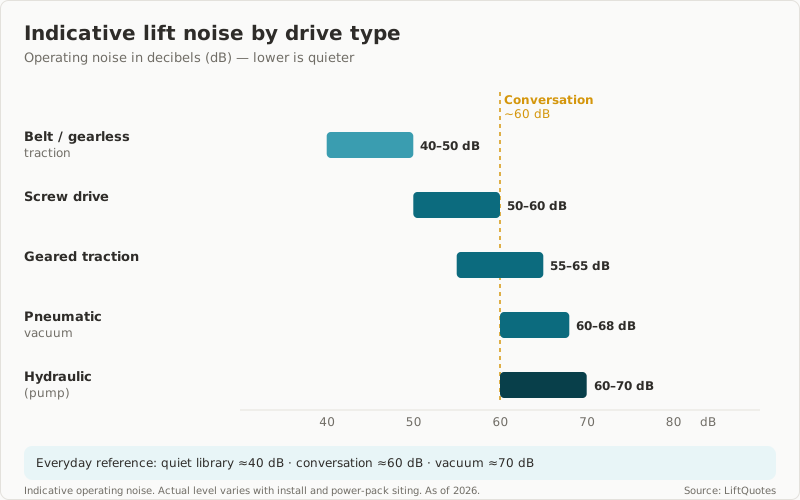
A quiet lift is one you hear arrive and little else. As of 2026, indicative operating noise for a well-installed Australian home lift runs at roughly 40 to 70 decibels depending on the drive type. The quietest belt and gearless traction lifts sit around 40 to 50 dB, screw-drive lifts run at about 50 to 60 dB, geared traction and pneumatic vacuum lifts land in the low-to-mid 60s, and hydraulic lifts reach 60 to 70 dB because of the pump. A normal conversation measures about 60 dB, so most home lifts are no louder than two people talking in the next room.
Decibels are not linear. The scale is logarithmic, so a lift at 70 dB is not ten per cent louder than one at 60 dB — it carries roughly twice the perceived loudness. That is why the gap between a belt-drive lift and a hydraulic one is far more noticeable in a quiet home than the raw numbers suggest, and why drive type is the first thing to settle if quietness matters to you.
What the decibel number actually means
A single dB figure only helps if you know how it was measured. Suppliers may quote a peak level at the moment the lift starts or stops, or an average during travel — the peak is always higher, so ask which one the number refers to. Noise is also measured at a set distance, usually inside the cabin or one metre from the machine, so a figure taken beside the power pack tells you little about what you will hear in the living room.
Context makes the number readable. A quiet library sits around 40 dB, a normal conversation around 60 dB, and a vacuum cleaner around 70 dB. A home lift lives inside that band — you notice it arrive, then it is gone. The occupational noise thresholds that trigger hearing protection at work begin at 85 dB averaged over an eight-hour day (Safe Work Australia), which no domestic lift comes close to. Lift noise at home is a comfort and amenity question, not a safety one.
Which lifts are quietest, and why
Drive type explains most of the spread, because it decides how the car is moved. Belt and gearless traction drives run smoothly with no pump and little mechanical noise, which is why they anchor the quiet end of the scale. Hydraulic lifts sit at the loud end because the pump has to push fluid under load to raise the car — the mechanical difference is exactly what our comparison of hydraulic vs electric lifts sets out in full.
Among residential options, the trade-offs between the two most common home-lift drives are covered in our screw drive vs hydraulic lift comparison, while the suspension choice behind the quietest cabins is explained in chain drive vs belt drive lifts. If you want the short answer to the underlying worry rather than the full spec, our guide to whether home lifts are noisy covers it directly.
How to specify a quiet lift
Most noise is designed out before installation, not fixed afterwards. When you brief a supplier, work through four things:
- Choose the drive for quietness. If silence is a priority, a belt or gearless drive is the quietest realistic starting point. A screw drive is a reasonable middle ground; specify a hydraulic lift only where its load or budget advantages outweigh the extra noise.
- Site the power pack deliberately. On hydraulic and some traction lifts the pump or motor is the loudest component, and it can usually live in a remote power pack. Putting it in a garage or plant cupboard rather than against a bedroom wall removes most of the perceived noise.
- Insist on install quality. Well-aligned, well-lubricated guide rails and a correctly balanced cabin run far quieter than a rushed fit. This is where a careful installer earns their fee.
- Plan for maintenance. Noise that grows over time signals wear — dry rails, a labouring pump, or ageing rollers. The same routine servicing that keeps home lift safety features reliable also keeps a lift at its original sound level.
Is lift noise regulated?
There is no fixed decibel limit for a home lift in Australian standards. AS/NZS 1735.18:2002 — the Australian Standard covering passenger lifts in private residences — governs the design and safety of residential lifts but does not set a noise ceiling, so quietness is a specification you agree with the supplier rather than a compliance figure. Verify the current standard through Standards Australia, and treat any dB figure a supplier gives you as indicative and worth writing into the quote.
One thing to check separately is local amenity: in attached dwellings, townhouses, and strata buildings, a lift running against a shared wall can carry to a neighbour, and some councils and owners corporations set their own noise expectations for building works and plant. LiftQuotes does not provide legal advice — confirm any local noise conditions with your council or owners corporation before you commit.
A quiet lift is a planning decision, not a lucky outcome. To compare quiet drive options and installation quality across suppliers, get free quotes from qualified Australian lift companies and ask each one for an indicative operating dB figure and where they would site the power pack. For the full range of residential options, start with our home lifts hub.
Lift companies in Australia
Browse profiles, compare service areas, and check reviews.

Lift Shop
★ 5.0 (1551 reviews)
Australia's largest dedicated home lift specialist since 1996. 10,000+ installations. Exclusive Italian-crafted lifts with industry-leading 8-year warranty.
View profile →
Compact Home Lifts
NDIS★ 5.0 (465 reviews)
Melbourne branch of Compact Home Lifts. Compact residential lift specialist providing maintenance and repair services across Victoria.
View profile →

Next Level Elevators
★ 5.0 (454 reviews)
Award-winning provider of premium Italian-designed all-electric home elevators. Certified Eltec Partner. Showrooms in Melbourne, Sydney, and Brisbane.
View profile →

Shotton Lifts
NDIS★ 5.0 (9 reviews)
Family-owned Australian lift manufacturer since 1977. 80+ staff. Design, engineer, manufacture, install and service from Dandenong South VIC. NDIS registered.
View profile →

LiftFit Australia
NDIS★ 5.0 (8 reviews)
Victoria-based NDIS registered lift provider, est. 2011. Partners with Cibes, Savaria, and Kalea. Residential, commercial, and platform lifts.
View profile →

Easy Living Home Elevators
★ 5.0 (7 reviews)
Australia's #1 home elevator supplier since 1998. 100% Australian-owned. 11,000+ elevators in service across 6 states.
View profile →
LiftQuotes is a comparison platform. Companies shown are filtered by relevance to this page. Listing does not imply endorsement. LiftQuotes may receive a referral fee when you request quotes.
Put this into action
When you're ready to move forward, get free quotes from verified Australian lift installers.
What are you looking for today?
I need a lift installed
I have a lift that needs attention
Noise is one of the most common worries homeowners raise about a lift, and one of the easiest to get right if you plan for it. As of 2026, indicative operating noise for an Australian home lift sits between about 40 decibels for the quietest belt and gearless models and around 70 decibels for hydraulic lifts, where the pump does most of the work. A normal conversation measures about 60 decibels — so most home lifts are audible when they run and easy to ignore the rest of the time.
The single biggest factor is the drive type. Belt and gearless traction lifts are the quietest, screw-drive lifts sit in the low-to-moderate range, and hydraulic lifts are the loudest because of pump noise. After drive type, the two things that move the real-world figure most are where the power pack is installed and how carefully the lift is fitted.
This guide explains what a lift noise figure actually means, sets out indicative levels by drive type, and gives you a practical way to specify a quiet lift when you ask suppliers for quotes.
What is a quiet lift?
A quiet lift is one you hear arrive and little else. As of 2026, indicative operating noise for a well-installed Australian home lift runs at roughly 40 to 70 decibels depending on the drive type. The quietest belt and gearless traction lifts sit around 40 to 50 dB, screw-drive lifts run at about 50 to 60 dB, geared traction and pneumatic vacuum lifts land in the low-to-mid 60s, and hydraulic lifts reach 60 to 70 dB because of the pump. A normal conversation measures about 60 dB, so most home lifts are no louder than two people talking in the next room.
Decibels are not linear. The scale is logarithmic, so a lift at 70 dB is not ten per cent louder than one at 60 dB — it carries roughly twice the perceived loudness. That is why the gap between a belt-drive lift and a hydraulic one is far more noticeable in a quiet home than the raw numbers suggest, and why drive type is the first thing to settle if quietness matters to you.
What the decibel number actually means
A single dB figure only helps if you know how it was measured. Suppliers may quote a peak level at the moment the lift starts or stops, or an average during travel — the peak is always higher, so ask which one the number refers to. Noise is also measured at a set distance, usually inside the cabin or one metre from the machine, so a figure taken beside the power pack tells you little about what you will hear in the living room.
Context makes the number readable. A quiet library sits around 40 dB, a normal conversation around 60 dB, and a vacuum cleaner around 70 dB. A home lift lives inside that band — you notice it arrive, then it is gone. The occupational noise thresholds that trigger hearing protection at work begin at 85 dB averaged over an eight-hour day (Safe Work Australia), which no domestic lift comes close to. Lift noise at home is a comfort and amenity question, not a safety one.
Which lifts are quietest, and why
Drive type explains most of the spread, because it decides how the car is moved. Belt and gearless traction drives run smoothly with no pump and little mechanical noise, which is why they anchor the quiet end of the scale. Hydraulic lifts sit at the loud end because the pump has to push fluid under load to raise the car — the mechanical difference is exactly what our comparison of hydraulic vs electric lifts sets out in full.
Among residential options, the trade-offs between the two most common home-lift drives are covered in our screw drive vs hydraulic lift comparison, while the suspension choice behind the quietest cabins is explained in chain drive vs belt drive lifts. If you want the short answer to the underlying worry rather than the full spec, our guide to whether home lifts are noisy covers it directly.
How to specify a quiet lift
Most noise is designed out before installation, not fixed afterwards. When you brief a supplier, work through four things:
- Choose the drive for quietness. If silence is a priority, a belt or gearless drive is the quietest realistic starting point. A screw drive is a reasonable middle ground; specify a hydraulic lift only where its load or budget advantages outweigh the extra noise.
- Site the power pack deliberately. On hydraulic and some traction lifts the pump or motor is the loudest component, and it can usually live in a remote power pack. Putting it in a garage or plant cupboard rather than against a bedroom wall removes most of the perceived noise.
- Insist on install quality. Well-aligned, well-lubricated guide rails and a correctly balanced cabin run far quieter than a rushed fit. This is where a careful installer earns their fee.
- Plan for maintenance. Noise that grows over time signals wear — dry rails, a labouring pump, or ageing rollers. The same routine servicing that keeps home lift safety features reliable also keeps a lift at its original sound level.
Is lift noise regulated?
There is no fixed decibel limit for a home lift in Australian standards. AS/NZS 1735.18:2002 — the Australian Standard covering passenger lifts in private residences — governs the design and safety of residential lifts but does not set a noise ceiling, so quietness is a specification you agree with the supplier rather than a compliance figure. Verify the current standard through Standards Australia, and treat any dB figure a supplier gives you as indicative and worth writing into the quote.
One thing to check separately is local amenity: in attached dwellings, townhouses, and strata buildings, a lift running against a shared wall can carry to a neighbour, and some councils and owners corporations set their own noise expectations for building works and plant. LiftQuotes does not provide legal advice — confirm any local noise conditions with your council or owners corporation before you commit.
A quiet lift is a planning decision, not a lucky outcome. To compare quiet drive options and installation quality across suppliers, get free quotes from qualified Australian lift companies and ask each one for an indicative operating dB figure and where they would site the power pack. For the full range of residential options, start with our home lifts hub.
Lift companies in Australia
Browse profiles, compare service areas, and check reviews.
Lift Shop
★ 5.0 (1551 reviews)
Australia's largest dedicated home lift specialist since 1996. 10,000+ installations. Exclusive Italian-crafted lifts with industry-leading 8-year warranty.
View profile →
Compact Home Lifts
NDIS★ 5.0 (465 reviews)
Melbourne branch of Compact Home Lifts. Compact residential lift specialist providing maintenance and repair services across Victoria.
View profile →
Next Level Elevators
★ 5.0 (454 reviews)
Award-winning provider of premium Italian-designed all-electric home elevators. Certified Eltec Partner. Showrooms in Melbourne, Sydney, and Brisbane.
View profile →
Shotton Lifts
NDIS★ 5.0 (9 reviews)
Family-owned Australian lift manufacturer since 1977. 80+ staff. Design, engineer, manufacture, install and service from Dandenong South VIC. NDIS registered.
View profile →
LiftFit Australia
NDIS★ 5.0 (8 reviews)
Victoria-based NDIS registered lift provider, est. 2011. Partners with Cibes, Savaria, and Kalea. Residential, commercial, and platform lifts.
View profile →
Easy Living Home Elevators
★ 5.0 (7 reviews)
Australia's #1 home elevator supplier since 1998. 100% Australian-owned. 11,000+ elevators in service across 6 states.
View profile →
LiftQuotes is a comparison platform. Companies shown are filtered by relevance to this page. Listing does not imply endorsement. LiftQuotes may receive a referral fee when you request quotes.
Put this into action
When you're ready to move forward, get free quotes from verified Australian lift installers.
What are you looking for today?
I need a lift installed
I have a lift that needs attention
Drive type sets the baseline
Belt and gearless lifts are quietest (about 40 to 50 dB); screw drive is low-to-moderate; hydraulic is loudest because of pump noise.
Decibels are not linear
The dB scale is logarithmic. A 70 dB lift is roughly twice as loud to the ear as a 60 dB one — small numbers, big real-world difference.
Power-pack siting does the rest
On hydraulic and some traction lifts the pump is the loudest part. Housing it away from bedrooms removes most of the perceived noise.
Specify quietness up front
Ask each supplier for an indicative operating dB figure and where they would site the power pack — quiet is cheaper to design in than to fix later.
Common questions about lift noise levels
As of 2026, indicative operating noise runs from about 40 to 50 dB for the quietest belt and gearless traction lifts, 50 to 60 dB for screw-drive lifts, the low-to-mid 60s for geared traction and pneumatic vacuum lifts, and 60 to 70 dB for hydraulic lifts because of the pump. A normal conversation is about 60 dB, so most home lifts are no louder than two people talking. The real level depends on installation quality and where the power pack sits.
Related guides
Guide
Our Editorial Methodology: How LiftQuotes Researches Content
How LiftQuotes researches, sources and reviews every lift guide and cost page: the standards we cite, our linked-source rule for cost data, and how often we update.
Guide
Lift Compliance Checklist for Facility Managers (Australia)
A facility manager's lift compliance checklist for Australia: plant registration, inspection, log books, 4G VoLTE emergency phones and DDA access duties.
Comparison
Stairlift vs Platform Lift: Which Access Solution Fits?
A stairlift carries a seated user along the stairs from about $3,000; a platform lift raises a wheelchair vertically from about $15,000. Compare cost, access and fit.
Location
Lift Companies in Melbourne: Compare Local Installers
Compare lift companies in Melbourne for home, platform and commercial lifts. WorkSafe Victoria compliance, local installer coverage and indicative VIC costs.
Compare quiet lift options
Get quotes from qualified Australian lift companies and compare drive type, indicative noise levels, and power-pack placement side by side.
Join 1,000+ Australians who've requested quotes through LiftQuotes
Get free quotes