Home Lift Running Costs in Australia
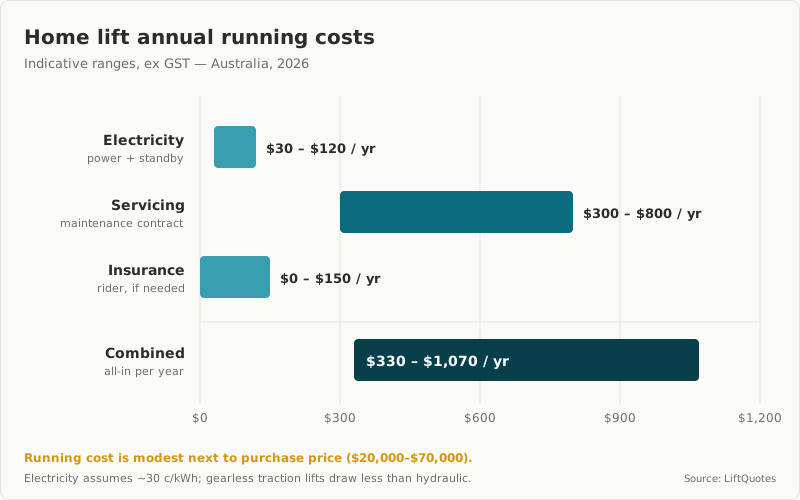
Electricity, servicing and insurance for a residential lift add up to roughly $330 to $1,070 a year — modest next to the purchase price.
A home lift in Australia costs roughly $330 to $1,070 a year to run, once you add electricity, an annual service and any insurance adjustment. That is the all-in figure most residential owners should plan for — a few dollars a week, not the recurring expense many buyers fear.
The range is wide because two of the three costs vary with your choices. Electricity depends on the lift type and how often you use it. Servicing depends on whether you take a basic or comprehensive contract. Insurance is often nil, because many home lifts are already covered under an existing home and contents policy. This page breaks down each component with indicative 2026 figures, then shows why a gearless traction lift is cheaper to run than a hydraulic one.
Indicative annual running costs for a typical two- or three-stop residential home lift, ex GST. Figures assume normal household use and were last checked in July 2026.
| Scenario | Cost range (AUD, ex GST) | Notes |
|---|---|---|
| Electricity (typical household use) | $30–$120 | Assumes roughly 0.2–0.5 kWh per trip plus low standby draw, priced at an indicative 30 c/kWh (Australian Energy Regulator retail data, 2026). Gearless traction lifts sit at the lower end. |
| Annual servicing (residential contract) | $300–$800 | Supplier-stated pricing for a residential maintenance visit or contract. Comprehensive cover (parts included) sits at the higher end; a single annual service is lower. LiftQuotes research, July 2026. |
| Insurance (rider, only if required) | $0–$150 | Many home lifts fall under an existing home and contents policy at no extra cost. Some insurers apply a small premium adjustment or require the lift to be noted. Confirm with your insurer against the policy PDS. |
| Combined annual running cost | $330–$1,070 | Sum of electricity, servicing and any insurance adjustment. Excludes one-off repairs outside a contract. |
Ranges combine supplier-stated servicing prices, published residential electricity tariffs, and general insurer guidance. They are indicative for a standard residential lift in normal household use and exclude ad-hoc repairs, modernisation, and building works. Verify servicing quotes and insurance terms for your specific lift.
Last checked: 6 July 2026
Four things move a home lift from the bottom of the running-cost range to the top.
Lift type — hydraulic or traction
A hydraulic lift runs a pump and motor to raise the car, which draws more power and heats hydraulic fluid. A gearless traction or screw-drive lift uses a counterweighted or self-contained motor and typically consumes less electricity per trip. Over a year the difference is small in dollars, but it is real.
How often the lift is used
Electricity scales with trips. A lift that moves a few times a day in a two-person household barely registers on the power bill. A busy multi-generational home with frequent daily use sits higher, though still modest — a home lift lifts a light car short distances, unlike a commercial lift.
Standby power draw
A home lift uses a small amount of power around the clock to keep controls, lighting, the emergency phone and battery backup ready. Standby is usually a low, steady draw of tens of watts, but across a full year it can be a meaningful share of the electricity figure — particularly for a lightly used lift.
Servicing contract type
A single annual service is the cheapest option but leaves parts and callouts billed separately. A comprehensive residential contract costs more each year but folds parts, labour and breakdown response into one predictable fee. For an older lift, comprehensive cover usually works out cheaper overall.
Lift companies in Australia
Browse profiles, compare service areas, and check reviews.

Lift Shop
★ 5.0 (1551 reviews)
Australia's largest dedicated home lift specialist since 1996. 10,000+ installations. Exclusive Italian-crafted lifts with industry-leading 8-year warranty.
View profile →

Compact Home Lifts
NDIS★ 5.0 (465 reviews)
Melbourne branch of Compact Home Lifts. Compact residential lift specialist providing maintenance and repair services across Victoria.
View profile →

Next Level Elevators
★ 5.0 (454 reviews)
Award-winning provider of premium Italian-designed all-electric home elevators. Certified Eltec Partner. Showrooms in Melbourne, Sydney, and Brisbane.
View profile →

Shotton Lifts
NDIS★ 5.0 (9 reviews)
Family-owned Australian lift manufacturer since 1977. 80+ staff. Design, engineer, manufacture, install and service from Dandenong South VIC. NDIS registered.
View profile →

LiftFit Australia
NDIS★ 5.0 (8 reviews)
Victoria-based NDIS registered lift provider, est. 2011. Partners with Cibes, Savaria, and Kalea. Residential, commercial, and platform lifts.
View profile →

Easy Living Home Elevators
★ 5.0 (7 reviews)
Australia's #1 home elevator supplier since 1998. 100% Australian-owned. 11,000+ elevators in service across 6 states.
View profile →
LiftQuotes is a comparison platform. Companies shown are filtered by relevance to this page. Listing does not imply endorsement. LiftQuotes may receive a referral fee when you request quotes.
What does it cost to run a home lift?
Budget for roughly $330 to $1,070 a year, all-in. That covers the three ongoing costs of owning a residential lift: the electricity it draws, an annual service, and any adjustment to your insurance. For most households the real figure lands in the middle of that range — around $500 to $700 a year — because electricity is genuinely cheap and insurance is often already covered.
That is running cost, not purchase price. If you are still weighing up the upfront investment, the home lift cost guide covers equipment, shaft and building works separately. The point of this page is the number that matters after installation: what the lift adds to your bills each year.
Electricity: what a home lift adds to your power bill
Very little. A residential home lift lifts a light car a short distance a handful of times a day, so the energy per trip is small — in the order of 0.2 to 0.5 kWh, comparable to running a kettle for a few minutes. At an indicative 2026 retail price of around 30 cents per kWh (Australian Energy Regulator retail data), typical household use works out to roughly $30 to $120 a year.
The figure that surprises people is standby. A home lift keeps its controls, cabin lighting, emergency phone and battery backup live around the clock, drawing a small, steady load of tens of watts. For a lightly used lift, standby can be a larger share of the annual electricity cost than the trips themselves. It is still a low number — but it is why a lift you rarely use does not cost nothing to run.
Most home lifts run on a standard single-phase household supply, so there is no special connection or tariff to budget for. If a supplier quotes you three-phase power, ask why — it points to a heavier hydraulic unit with higher running costs.
Annual servicing and maintenance
Servicing is the largest running cost, and the one you control. A single annual service for a residential home lift is indicatively $300 to $500, with a comprehensive contract that bundles parts, labour and breakdown callouts running to around $800 a year (supplier-stated pricing, LiftQuotes research, July 2026).
A yearly service is not optional. It keeps the safety systems — door interlocks, overspeed protection, the emergency phone and battery backup — working, and it is usually a condition of the manufacturer warranty. Skipping it to save a few hundred dollars risks a far larger repair bill and voids cover. Our lift maintenance cost guide breaks down what comprehensive and non-comprehensive contracts include across residential, strata and commercial lifts.
For a newer lift, a basic annual service is usually enough. For a lift past its first decade, a comprehensive contract tends to be cheaper overall once you factor in the parts that start to wear.
Insurance: is a home lift covered?
Often, yes — at no extra cost. A permanently installed home lift is generally treated as part of the building fabric, which means it usually falls under an existing home and contents policy the same way a fixed kitchen or bathroom does. In that case the running cost is nil.
The caveats are worth checking. Some insurers want the lift noted on the policy, some apply a small premium adjustment (indicatively up to $150 a year), and a few exclude mechanical breakdown, which your maintenance contract covers instead. Read the product disclosure statement or call your insurer, and confirm the lift is captured in your building sum insured — a home lift adds replacement value that an old policy may not reflect.
Hydraulic vs traction: which is cheaper to run?
A gearless traction or screw-drive lift is cheaper to run than a hydraulic one. A hydraulic lift drives a pump to push fluid and raise the car, drawing more power on the way up and generating heat in the hydraulic fluid. A traction lift uses a counterweight so the motor moves far less dead weight, and some models add regenerative drives that feed energy back on the way down.
In annual dollars the gap is modest — both are cheap to run — but traction wins on energy, noise and long-run maintenance. If running cost and efficiency are priorities, the hydraulic versus electric lift comparison sets out the trade-offs against upfront price, pit depth and load capacity so you can weigh the whole picture, not just the power bill.
What this means for your budget
Running a home lift is not a major ongoing expense. As of mid-2026, plan for around $330 to $1,070 a year all-in, with servicing the biggest and most controllable line. Against a purchase price of $20,000 to $70,000, the yearly running cost is a rounding error — the decision that matters is the home lift itself and the contract you put behind it.
Your lift type, usage and contract will shift the figure, which is exactly why comparing suppliers pays off. Get free quotes from vetted Australian lift companies to compare both the purchase price and the ongoing servicing cost before you commit.
How we research these costs
Running-cost figures on this page are indicative ranges for a standard two- or three-stop residential home lift in normal household use, ex GST. Electricity estimates combine typical per-trip energy draw (0.2–0.5 kWh) and standby load with an indicative residential retail price of around 30 c/kWh drawn from Australian Energy Regulator retail data for 2026. Servicing figures are supplier-stated prices for residential maintenance visits and contracts collated by LiftQuotes. Insurance guidance reflects general home and contents treatment of fixed building improvements — confirm your position against your insurer's product disclosure statement.
Sources: Australian Energy Regulator residential electricity retail data (2026); supplier-stated servicing prices collated by LiftQuotes; general home and contents insurance guidance. Figures exclude one-off repairs, modernisation and building works.
Last reviewed
6 July 2026
Next review due
6 January 2027
Get quotes tailored to your project
Tell us about your home and receive personalised pricing from local installers.
What are you looking for today?
I need a lift installed
I have a lift that needs attention
A home lift in Australia costs roughly $330 to $1,070 a year to run, once you add electricity, an annual service and any insurance adjustment. That is the all-in figure most residential owners should plan for — a few dollars a week, not the recurring expense many buyers fear.
The range is wide because two of the three costs vary with your choices. Electricity depends on the lift type and how often you use it. Servicing depends on whether you take a basic or comprehensive contract. Insurance is often nil, because many home lifts are already covered under an existing home and contents policy. This page breaks down each component with indicative 2026 figures, then shows why a gearless traction lift is cheaper to run than a hydraulic one.
Indicative annual running costs for a typical two- or three-stop residential home lift, ex GST. Figures assume normal household use and were last checked in July 2026.
| Scenario | Cost range (AUD, ex GST) | Notes |
|---|---|---|
| Electricity (typical household use) | $30–$120 | Assumes roughly 0.2–0.5 kWh per trip plus low standby draw, priced at an indicative 30 c/kWh (Australian Energy Regulator retail data, 2026). Gearless traction lifts sit at the lower end. |
| Annual servicing (residential contract) | $300–$800 | Supplier-stated pricing for a residential maintenance visit or contract. Comprehensive cover (parts included) sits at the higher end; a single annual service is lower. LiftQuotes research, July 2026. |
| Insurance (rider, only if required) | $0–$150 | Many home lifts fall under an existing home and contents policy at no extra cost. Some insurers apply a small premium adjustment or require the lift to be noted. Confirm with your insurer against the policy PDS. |
| Combined annual running cost | $330–$1,070 | Sum of electricity, servicing and any insurance adjustment. Excludes one-off repairs outside a contract. |
Ranges combine supplier-stated servicing prices, published residential electricity tariffs, and general insurer guidance. They are indicative for a standard residential lift in normal household use and exclude ad-hoc repairs, modernisation, and building works. Verify servicing quotes and insurance terms for your specific lift.
Last checked: 6 July 2026
Four things move a home lift from the bottom of the running-cost range to the top.
Lift type — hydraulic or traction
A hydraulic lift runs a pump and motor to raise the car, which draws more power and heats hydraulic fluid. A gearless traction or screw-drive lift uses a counterweighted or self-contained motor and typically consumes less electricity per trip. Over a year the difference is small in dollars, but it is real.
How often the lift is used
Electricity scales with trips. A lift that moves a few times a day in a two-person household barely registers on the power bill. A busy multi-generational home with frequent daily use sits higher, though still modest — a home lift lifts a light car short distances, unlike a commercial lift.
Standby power draw
A home lift uses a small amount of power around the clock to keep controls, lighting, the emergency phone and battery backup ready. Standby is usually a low, steady draw of tens of watts, but across a full year it can be a meaningful share of the electricity figure — particularly for a lightly used lift.
Servicing contract type
A single annual service is the cheapest option but leaves parts and callouts billed separately. A comprehensive residential contract costs more each year but folds parts, labour and breakdown response into one predictable fee. For an older lift, comprehensive cover usually works out cheaper overall.
Lift companies in Australia
Browse profiles, compare service areas, and check reviews.
Lift Shop
★ 5.0 (1551 reviews)
Australia's largest dedicated home lift specialist since 1996. 10,000+ installations. Exclusive Italian-crafted lifts with industry-leading 8-year warranty.
View profile →
Compact Home Lifts
NDIS★ 5.0 (465 reviews)
Melbourne branch of Compact Home Lifts. Compact residential lift specialist providing maintenance and repair services across Victoria.
View profile →
Next Level Elevators
★ 5.0 (454 reviews)
Award-winning provider of premium Italian-designed all-electric home elevators. Certified Eltec Partner. Showrooms in Melbourne, Sydney, and Brisbane.
View profile →
Shotton Lifts
NDIS★ 5.0 (9 reviews)
Family-owned Australian lift manufacturer since 1977. 80+ staff. Design, engineer, manufacture, install and service from Dandenong South VIC. NDIS registered.
View profile →
LiftFit Australia
NDIS★ 5.0 (8 reviews)
Victoria-based NDIS registered lift provider, est. 2011. Partners with Cibes, Savaria, and Kalea. Residential, commercial, and platform lifts.
View profile →
Easy Living Home Elevators
★ 5.0 (7 reviews)
Australia's #1 home elevator supplier since 1998. 100% Australian-owned. 11,000+ elevators in service across 6 states.
View profile →
LiftQuotes is a comparison platform. Companies shown are filtered by relevance to this page. Listing does not imply endorsement. LiftQuotes may receive a referral fee when you request quotes.
What does it cost to run a home lift?
Budget for roughly $330 to $1,070 a year, all-in. That covers the three ongoing costs of owning a residential lift: the electricity it draws, an annual service, and any adjustment to your insurance. For most households the real figure lands in the middle of that range — around $500 to $700 a year — because electricity is genuinely cheap and insurance is often already covered.
That is running cost, not purchase price. If you are still weighing up the upfront investment, the home lift cost guide covers equipment, shaft and building works separately. The point of this page is the number that matters after installation: what the lift adds to your bills each year.
Electricity: what a home lift adds to your power bill
Very little. A residential home lift lifts a light car a short distance a handful of times a day, so the energy per trip is small — in the order of 0.2 to 0.5 kWh, comparable to running a kettle for a few minutes. At an indicative 2026 retail price of around 30 cents per kWh (Australian Energy Regulator retail data), typical household use works out to roughly $30 to $120 a year.
The figure that surprises people is standby. A home lift keeps its controls, cabin lighting, emergency phone and battery backup live around the clock, drawing a small, steady load of tens of watts. For a lightly used lift, standby can be a larger share of the annual electricity cost than the trips themselves. It is still a low number — but it is why a lift you rarely use does not cost nothing to run.
Most home lifts run on a standard single-phase household supply, so there is no special connection or tariff to budget for. If a supplier quotes you three-phase power, ask why — it points to a heavier hydraulic unit with higher running costs.
Annual servicing and maintenance
Servicing is the largest running cost, and the one you control. A single annual service for a residential home lift is indicatively $300 to $500, with a comprehensive contract that bundles parts, labour and breakdown callouts running to around $800 a year (supplier-stated pricing, LiftQuotes research, July 2026).
A yearly service is not optional. It keeps the safety systems — door interlocks, overspeed protection, the emergency phone and battery backup — working, and it is usually a condition of the manufacturer warranty. Skipping it to save a few hundred dollars risks a far larger repair bill and voids cover. Our lift maintenance cost guide breaks down what comprehensive and non-comprehensive contracts include across residential, strata and commercial lifts.
For a newer lift, a basic annual service is usually enough. For a lift past its first decade, a comprehensive contract tends to be cheaper overall once you factor in the parts that start to wear.
Insurance: is a home lift covered?
Often, yes — at no extra cost. A permanently installed home lift is generally treated as part of the building fabric, which means it usually falls under an existing home and contents policy the same way a fixed kitchen or bathroom does. In that case the running cost is nil.
The caveats are worth checking. Some insurers want the lift noted on the policy, some apply a small premium adjustment (indicatively up to $150 a year), and a few exclude mechanical breakdown, which your maintenance contract covers instead. Read the product disclosure statement or call your insurer, and confirm the lift is captured in your building sum insured — a home lift adds replacement value that an old policy may not reflect.
Hydraulic vs traction: which is cheaper to run?
A gearless traction or screw-drive lift is cheaper to run than a hydraulic one. A hydraulic lift drives a pump to push fluid and raise the car, drawing more power on the way up and generating heat in the hydraulic fluid. A traction lift uses a counterweight so the motor moves far less dead weight, and some models add regenerative drives that feed energy back on the way down.
In annual dollars the gap is modest — both are cheap to run — but traction wins on energy, noise and long-run maintenance. If running cost and efficiency are priorities, the hydraulic versus electric lift comparison sets out the trade-offs against upfront price, pit depth and load capacity so you can weigh the whole picture, not just the power bill.
What this means for your budget
Running a home lift is not a major ongoing expense. As of mid-2026, plan for around $330 to $1,070 a year all-in, with servicing the biggest and most controllable line. Against a purchase price of $20,000 to $70,000, the yearly running cost is a rounding error — the decision that matters is the home lift itself and the contract you put behind it.
Your lift type, usage and contract will shift the figure, which is exactly why comparing suppliers pays off. Get free quotes from vetted Australian lift companies to compare both the purchase price and the ongoing servicing cost before you commit.
How we research these costs
Running-cost figures on this page are indicative ranges for a standard two- or three-stop residential home lift in normal household use, ex GST. Electricity estimates combine typical per-trip energy draw (0.2–0.5 kWh) and standby load with an indicative residential retail price of around 30 c/kWh drawn from Australian Energy Regulator retail data for 2026. Servicing figures are supplier-stated prices for residential maintenance visits and contracts collated by LiftQuotes. Insurance guidance reflects general home and contents treatment of fixed building improvements — confirm your position against your insurer's product disclosure statement.
Sources: Australian Energy Regulator residential electricity retail data (2026); supplier-stated servicing prices collated by LiftQuotes; general home and contents insurance guidance. Figures exclude one-off repairs, modernisation and building works.
Last reviewed
6 July 2026
Next review due
6 January 2027
Get quotes tailored to your project
Tell us about your home and receive personalised pricing from local installers.
What are you looking for today?
I need a lift installed
I have a lift that needs attention
Common questions about home lift running costs
As of mid-2026, plan for roughly $330 to $1,070 a year all-in, covering electricity, an annual service and any insurance adjustment. Most households land in the middle of that range — around $500 to $700 a year — because electricity is cheap and insurance is often already covered under an existing home and contents policy.
Related guides
Guide
Our Editorial Methodology: How LiftQuotes Researches Content
How LiftQuotes researches, sources and reviews every lift guide and cost page: the standards we cite, our linked-source rule for cost data, and how often we update.
Guide
Lift Compliance Checklist for Facility Managers (Australia)
A facility manager's lift compliance checklist for Australia: plant registration, inspection, log books, 4G VoLTE emergency phones and DDA access duties.
Comparison
Stairlift vs Platform Lift: Which Access Solution Fits?
A stairlift carries a seated user along the stairs from about $3,000; a platform lift raises a wheelchair vertically from about $15,000. Compare cost, access and fit.
Location
Lift Companies in Melbourne: Compare Local Installers
Compare lift companies in Melbourne for home, platform and commercial lifts. WorkSafe Victoria compliance, local installer coverage and indicative VIC costs.
Compare home lift quotes
Get free, no-obligation quotes from vetted Australian lift companies — and compare running costs and servicing, not just the purchase price.
Join 1,000+ Australians who've requested quotes through LiftQuotes
Get free quotes