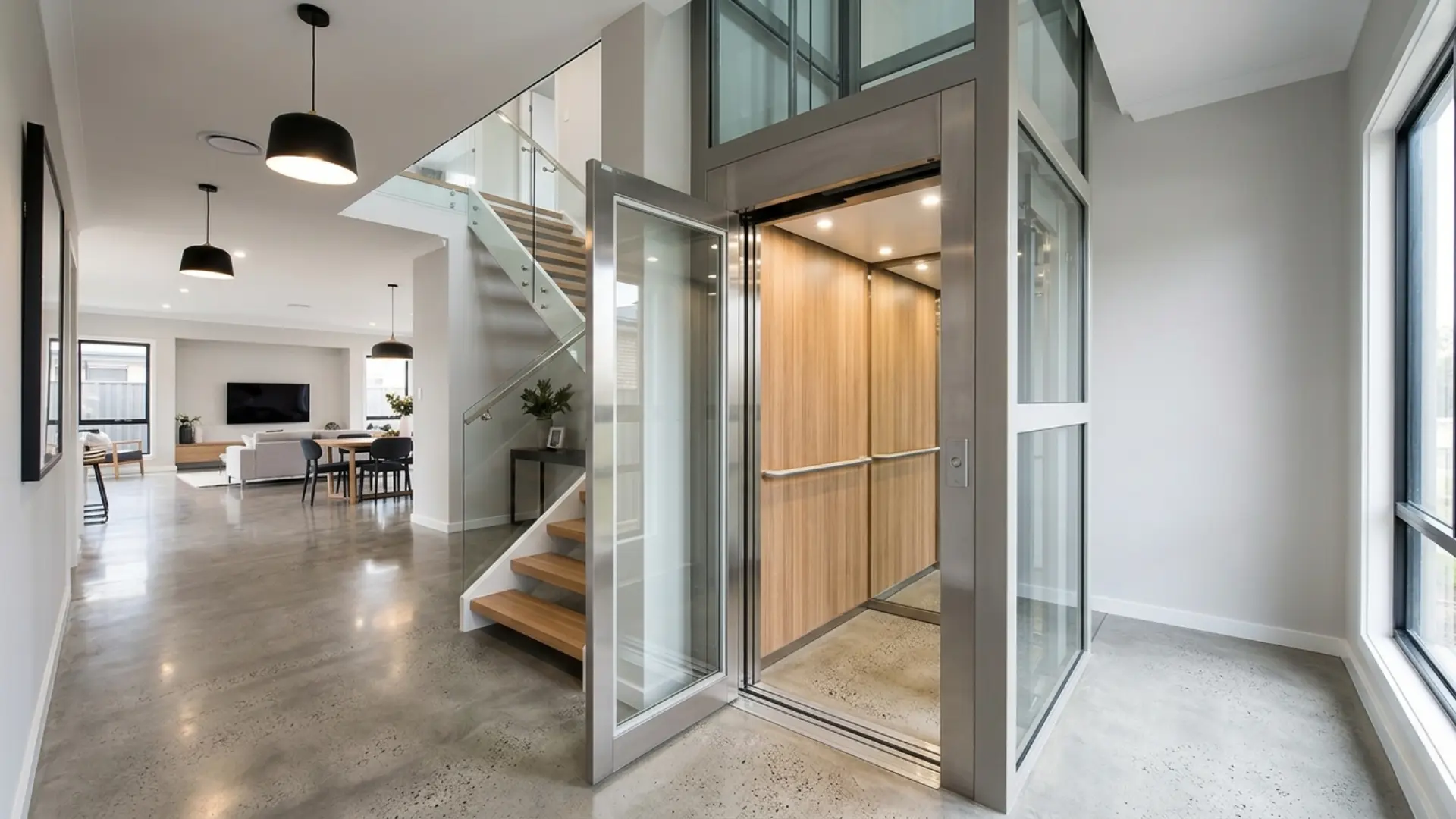
Home Lifts in Australia
A home lift typically costs $20,000–$70,000 installed, depending on lift type, stops served, and building works. Here is what drives that range — and how to narrow it down for your home.
A home lift typically costs between $20,000 and $70,000 installed in Australia, with the range driven by lift type, number of stops, and the extent of building works your home requires. A compact through-floor lift in a new build sits at the lower end; a hydraulic lift retrofitted into an existing home — requiring a new shaft, pit, and structural modifications — sits at the higher end.
Four main types are available to Australian homeowners: hydraulic lifts, traction or machine-room-less (MRL) lifts, pneumatic (vacuum) lifts, and through-floor compact lifts. Each has different space requirements, travel limits, and ongoing maintenance costs. The right choice depends on your home's layout, the floors it needs to serve, and your structural starting point.
Most buyers are either planning ahead — ageing in place, a renovation, or a new build — or responding to a change in mobility for themselves or a family member. Both situations raise the same core questions: will it fit, what will it cost all-up, and what are the ongoing obligations?
Home lifts in Australia are governed by AS/NZS 1735.18:2002 — the Australian Standard for automatically controlled passenger lifts in private residences. In WHS jurisdictions (every state and territory except Victoria, which operates under its own OHS legislation), home lifts are also registrable plant under Schedule 5 of the Model WHS Regulations, requiring both design registration and item registration with your state regulator.
Choosing your lift type and understanding total cost
Choosing the right home lift type
Four lift types are available to Australian homeowners, each suited to different homes and situations.
Hydraulic lifts use a fluid-driven piston, require a machine room and pit, and suit multi-storey retrofits where space allows. Traction and MRL lifts use steel ropes and a counterweight with the drive housed in the shaft — no separate machine room needed. They are the most common choice in new Australian residential builds. Pneumatic (vacuum) lifts need no shaft or pit, making them the easiest to retrofit into existing homes — but car size and travel height are limited. Through-floor compact lifts have the smallest footprint and lowest entry cost, but are limited to two stops.
If you are weighing a home lift against a wheelchair access solution, see home lift vs platform lift. For short-rise accessibility applications, a platform lift may be more appropriate.
What a home lift costs
A home lift typically costs $20,000–$70,000 installed (indicative; ex GST; last checked March 2026). The equipment price is only part of the project — building works (shaft construction, concrete pit, floor reinforcement, electrical supply) are typically quoted separately and can add $5,000–$20,000 or more in a retrofit.
For a full breakdown by lift type and scenario, see home lift costs. For cost comparisons across all lift categories — including platform lifts, commercial lifts, and stairlifts — see lift costs in Australia.
Planning your installation
If you are at the planning stage of a new build or renovation, raise shaft placement with your builder before structural drawings are finalised. Designing the shaft and pit into the plans from the start can save $5,000–$20,000 compared to retrofitting later.
Key dimensions to have ready before requesting quotes:
- Hydraulic and traction lifts: shaft approximately 1.1m × 1.4m plus structural clearances, pit 150–300mm
- Pneumatic lifts: floor space for cylinder diameter (900mm–1,250mm), no pit
- Through-floor compact lifts: floor opening plus headroom clearance above upper landing
Find installers in your city
For location-specific guidance — including state regulations, housing stock considerations, and local installer options — see home lifts Sydney, home lifts Melbourne, and home lifts Brisbane.
Home Lifts companies in Australia
Browse profiles, compare service areas, and check reviews.

Shotton Lifts
NDIS★ 5.0 (9 reviews)
Family-owned Australian lift manufacturer since 1977. 80+ staff. Design, engineer, manufacture, install and service from Dandenong South VIC. NDIS registered.
View profile →

LiftFit Australia
NDIS★ 5.0 (8 reviews)
Victoria-based NDIS registered lift provider, est. 2011. Partners with Cibes, Savaria, and Kalea. Residential, commercial, and platform lifts.
View profile →

Easy Living Home Elevators
★ 5.0 (7 reviews)
Australia's #1 home elevator supplier since 1998. 100% Australian-owned. 11,000+ elevators in service across 6 states.
View profile →

EcoLift
★ 5.0 (3 reviews)
Family-owned Sydney lift company. European-parts-based installations for reliability and cost-efficient servicing.
View profile →

Sunshine Coast Elevators
★ 5.0 (3 reviews)
Sunshine Coast QLD specialist in bespoke Italian-made residential elevators and disability access lifts. 38+ years industry experience.
View profile →

EMS Elevator Group
★ 5.0 (2 reviews)
Sydney-based bespoke elevator company specialising in installation, modernisation, and maintenance. 24/7 support.
View profile →
LiftQuotes is a comparison platform. Companies shown are filtered by relevance to this page. Listing does not imply endorsement. LiftQuotes may receive a referral fee when you request quotes.
Get quotes from local installers
Your home's layout and access needs will determine the right product. Get quotes to find out.
What are you looking for today?
I need a lift installed
I have a lift that needs attention
A home lift typically costs between $20,000 and $70,000 installed in Australia, with the range driven by lift type, number of stops, and the extent of building works your home requires. A compact through-floor lift in a new build sits at the lower end; a hydraulic lift retrofitted into an existing home — requiring a new shaft, pit, and structural modifications — sits at the higher end.
Four main types are available to Australian homeowners: hydraulic lifts, traction or machine-room-less (MRL) lifts, pneumatic (vacuum) lifts, and through-floor compact lifts. Each has different space requirements, travel limits, and ongoing maintenance costs. The right choice depends on your home's layout, the floors it needs to serve, and your structural starting point.
Most buyers are either planning ahead — ageing in place, a renovation, or a new build — or responding to a change in mobility for themselves or a family member. Both situations raise the same core questions: will it fit, what will it cost all-up, and what are the ongoing obligations?
Home lifts in Australia are governed by AS/NZS 1735.18:2002 — the Australian Standard for automatically controlled passenger lifts in private residences. In WHS jurisdictions (every state and territory except Victoria, which operates under its own OHS legislation), home lifts are also registrable plant under Schedule 5 of the Model WHS Regulations, requiring both design registration and item registration with your state regulator.
Choosing your lift type and understanding total cost
Choosing the right home lift type
Four lift types are available to Australian homeowners, each suited to different homes and situations.
Hydraulic lifts use a fluid-driven piston, require a machine room and pit, and suit multi-storey retrofits where space allows. Traction and MRL lifts use steel ropes and a counterweight with the drive housed in the shaft — no separate machine room needed. They are the most common choice in new Australian residential builds. Pneumatic (vacuum) lifts need no shaft or pit, making them the easiest to retrofit into existing homes — but car size and travel height are limited. Through-floor compact lifts have the smallest footprint and lowest entry cost, but are limited to two stops.
If you are weighing a home lift against a wheelchair access solution, see home lift vs platform lift. For short-rise accessibility applications, a platform lift may be more appropriate.
What a home lift costs
A home lift typically costs $20,000–$70,000 installed (indicative; ex GST; last checked March 2026). The equipment price is only part of the project — building works (shaft construction, concrete pit, floor reinforcement, electrical supply) are typically quoted separately and can add $5,000–$20,000 or more in a retrofit.
For a full breakdown by lift type and scenario, see home lift costs. For cost comparisons across all lift categories — including platform lifts, commercial lifts, and stairlifts — see lift costs in Australia.
Planning your installation
If you are at the planning stage of a new build or renovation, raise shaft placement with your builder before structural drawings are finalised. Designing the shaft and pit into the plans from the start can save $5,000–$20,000 compared to retrofitting later.
Key dimensions to have ready before requesting quotes:
- Hydraulic and traction lifts: shaft approximately 1.1m × 1.4m plus structural clearances, pit 150–300mm
- Pneumatic lifts: floor space for cylinder diameter (900mm–1,250mm), no pit
- Through-floor compact lifts: floor opening plus headroom clearance above upper landing
Find installers in your city
For location-specific guidance — including state regulations, housing stock considerations, and local installer options — see home lifts Sydney, home lifts Melbourne, and home lifts Brisbane.
Home Lifts companies in Australia
Browse profiles, compare service areas, and check reviews.
Shotton Lifts
NDIS★ 5.0 (9 reviews)
Family-owned Australian lift manufacturer since 1977. 80+ staff. Design, engineer, manufacture, install and service from Dandenong South VIC. NDIS registered.
View profile →
LiftFit Australia
NDIS★ 5.0 (8 reviews)
Victoria-based NDIS registered lift provider, est. 2011. Partners with Cibes, Savaria, and Kalea. Residential, commercial, and platform lifts.
View profile →
Easy Living Home Elevators
★ 5.0 (7 reviews)
Australia's #1 home elevator supplier since 1998. 100% Australian-owned. 11,000+ elevators in service across 6 states.
View profile →
EcoLift
★ 5.0 (3 reviews)
Family-owned Sydney lift company. European-parts-based installations for reliability and cost-efficient servicing.
View profile →
Sunshine Coast Elevators
★ 5.0 (3 reviews)
Sunshine Coast QLD specialist in bespoke Italian-made residential elevators and disability access lifts. 38+ years industry experience.
View profile →
EMS Elevator Group
★ 5.0 (2 reviews)
Sydney-based bespoke elevator company specialising in installation, modernisation, and maintenance. 24/7 support.
View profile →
LiftQuotes is a comparison platform. Companies shown are filtered by relevance to this page. Listing does not imply endorsement. LiftQuotes may receive a referral fee when you request quotes.
Get quotes from local installers
Your home's layout and access needs will determine the right product. Get quotes to find out.
What are you looking for today?
I need a lift installed
I have a lift that needs attention
Types, costs and compliance at a glance
Lift types for residential use
Hydraulic, traction/MRL, pneumatic, and through-floor compact lifts each suit different home configurations. Hydraulic lifts require a machine room and a pit below the lowest landing. Pneumatic lifts need neither. Through-floor compact lifts have the smallest footprint but are limited to two stops. The right type depends on your home's layout and structural constraints before cost enters the conversation.
What installed cost actually includes
Quoted prices typically cover the lift equipment and installation labour. Building works — shaft construction, concrete pit, structural floor modifications, and electrical supply — are often quoted separately or excluded from supplier starting prices. This is the primary source of budget surprises for homeowners. Always ask installers to itemise building works separately from the equipment cost.
Compliance and registration
Home lifts are governed by AS/NZS 1735.18:2002, the Australian Standard for passenger lifts in private residences. As registrable plant under Schedule 5 of the Model WHS Regulations, each installation requires item registration with your state WHS regulator. Victoria operates under its own OHS Regulations rather than model WHS laws — registration requirements differ in process but not in principle.
Ongoing maintenance costs
Annual servicing for a home lift typically runs $500–$1,500 ex GST, based on indicative ranges from Australian cost guides (last checked March 2026). This covers routine inspection, adjustments, and lubrication. Repairs and emergency call-outs are charged separately. Review service contract scope carefully before signing — coverage varies significantly between providers.
Frequently asked questions about home lifts
A home lift in Australia typically costs between $20,000 and $70,000 installed, based on indicative ranges from available market data (hipages national cost guide; last checked March 2026). The range is wide because a compact through-floor lift in a new build has very different cost drivers to a hydraulic lift retrofitted into an existing home. Supplier-stated entry prices suggest a floor of around $31,000 for compact models, though these figures typically exclude building works — shaft construction, a concrete pit, structural modifications, and electrical supply — which are often the biggest variable in the total project cost.
Related guides
Location
Commercial Lifts Melbourne: Costs, Compliance & Installers
Commercial lift costs, Victorian OHS compliance and the Melbourne installer market — indicative prices, WorkSafe Victoria rules and NCC requirements for VIC projects.
Location
Commercial Lifts Sydney: Costs, Compliance & Installers
Commercial lift costs, NSW compliance and the Sydney installer market — indicative prices, SafeWork NSW rules and NCC requirements for CBD and metro projects.
Guide
What Size Lift Do I Need for a Wheelchair? (Australia)
A home lift for a wheelchair needs roughly 1,100 x 1,400 mm inside and a 900 mm clear door. See minimum sizes for a wheelchair, a carer, and turning space.
Guide
Support at Home & Lift Funding: The 2026 Guide
Can Support at Home fund a home lift or stairlift? How aged care funding works, the OT assessment, means-tested contributions, and how it differs from the NDIS.
Get home lift quotes from local installers
Your home's layout, the number of stops required, and the building works involved will determine the real cost. Getting two or three quotes from local installers is the only reliable way to find out what your specific project will cost.
Join 1,000+ Australians who've requested quotes through LiftQuotes
Get free quotes