Chain Drive vs Belt Drive Lifts
A belt drive lift runs quieter and needs no lubrication, which is why it has become standard on modern machine-room-less home lifts. A chain drive is robust and a little cheaper, but it can click as it runs and needs periodic oiling. This guide sets out the real difference for a home buyer.
Chain drive and belt drive describe how a lift is suspended and moved — the physical link between the motor and the cabin. A chain drive uses a toothed steel chain running over sprockets, much like a heavy-duty bicycle chain. A belt drive uses a flat polyurethane or steel-cord belt wrapped over a drive sheave. Both are proven and safe; the difference you actually feel is in noise, ride and how much upkeep the mechanism asks for.
For a home buyer the practical takeaway is simple. Belt drive is the quieter, lower-maintenance option and now dominates modern residential lifts, while chain drive remains common on goods lifts and some older or budget installations. This page compares the two the way a buyer would weigh them, so you can tell an installer which direction you are leaning before the first site visit.
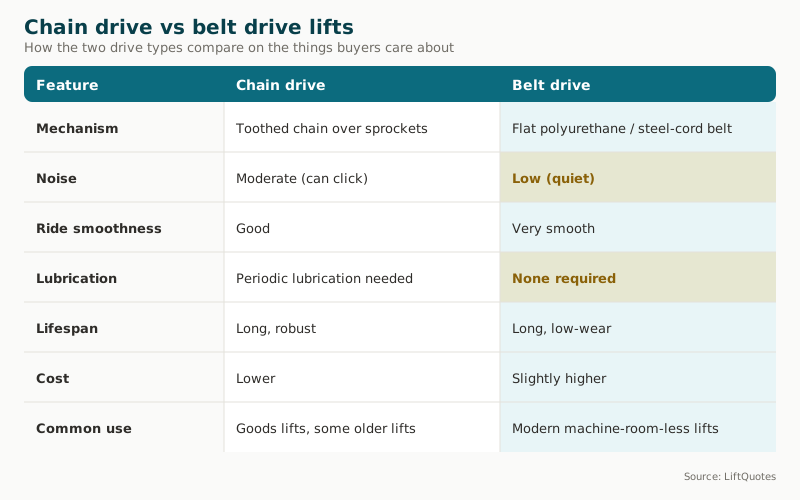
The two suspension types compared across the factors that actually shape a home lift decision. For most modern homes belt drive is the easier lift to live with; chain drive still earns its place on goods lifts and tighter budgets.
Swipe to compare →
| Factor | Chain drive | Belt drive |
|---|---|---|
| Best for | Goods lifts, budget or older installs | Modern quiet home lifts |
| Mechanism | Toothed steel chain over sprockets | Flat polyurethane or steel-cord belt |
| Noise | Moderate — can click under load | Low — runs quietly |
| Ride smoothness | Good | Very smooth |
| Lubrication | Periodic lubrication needed | None required |
| Expected lifespan | Long and robust | Long, with low wear |
| Typical cost | Lower | Slightly higher |
| Common use | Goods lifts, some older passenger lifts | Machine-room-less residential lifts |
Indicative positioning as of Q2 2026, based on LiftQuotes research and supplier-stated ranges for standard residential installations, ex GST. Suspension type is one factor among many — confirm the full specification and site suitability with an installer.
What chain drive and belt drive actually mean
Every traction-style lift needs a way to hang the cabin and move it up and down. That suspension does two jobs at once: it carries the weight of the car and its passengers, and it transfers the pull of the motor into travel. Chain drive and belt drive are two ways of doing exactly that.
A chain drive uses a toothed steel chain that runs over sprockets driven by the motor — the same principle as a bicycle chain, scaled up and engineered for years of loaded duty. It is strong, forgiving of dust and dirt, and cheap to make, which is why you still see it on goods lifts and on some older or budget passenger lifts.
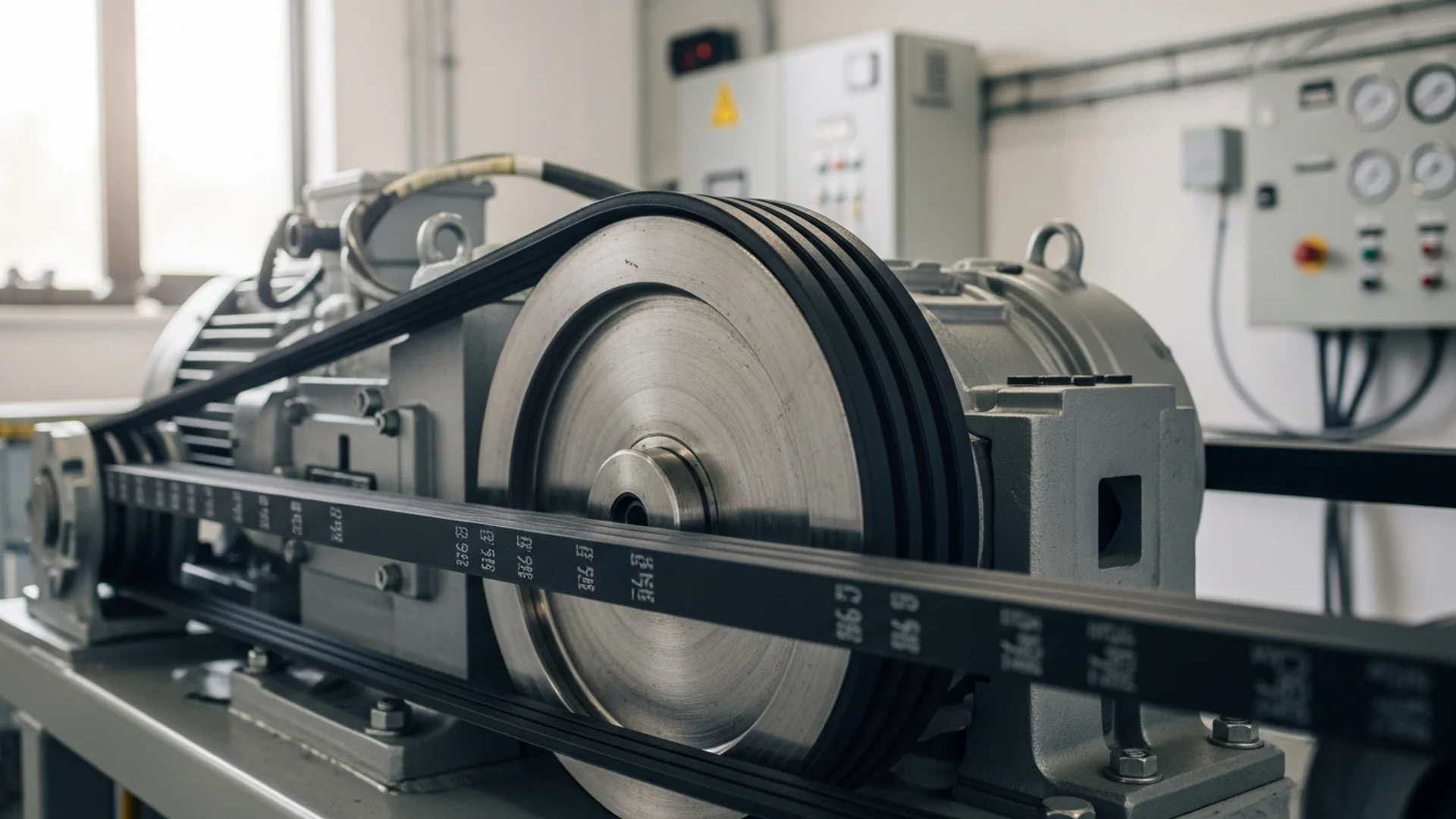
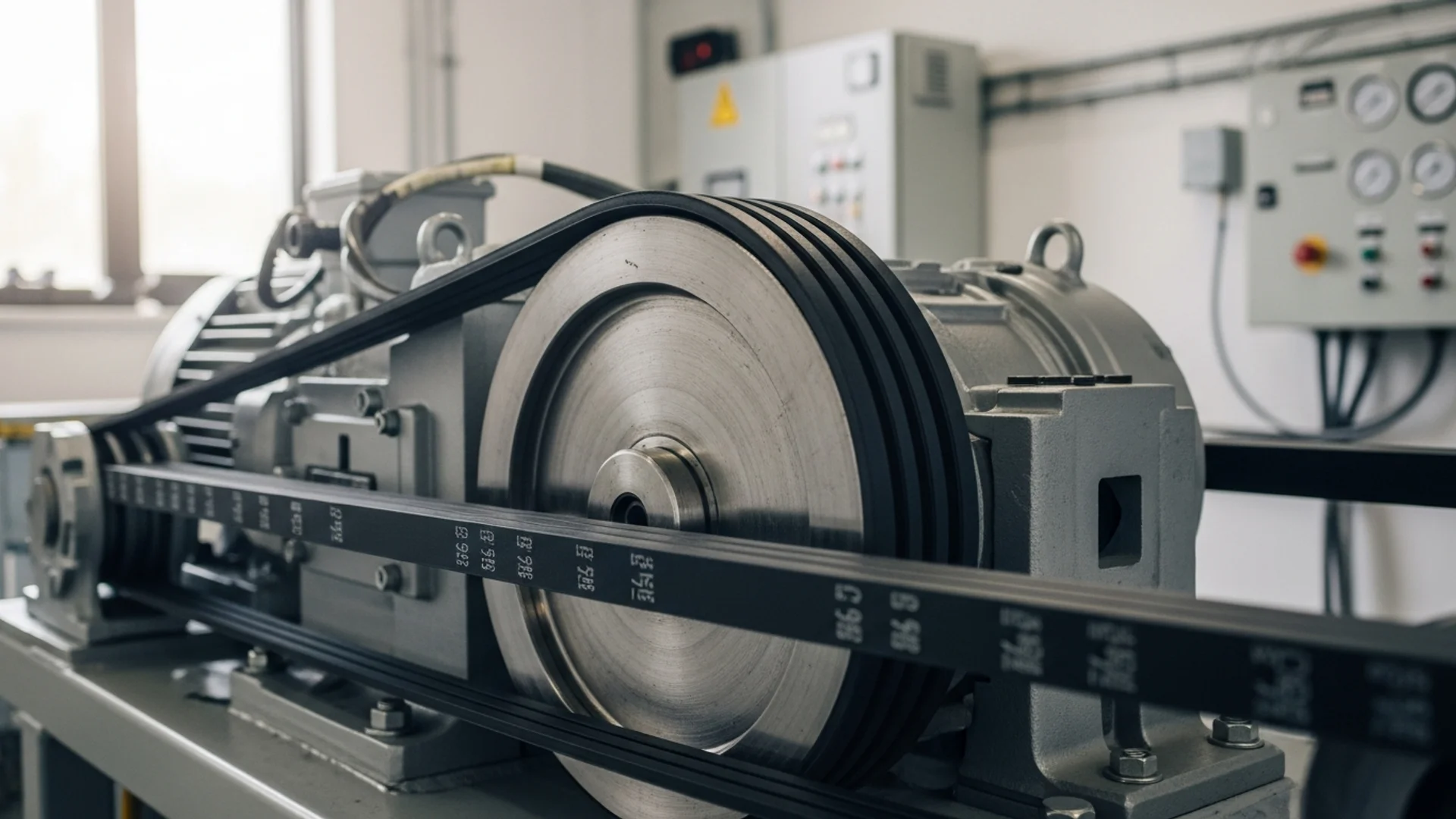
A belt drive replaces the chain with a flat belt, usually polyurethane with embedded steel cords, wrapped over a smooth drive sheave. The flat belt grips a wider surface, runs without metal-on-metal contact, and needs no oil. That combination is why belt drive has become the default suspension on modern home lifts, especially compact machine-room-less designs.
Noise and ride quality
This is where most home buyers notice the difference. A chain drive makes a low mechanical sound as the chain meshes with its sprockets, and under load it can produce a faint clicking or clatter that carries through the shaft. It is rarely loud, but in a quiet home it is audible.
A belt drive runs noticeably quieter. There is no chain meshing and no metal links slapping, so the lift moves with a soft hum rather than a mechanical rattle. The flat belt also delivers a very smooth ride, with gentle starts and stops, which is a large part of why belt-driven lifts feel more refined in a residential setting. If a near-silent lift beside bedrooms or living areas matters to you, belt drive is the clear pick.
Lubrication and maintenance
A chain needs periodic lubrication to run smoothly and to slow wear, so a chain drive lift carries a small but real upkeep task: the chain must be kept oiled and checked for stretch and tension over its life. Done on schedule it is straightforward, but it is one more item on the maintenance list, and a neglected chain gets noisier and wears faster.
A belt drive needs no lubrication at all. There is nothing to oil, and modern lift belts are engineered for low wear and long, predictable service, with the belt inspected and replaced on condition rather than constantly maintained. Whichever suspension your lift uses, it still needs regular servicing by a competent technician — our guide to lift maintenance covers what a good contract should include and how servicing keeps either drive type safe and quiet.
Lifespan and long-term ownership
Both suspension types last a long time when they are looked after. A well-maintained chain is robust and tolerant of tough conditions, which is exactly why goods and industrial lifts favour it. A lift belt is engineered for low wear and a long, even service life, and because it runs without the shock loading of a chain, it tends to age gently and predictably.
The honest position is that suspension type alone rarely decides how long a lift lasts — servicing, usage and overall build quality matter more. Suspension is one piece of a larger drive-system decision, and it often travels with the choice between a hydraulic vs electric lift or a screw drive vs hydraulic lift, so weigh it alongside those rather than in isolation.
Cost: what each really means for your budget
As a component, chain drive is generally the cheaper suspension, and it can shave a little off a lift's headline price — one reason it appears on budget and goods installations. Belt drive costs slightly more, but the premium is modest and buys you a quieter, lower-maintenance lift.
In practice the suspension type is a small line in the total. As of Q2 2026, the figure that moves a home lift budget most is the building works your home needs — the shaft, the pit and the structural changes — not whether the cabin hangs from a chain or a belt. For the full picture of what drives the installed figure up or down, see our home lift cost guide, and remember that both suspension types must be installed and maintained to AS/NZS 1735.18:2002, the Australian Standard for passenger lifts in private residences. Lifts are also registrable plant under the model Work Health and Safety framework — with Victoria the exception, operating under its own Occupational Health and Safety Act through WorkSafe Victoria — so confirm current requirements with your state regulator or installer.
Choose belt drive if, choose chain drive if
Choose a belt drive lift if you want the quietest, smoothest and lowest-maintenance option for a home — which describes most modern residential installations, and is why belt drive is now the standard on machine-room-less home lifts. Choose a chain drive lift if you are fitting a goods lift, working to a tighter budget, or matching an existing chain-driven system, and you can accept a little more noise and a periodic lubrication task.
For most Australian homes the answer is belt drive, but the suspension type should never be the whole decision. Get free quotes from home lift installers, and ask each one which drive system they would fit in your home and why — the right lift is the one specified for your floor plan, your shaft and the way you will use it.
Lift companies in Australia
Browse profiles, compare service areas, and check reviews.

Lift Shop
★ 5.0 (1551 reviews)
Australia's largest dedicated home lift specialist since 1996. 10,000+ installations. Exclusive Italian-crafted lifts with industry-leading 8-year warranty.
View profile →

Compact Home Lifts
NDIS★ 5.0 (465 reviews)
Melbourne branch of Compact Home Lifts. Compact residential lift specialist providing maintenance and repair services across Victoria.
View profile →

Next Level Elevators
★ 5.0 (454 reviews)
Award-winning provider of premium Italian-designed all-electric home elevators. Certified Eltec Partner. Showrooms in Melbourne, Sydney, and Brisbane.
View profile →

Shotton Lifts
NDIS★ 5.0 (9 reviews)
Family-owned Australian lift manufacturer since 1977. 80+ staff. Design, engineer, manufacture, install and service from Dandenong South VIC. NDIS registered.
View profile →

LiftFit Australia
NDIS★ 5.0 (8 reviews)
Victoria-based NDIS registered lift provider, est. 2011. Partners with Cibes, Savaria, and Kalea. Residential, commercial, and platform lifts.
View profile →

Easy Living Home Elevators
★ 5.0 (7 reviews)
Australia's #1 home elevator supplier since 1998. 100% Australian-owned. 11,000+ elevators in service across 6 states.
View profile →
LiftQuotes is a comparison platform. Companies shown are filtered by relevance to this page. Listing does not imply endorsement. LiftQuotes may receive a referral fee when you request quotes.
Still deciding? Get quotes for both options
Installers will assess your site and recommend the right specification.
What are you looking for today?
I need a lift installed
I have a lift that needs attention
The two suspension types compared across the factors that actually shape a home lift decision. For most modern homes belt drive is the easier lift to live with; chain drive still earns its place on goods lifts and tighter budgets.
Swipe to compare →
| Factor | Chain drive | Belt drive |
|---|---|---|
| Best for | Goods lifts, budget or older installs | Modern quiet home lifts |
| Mechanism | Toothed steel chain over sprockets | Flat polyurethane or steel-cord belt |
| Noise | Moderate — can click under load | Low — runs quietly |
| Ride smoothness | Good | Very smooth |
| Lubrication | Periodic lubrication needed | None required |
| Expected lifespan | Long and robust | Long, with low wear |
| Typical cost | Lower | Slightly higher |
| Common use | Goods lifts, some older passenger lifts | Machine-room-less residential lifts |
Indicative positioning as of Q2 2026, based on LiftQuotes research and supplier-stated ranges for standard residential installations, ex GST. Suspension type is one factor among many — confirm the full specification and site suitability with an installer.
What chain drive and belt drive actually mean
Every traction-style lift needs a way to hang the cabin and move it up and down. That suspension does two jobs at once: it carries the weight of the car and its passengers, and it transfers the pull of the motor into travel. Chain drive and belt drive are two ways of doing exactly that.
A chain drive uses a toothed steel chain that runs over sprockets driven by the motor — the same principle as a bicycle chain, scaled up and engineered for years of loaded duty. It is strong, forgiving of dust and dirt, and cheap to make, which is why you still see it on goods lifts and on some older or budget passenger lifts.
A belt drive replaces the chain with a flat belt, usually polyurethane with embedded steel cords, wrapped over a smooth drive sheave. The flat belt grips a wider surface, runs without metal-on-metal contact, and needs no oil. That combination is why belt drive has become the default suspension on modern home lifts, especially compact machine-room-less designs.
Noise and ride quality
This is where most home buyers notice the difference. A chain drive makes a low mechanical sound as the chain meshes with its sprockets, and under load it can produce a faint clicking or clatter that carries through the shaft. It is rarely loud, but in a quiet home it is audible.
A belt drive runs noticeably quieter. There is no chain meshing and no metal links slapping, so the lift moves with a soft hum rather than a mechanical rattle. The flat belt also delivers a very smooth ride, with gentle starts and stops, which is a large part of why belt-driven lifts feel more refined in a residential setting. If a near-silent lift beside bedrooms or living areas matters to you, belt drive is the clear pick.
Lubrication and maintenance
A chain needs periodic lubrication to run smoothly and to slow wear, so a chain drive lift carries a small but real upkeep task: the chain must be kept oiled and checked for stretch and tension over its life. Done on schedule it is straightforward, but it is one more item on the maintenance list, and a neglected chain gets noisier and wears faster.
A belt drive needs no lubrication at all. There is nothing to oil, and modern lift belts are engineered for low wear and long, predictable service, with the belt inspected and replaced on condition rather than constantly maintained. Whichever suspension your lift uses, it still needs regular servicing by a competent technician — our guide to lift maintenance covers what a good contract should include and how servicing keeps either drive type safe and quiet.
Lifespan and long-term ownership
Both suspension types last a long time when they are looked after. A well-maintained chain is robust and tolerant of tough conditions, which is exactly why goods and industrial lifts favour it. A lift belt is engineered for low wear and a long, even service life, and because it runs without the shock loading of a chain, it tends to age gently and predictably.
The honest position is that suspension type alone rarely decides how long a lift lasts — servicing, usage and overall build quality matter more. Suspension is one piece of a larger drive-system decision, and it often travels with the choice between a hydraulic vs electric lift or a screw drive vs hydraulic lift, so weigh it alongside those rather than in isolation.
Cost: what each really means for your budget
As a component, chain drive is generally the cheaper suspension, and it can shave a little off a lift's headline price — one reason it appears on budget and goods installations. Belt drive costs slightly more, but the premium is modest and buys you a quieter, lower-maintenance lift.
In practice the suspension type is a small line in the total. As of Q2 2026, the figure that moves a home lift budget most is the building works your home needs — the shaft, the pit and the structural changes — not whether the cabin hangs from a chain or a belt. For the full picture of what drives the installed figure up or down, see our home lift cost guide, and remember that both suspension types must be installed and maintained to AS/NZS 1735.18:2002, the Australian Standard for passenger lifts in private residences. Lifts are also registrable plant under the model Work Health and Safety framework — with Victoria the exception, operating under its own Occupational Health and Safety Act through WorkSafe Victoria — so confirm current requirements with your state regulator or installer.
Choose belt drive if, choose chain drive if
Choose a belt drive lift if you want the quietest, smoothest and lowest-maintenance option for a home — which describes most modern residential installations, and is why belt drive is now the standard on machine-room-less home lifts. Choose a chain drive lift if you are fitting a goods lift, working to a tighter budget, or matching an existing chain-driven system, and you can accept a little more noise and a periodic lubrication task.
For most Australian homes the answer is belt drive, but the suspension type should never be the whole decision. Get free quotes from home lift installers, and ask each one which drive system they would fit in your home and why — the right lift is the one specified for your floor plan, your shaft and the way you will use it.
Lift companies in Australia
Browse profiles, compare service areas, and check reviews.
Lift Shop
★ 5.0 (1551 reviews)
Australia's largest dedicated home lift specialist since 1996. 10,000+ installations. Exclusive Italian-crafted lifts with industry-leading 8-year warranty.
View profile →
Compact Home Lifts
NDIS★ 5.0 (465 reviews)
Melbourne branch of Compact Home Lifts. Compact residential lift specialist providing maintenance and repair services across Victoria.
View profile →
Next Level Elevators
★ 5.0 (454 reviews)
Award-winning provider of premium Italian-designed all-electric home elevators. Certified Eltec Partner. Showrooms in Melbourne, Sydney, and Brisbane.
View profile →
Shotton Lifts
NDIS★ 5.0 (9 reviews)
Family-owned Australian lift manufacturer since 1977. 80+ staff. Design, engineer, manufacture, install and service from Dandenong South VIC. NDIS registered.
View profile →
LiftFit Australia
NDIS★ 5.0 (8 reviews)
Victoria-based NDIS registered lift provider, est. 2011. Partners with Cibes, Savaria, and Kalea. Residential, commercial, and platform lifts.
View profile →
Easy Living Home Elevators
★ 5.0 (7 reviews)
Australia's #1 home elevator supplier since 1998. 100% Australian-owned. 11,000+ elevators in service across 6 states.
View profile →
LiftQuotes is a comparison platform. Companies shown are filtered by relevance to this page. Listing does not imply endorsement. LiftQuotes may receive a referral fee when you request quotes.
Still deciding? Get quotes for both options
Installers will assess your site and recommend the right specification.
What are you looking for today?
I need a lift installed
I have a lift that needs attention
The difference is the suspension
A chain drive hangs the cabin from a toothed steel chain over sprockets; a belt drive uses a flat polyurethane or steel-cord belt over a smooth sheave.
Belt drive is quieter and cleaner
No chain meshing and no oil to manage means a soft hum, a very smooth ride and no lubrication task — ideal beside bedrooms and living areas.
Chain drive is robust and cheaper
Strong, dirt-tolerant and lower cost, chain drive still suits goods lifts, budget installs and older systems, at the price of a little more noise.
Suspension is a small part of the budget
Both last a long time when serviced, and the building works your home needs move the installed cost far more than the drive type itself.
Common Questions About Chain Drive and Belt Drive Lifts
A belt drive lift is a traction lift suspended and driven by a flat belt — usually polyurethane with embedded steel cords — wrapped over a smooth drive sheave, rather than by a steel rope or chain. The flat belt grips a wide surface and runs without metal-on-metal contact, so it needs no lubrication and moves very quietly. Belt drive has become the standard suspension on modern machine-room-less home lifts because it delivers a smooth, quiet ride with minimal upkeep.
Related guides
Guide
Our Editorial Methodology: How LiftQuotes Researches Content
How LiftQuotes researches, sources and reviews every lift guide and cost page: the standards we cite, our linked-source rule for cost data, and how often we update.
Guide
Lift Compliance Checklist for Facility Managers (Australia)
A facility manager's lift compliance checklist for Australia: plant registration, inspection, log books, 4G VoLTE emergency phones and DDA access duties.
Comparison
Stairlift vs Platform Lift: Which Access Solution Fits?
A stairlift carries a seated user along the stairs from about $3,000; a platform lift raises a wheelchair vertically from about $15,000. Compare cost, access and fit.
Location
Lift Companies in Melbourne: Compare Local Installers
Compare lift companies in Melbourne for home, platform and commercial lifts. WorkSafe Victoria compliance, local installer coverage and indicative VIC costs.
Deciding between a chain drive and belt drive lift?
Tell us about your home and we will connect you with installers who can explain which drive system suits your shaft and how you will use it — not just quote a price. Free, with no obligation.
Join 1,000+ Australians who've requested quotes through LiftQuotes
Get free quotes