Car Lift Cost in Australia
A residential car lift costs roughly $45,000 to $120,000 installed; commercial car stackers start from about $8,000 per space. Here is the 2026 breakdown.
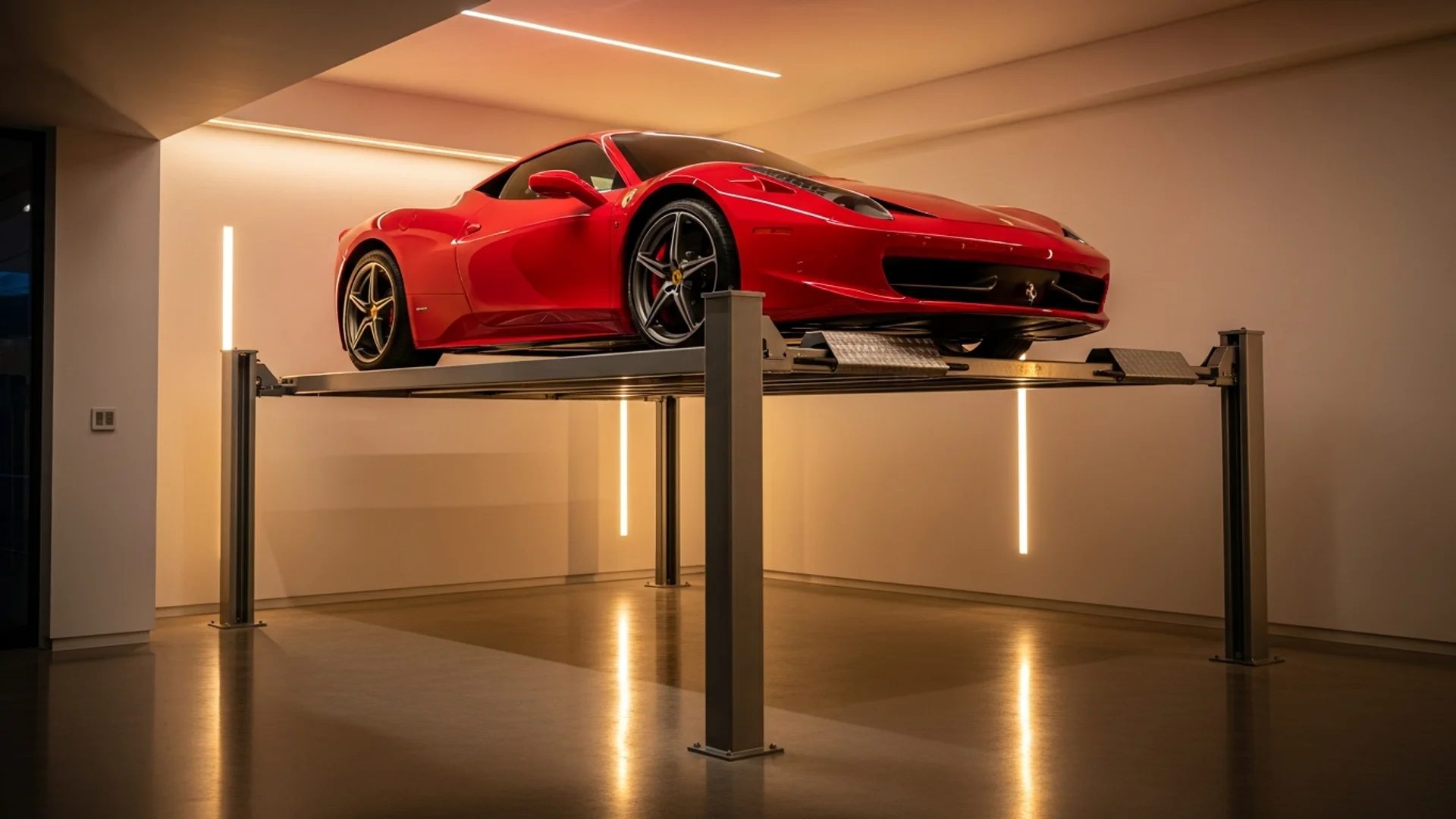
A residential car lift in Australia costs roughly $45,000 to $120,000 installed as of Q2 2026 — the platform unit, plus the pit and structural works needed to build it into your home. That is the figure for lifting one vehicle between levels, typically down to a basement garage or up to a garage above living space.
The wider car-parking market covers three other products with very different price tags. A car turntable — a rotating pad that spins a vehicle so you can drive out nose-first — runs $15,000 to $45,000, often added alongside a lift or driveway. Commercial car stackers, which stack vehicles mechanically, are priced per space at roughly $8,000 to $25,000. Fully automated parking systems that retrieve a car for you start around $30,000 per space and climb well past $70,000.
This page breaks down each option with indicative 2026 ranges, then splits a residential car lift into its three real cost drivers: the platform unit, the pit and structural works, and installation.
Indicative Australian car lift and car-parking costs, ex GST. Residential figures are installed; commercial systems are priced per parking space. Last checked July 2026.
| Scenario | Cost range (AUD, ex GST) | Notes |
|---|---|---|
| Residential car lift (one vehicle, between levels) | $45,000–$120,000 | Installed cost for a single-vehicle platform lift to a basement or upper garage. Includes the platform unit and typical installation; the pit and structural works are the biggest swing factor. Supplier-stated pricing collated by LiftQuotes, July 2026. |
| Car turntable (rotating pad, often an add-on) | $15,000–$45,000 | A powered turntable to reposition a vehicle in a tight driveway or garage. Lower end for a surface-mounted residential pad; higher end for a recessed, load-rated unit. Indicative, ex GST. |
| Commercial car stacker (per parking space) | $8,000–$25,000 | Mechanical stacking that parks two or more vehicles in one footprint. Priced per space; simple two-post dependent stackers sit low, independent-access systems higher. Indicative, ex GST. |
| Automated parking system (per parking space) | $30,000–$70,000 | Fully automated retrieval — the system parks and returns the vehicle. Priced per space and rises with capacity and speed; $70,000+ for large installations. Indicative, ex GST. |
Ranges combine supplier-stated pricing for vehicle lifts, turntables and mechanical parking systems collated by LiftQuotes, cross-checked against published residential cost guides. Residential figures are installed and exclude significant excavation, and commercial figures are per space and exclude the building structure they sit in. Verify against site-specific quotes.
Last checked: 7 July 2026
For a residential car lift, three cost buckets make up the installed price — and the pit is where budgets move most.
The platform unit
The lift itself — platform, drive, guide rails, gates and controls — is the base cost, indicatively $35,000 to $70,000 for a residential single-vehicle unit. Load rating drives the figure: a lift rated for a light hatchback costs less than one certified for a 2.5-tonne SUV or ute. Hydraulic platforms are common at this scale; a heavier vehicle or a longer travel pushes you up the range.
Pit and structural works
This is the variable that shocks buyers. A car lift needs a pit, a load-bearing slab and often a reinforced opening between levels, and in a basement install that means excavation, shoring and waterproofing. Building works can add $10,000 to $40,000 or more depending on soil, water table and access — frequently rivalling the platform unit itself. A new build that designs the shaft in from the start is far cheaper than retrofitting into an existing home.
Installation and commissioning
Delivery, rigging the unit into place, electrical connection, safety commissioning and certification typically add $5,000 to $12,000. Tight access, a crane requirement, or a three-phase power upgrade lift this figure. Like any registrable plant in a commercial setting, a car lift or stacker in shared premises may also carry inspection and registration obligations that a home install does not.
Turntable and finishing add-ons
A car turntable is the most common add-on, at $15,000 to $45,000 if you want the vehicle repositioned automatically rather than reversing out. Glazed shaft enclosures, premium platform finishes and integrated garage doors also add to the base figure. Decide these early — retrofitting a turntable after the slab is poured is expensive.
Lift companies in Australia
Browse profiles, compare service areas, and check reviews.

Lift Shop
★ 5.0 (1551 reviews)
Australia's largest dedicated home lift specialist since 1996. 10,000+ installations. Exclusive Italian-crafted lifts with industry-leading 8-year warranty.
View profile →

Compact Home Lifts
NDIS★ 5.0 (465 reviews)
Melbourne branch of Compact Home Lifts. Compact residential lift specialist providing maintenance and repair services across Victoria.
View profile →

Next Level Elevators
★ 5.0 (454 reviews)
Award-winning provider of premium Italian-designed all-electric home elevators. Certified Eltec Partner. Showrooms in Melbourne, Sydney, and Brisbane.
View profile →

Shotton Lifts
NDIS★ 5.0 (9 reviews)
Family-owned Australian lift manufacturer since 1977. 80+ staff. Design, engineer, manufacture, install and service from Dandenong South VIC. NDIS registered.
View profile →

LiftFit Australia
NDIS★ 5.0 (8 reviews)
Victoria-based NDIS registered lift provider, est. 2011. Partners with Cibes, Savaria, and Kalea. Residential, commercial, and platform lifts.
View profile →

Easy Living Home Elevators
★ 5.0 (7 reviews)
Australia's #1 home elevator supplier since 1998. 100% Australian-owned. 11,000+ elevators in service across 6 states.
View profile →
LiftQuotes is a comparison platform. Companies shown are filtered by relevance to this page. Listing does not imply endorsement. LiftQuotes may receive a referral fee when you request quotes.
How much does a car lift cost?
A residential car lift costs roughly $45,000 to $120,000 installed in Australia as of Q2 2026. That buys a platform lift sized for one vehicle, built into your home to move a car between levels — usually down to a basement garage or up to a garage above living space. The range is wide because the pit and structural works vary far more than the lift unit itself.
The broader car-parking market is easy to confuse, so it helps to separate four products by what they do and how they are priced. The table below sets out each one.
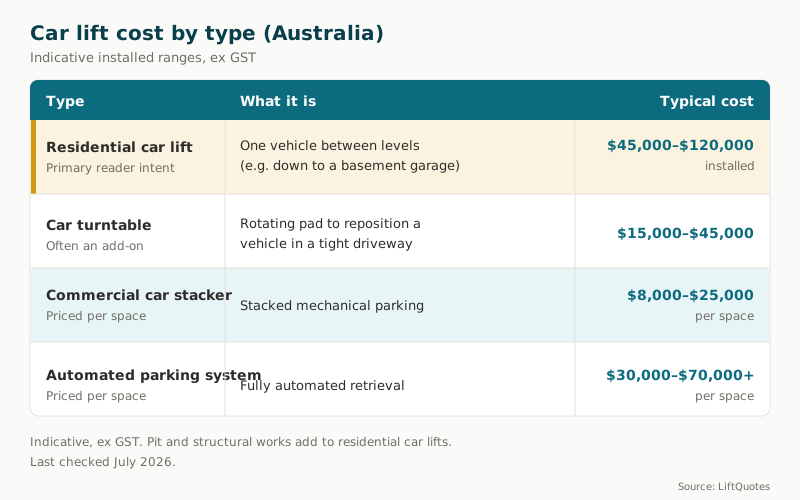
A residential car lift and a commercial car stacker are different purchases. A home car lift moves one vehicle vertically and is priced as a single installed unit. A car stacker or automated parking system multiplies parking in a fixed footprint and is priced per space — which is why a commercial car park quote looks cheaper per number but adds up fast across dozens of bays.
Residential car lifts: what drives the price
Three things make up the installed cost of a home car lift: the platform unit, the pit and structural works, and installation. The platform unit — rated for your vehicle weight — is indicatively $35,000 to $70,000. Installation, rigging and commissioning add $5,000 to $12,000.
The pit and structural works are where budgets move. Excavating a basement pit, pouring a load-bearing slab and forming a reinforced opening between floors can add $10,000 to $40,000 or more, driven by soil conditions, the water table and site access. Retrofitting into an existing home costs materially more than designing the shaft into a new build. If you are weighing a car lift against other vertical transport for the same property, our lift costs overview compares the major categories side by side.
Car turntables: a common add-on
A car turntable is a powered rotating pad that spins a vehicle so you can drive out forwards instead of reversing into traffic or a tight lane. It is not a lift — it moves the car horizontally, not vertically — but it is frequently specified alongside a residential car lift or a narrow driveway. Expect $15,000 to $45,000, with surface-mounted residential pads at the lower end and recessed, heavily load-rated units at the top. Because a turntable often shares the slab and pit works with a car lift, deciding on it early avoids expensive retrofitting later.
Commercial car stackers and automated parking
Commercial and multi-residential projects usually solve parking density rather than level change. A mechanical car stacker parks two or more vehicles in one footprint and is priced per space at roughly $8,000 to $25,000 — simple dependent two-post stackers are cheapest, independent-access systems dearer. Fully automated parking systems, which retrieve the vehicle for the driver, start around $30,000 per space and run past $70,000 for larger, faster installations.
These systems are registrable plant in most workplace settings, carrying inspection and maintenance obligations a home install does not. For the wider picture on commercial vertical transport and goods handling, see our commercial lift cost guide and the freight and industrial lifts category. Developers specifying parking at DA stage should price the structure and the mechanical system together, not in isolation.
What is not included in a car lift quote
A headline car lift price is the unit and its direct installation. It rarely includes major excavation, a three-phase power upgrade, crane hire for tight access, garage doors and finishes, or a turntable. GST is on top of every figure on this page. Ongoing costs — annual servicing and, for commercial plant, statutory inspection — sit outside the purchase price too. Ask any supplier to quote the building works separately so you can see the true all-in cost.
What this means for your budget
For a home, budget around $45,000 to $120,000 for a residential car lift installed, and treat the pit and structural works as the number most likely to move. For a commercial or multi-residential project, price parking per space — $8,000 to $25,000 for a stacker, $30,000 or more for automated retrieval — and add the structure around it.
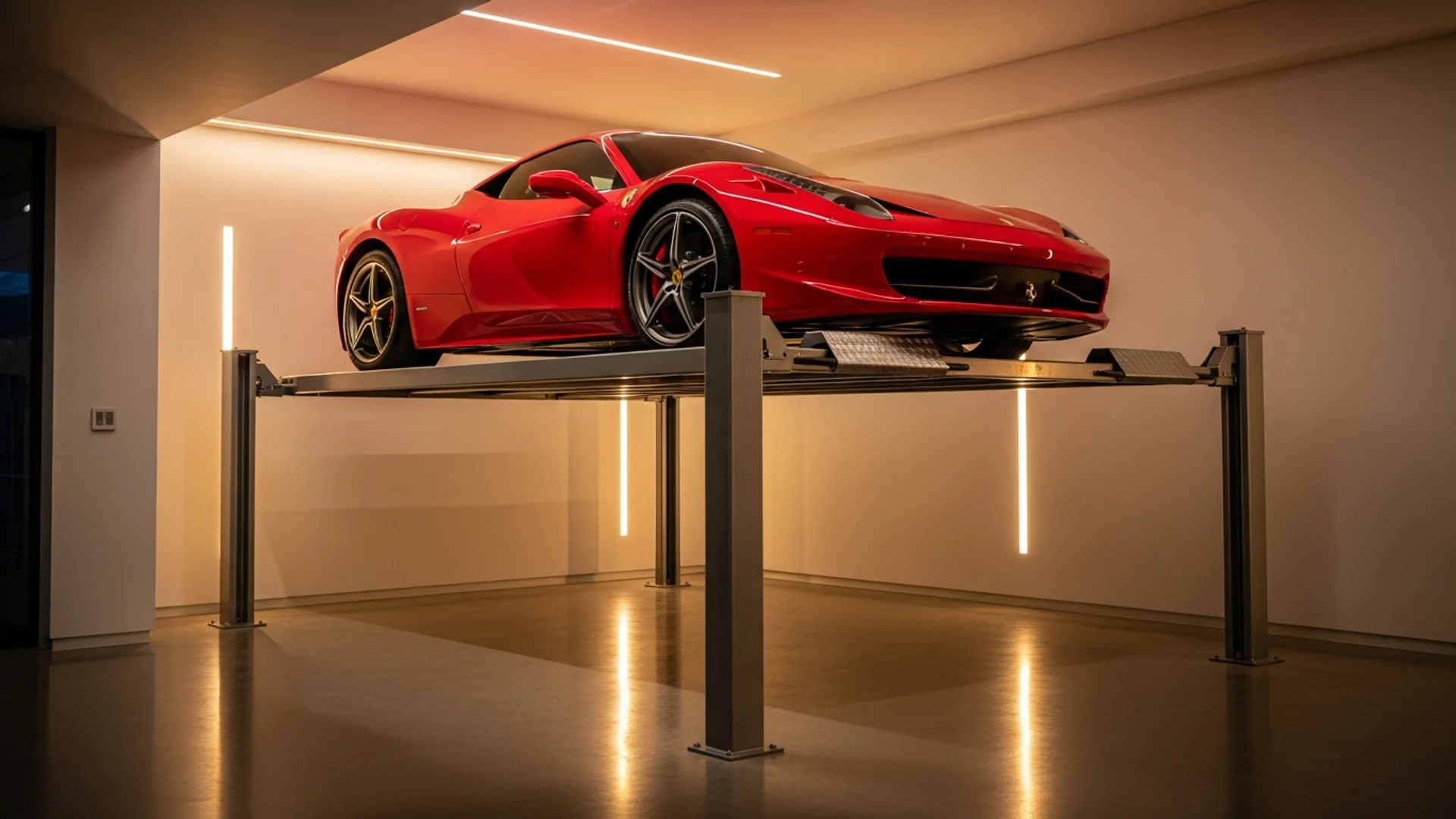
Car lifts are a niche where suppliers quote only on enquiry, so comparing options is the only way to see a real price for your site. Get free quotes from vetted Australian lift companies to compare the platform unit, the building works and the ongoing servicing before you commit.
How we research these costs
Cost figures on this page are indicative ranges, ex GST, last checked in July 2026. Residential car lift figures are installed costs — the platform unit plus typical installation — and exclude significant excavation and site-specific structural works, which are called out separately. Turntable, car stacker and automated parking figures are drawn from supplier-stated pricing collated by LiftQuotes; commercial systems are quoted per parking space and exclude the building structure they sit within. Because vehicle lifts and mechanical parking are quoted on enquiry rather than from published price lists, treat every figure as a planning range and confirm against site-specific quotes.
Sources: supplier-stated pricing for vehicle lifts, turntables and mechanical parking systems collated by LiftQuotes (2026); published residential cost-guide data for cross-checking; Standards Australia AS 1735 series designations for vehicle and platform lift context; Safe Work Australia model WHS guidance on registrable plant for commercial systems. Figures exclude major excavation, power upgrades and finishes.
Last reviewed
7 July 2026
Next review due
7 January 2027
Get quotes tailored to your project
Tell us about your home and receive personalised pricing from local installers.
What are you looking for today?
I need a lift installed
I have a lift that needs attention
Indicative Australian car lift and car-parking costs, ex GST. Residential figures are installed; commercial systems are priced per parking space. Last checked July 2026.
| Scenario | Cost range (AUD, ex GST) | Notes |
|---|---|---|
| Residential car lift (one vehicle, between levels) | $45,000–$120,000 | Installed cost for a single-vehicle platform lift to a basement or upper garage. Includes the platform unit and typical installation; the pit and structural works are the biggest swing factor. Supplier-stated pricing collated by LiftQuotes, July 2026. |
| Car turntable (rotating pad, often an add-on) | $15,000–$45,000 | A powered turntable to reposition a vehicle in a tight driveway or garage. Lower end for a surface-mounted residential pad; higher end for a recessed, load-rated unit. Indicative, ex GST. |
| Commercial car stacker (per parking space) | $8,000–$25,000 | Mechanical stacking that parks two or more vehicles in one footprint. Priced per space; simple two-post dependent stackers sit low, independent-access systems higher. Indicative, ex GST. |
| Automated parking system (per parking space) | $30,000–$70,000 | Fully automated retrieval — the system parks and returns the vehicle. Priced per space and rises with capacity and speed; $70,000+ for large installations. Indicative, ex GST. |
Ranges combine supplier-stated pricing for vehicle lifts, turntables and mechanical parking systems collated by LiftQuotes, cross-checked against published residential cost guides. Residential figures are installed and exclude significant excavation, and commercial figures are per space and exclude the building structure they sit in. Verify against site-specific quotes.
Last checked: 7 July 2026
For a residential car lift, three cost buckets make up the installed price — and the pit is where budgets move most.
The platform unit
The lift itself — platform, drive, guide rails, gates and controls — is the base cost, indicatively $35,000 to $70,000 for a residential single-vehicle unit. Load rating drives the figure: a lift rated for a light hatchback costs less than one certified for a 2.5-tonne SUV or ute. Hydraulic platforms are common at this scale; a heavier vehicle or a longer travel pushes you up the range.
Pit and structural works
This is the variable that shocks buyers. A car lift needs a pit, a load-bearing slab and often a reinforced opening between levels, and in a basement install that means excavation, shoring and waterproofing. Building works can add $10,000 to $40,000 or more depending on soil, water table and access — frequently rivalling the platform unit itself. A new build that designs the shaft in from the start is far cheaper than retrofitting into an existing home.
Installation and commissioning
Delivery, rigging the unit into place, electrical connection, safety commissioning and certification typically add $5,000 to $12,000. Tight access, a crane requirement, or a three-phase power upgrade lift this figure. Like any registrable plant in a commercial setting, a car lift or stacker in shared premises may also carry inspection and registration obligations that a home install does not.
Turntable and finishing add-ons
A car turntable is the most common add-on, at $15,000 to $45,000 if you want the vehicle repositioned automatically rather than reversing out. Glazed shaft enclosures, premium platform finishes and integrated garage doors also add to the base figure. Decide these early — retrofitting a turntable after the slab is poured is expensive.
Lift companies in Australia
Browse profiles, compare service areas, and check reviews.
Lift Shop
★ 5.0 (1551 reviews)
Australia's largest dedicated home lift specialist since 1996. 10,000+ installations. Exclusive Italian-crafted lifts with industry-leading 8-year warranty.
View profile →
Compact Home Lifts
NDIS★ 5.0 (465 reviews)
Melbourne branch of Compact Home Lifts. Compact residential lift specialist providing maintenance and repair services across Victoria.
View profile →
Next Level Elevators
★ 5.0 (454 reviews)
Award-winning provider of premium Italian-designed all-electric home elevators. Certified Eltec Partner. Showrooms in Melbourne, Sydney, and Brisbane.
View profile →
Shotton Lifts
NDIS★ 5.0 (9 reviews)
Family-owned Australian lift manufacturer since 1977. 80+ staff. Design, engineer, manufacture, install and service from Dandenong South VIC. NDIS registered.
View profile →
LiftFit Australia
NDIS★ 5.0 (8 reviews)
Victoria-based NDIS registered lift provider, est. 2011. Partners with Cibes, Savaria, and Kalea. Residential, commercial, and platform lifts.
View profile →
Easy Living Home Elevators
★ 5.0 (7 reviews)
Australia's #1 home elevator supplier since 1998. 100% Australian-owned. 11,000+ elevators in service across 6 states.
View profile →
LiftQuotes is a comparison platform. Companies shown are filtered by relevance to this page. Listing does not imply endorsement. LiftQuotes may receive a referral fee when you request quotes.
How much does a car lift cost?
A residential car lift costs roughly $45,000 to $120,000 installed in Australia as of Q2 2026. That buys a platform lift sized for one vehicle, built into your home to move a car between levels — usually down to a basement garage or up to a garage above living space. The range is wide because the pit and structural works vary far more than the lift unit itself.
The broader car-parking market is easy to confuse, so it helps to separate four products by what they do and how they are priced. The table below sets out each one.
A residential car lift and a commercial car stacker are different purchases. A home car lift moves one vehicle vertically and is priced as a single installed unit. A car stacker or automated parking system multiplies parking in a fixed footprint and is priced per space — which is why a commercial car park quote looks cheaper per number but adds up fast across dozens of bays.
Residential car lifts: what drives the price
Three things make up the installed cost of a home car lift: the platform unit, the pit and structural works, and installation. The platform unit — rated for your vehicle weight — is indicatively $35,000 to $70,000. Installation, rigging and commissioning add $5,000 to $12,000.
The pit and structural works are where budgets move. Excavating a basement pit, pouring a load-bearing slab and forming a reinforced opening between floors can add $10,000 to $40,000 or more, driven by soil conditions, the water table and site access. Retrofitting into an existing home costs materially more than designing the shaft into a new build. If you are weighing a car lift against other vertical transport for the same property, our lift costs overview compares the major categories side by side.
Car turntables: a common add-on
A car turntable is a powered rotating pad that spins a vehicle so you can drive out forwards instead of reversing into traffic or a tight lane. It is not a lift — it moves the car horizontally, not vertically — but it is frequently specified alongside a residential car lift or a narrow driveway. Expect $15,000 to $45,000, with surface-mounted residential pads at the lower end and recessed, heavily load-rated units at the top. Because a turntable often shares the slab and pit works with a car lift, deciding on it early avoids expensive retrofitting later.
Commercial car stackers and automated parking
Commercial and multi-residential projects usually solve parking density rather than level change. A mechanical car stacker parks two or more vehicles in one footprint and is priced per space at roughly $8,000 to $25,000 — simple dependent two-post stackers are cheapest, independent-access systems dearer. Fully automated parking systems, which retrieve the vehicle for the driver, start around $30,000 per space and run past $70,000 for larger, faster installations.
These systems are registrable plant in most workplace settings, carrying inspection and maintenance obligations a home install does not. For the wider picture on commercial vertical transport and goods handling, see our commercial lift cost guide and the freight and industrial lifts category. Developers specifying parking at DA stage should price the structure and the mechanical system together, not in isolation.
What is not included in a car lift quote
A headline car lift price is the unit and its direct installation. It rarely includes major excavation, a three-phase power upgrade, crane hire for tight access, garage doors and finishes, or a turntable. GST is on top of every figure on this page. Ongoing costs — annual servicing and, for commercial plant, statutory inspection — sit outside the purchase price too. Ask any supplier to quote the building works separately so you can see the true all-in cost.
What this means for your budget
For a home, budget around $45,000 to $120,000 for a residential car lift installed, and treat the pit and structural works as the number most likely to move. For a commercial or multi-residential project, price parking per space — $8,000 to $25,000 for a stacker, $30,000 or more for automated retrieval — and add the structure around it.
Car lifts are a niche where suppliers quote only on enquiry, so comparing options is the only way to see a real price for your site. Get free quotes from vetted Australian lift companies to compare the platform unit, the building works and the ongoing servicing before you commit.
How we research these costs
Cost figures on this page are indicative ranges, ex GST, last checked in July 2026. Residential car lift figures are installed costs — the platform unit plus typical installation — and exclude significant excavation and site-specific structural works, which are called out separately. Turntable, car stacker and automated parking figures are drawn from supplier-stated pricing collated by LiftQuotes; commercial systems are quoted per parking space and exclude the building structure they sit within. Because vehicle lifts and mechanical parking are quoted on enquiry rather than from published price lists, treat every figure as a planning range and confirm against site-specific quotes.
Sources: supplier-stated pricing for vehicle lifts, turntables and mechanical parking systems collated by LiftQuotes (2026); published residential cost-guide data for cross-checking; Standards Australia AS 1735 series designations for vehicle and platform lift context; Safe Work Australia model WHS guidance on registrable plant for commercial systems. Figures exclude major excavation, power upgrades and finishes.
Last reviewed
7 July 2026
Next review due
7 January 2027
Get quotes tailored to your project
Tell us about your home and receive personalised pricing from local installers.
What are you looking for today?
I need a lift installed
I have a lift that needs attention
Common questions about car lift costs
A residential car lift costs roughly $45,000 to $120,000 installed in Australia as of Q2 2026, covering the platform unit and typical installation. The pit and structural works are the biggest variable and can add $10,000 to $40,000 or more on top, especially for a basement retrofit. All figures are indicative and ex GST.
Related guides
Guide
Our Editorial Methodology: How LiftQuotes Researches Content
How LiftQuotes researches, sources and reviews every lift guide and cost page: the standards we cite, our linked-source rule for cost data, and how often we update.
Guide
Lift Compliance Checklist for Facility Managers (Australia)
A facility manager's lift compliance checklist for Australia: plant registration, inspection, log books, 4G VoLTE emergency phones and DDA access duties.
Comparison
Stairlift vs Platform Lift: Which Access Solution Fits?
A stairlift carries a seated user along the stairs from about $3,000; a platform lift raises a wheelchair vertically from about $15,000. Compare cost, access and fit.
Location
Lift Companies in Melbourne: Compare Local Installers
Compare lift companies in Melbourne for home, platform and commercial lifts. WorkSafe Victoria compliance, local installer coverage and indicative VIC costs.
Compare car lift quotes
Get free, no-obligation quotes from vetted Australian lift and parking specialists — and compare the platform unit, the building works and the ongoing servicing, not just the headline price.
Join 1,000+ Australians who've requested quotes through LiftQuotes
Get free quotes