What Is Lift Modernisation?
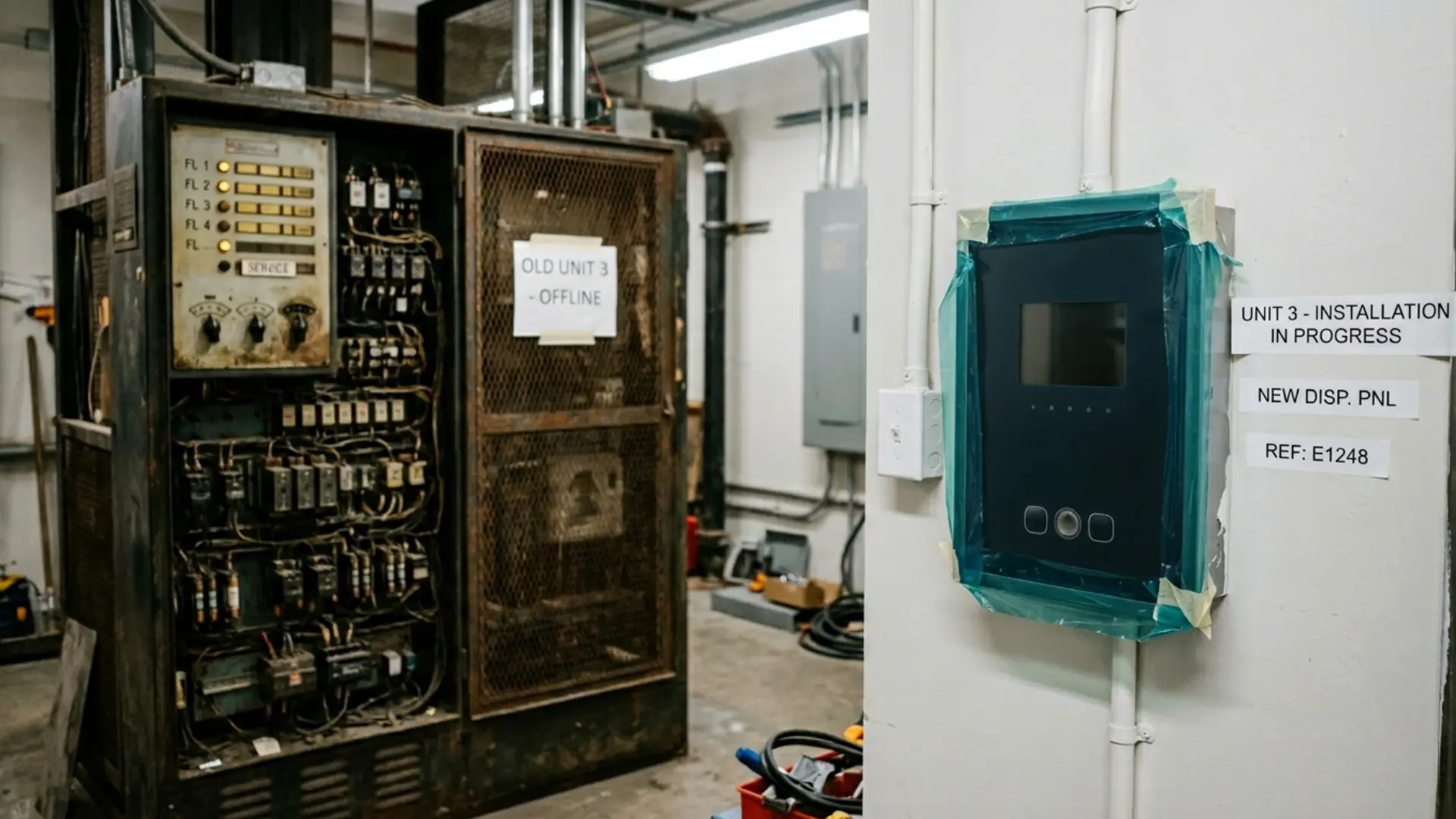
Lift modernisation replaces ageing components without removing the full shaft structure. It can restore reliability, improve energy efficiency, and bring an older lift into compliance — at a fraction of full replacement cost.
Lift modernisation is the process of replacing ageing or obsolete components in an existing lift installation — typically the control system, drive system, door equipment, or cab interior — without removing or rebuilding the full hoistway structure.
Modernisation sits between routine maintenance and full replacement. It is the right choice when a lift is structurally sound but its key systems are failing, energy-inefficient, or no longer compliant with current Australian Standards. It is generally not the right choice when the hoistway, pit, or structural frame is also in poor condition.
This guide explains what is typically included in a modernisation project, when it makes sense over full replacement, and what typical projects cost. For cost ranges, see our lift modernisation overview.
What modernisation typically includes
A modernisation project can target one or more components depending on what is failing and what budget is available. The most common components replaced are:
Control system — The most frequently modernised component. Older relay-based or early microprocessor controls are replaced with modern solid-state systems. New controls improve reliability, enable remote monitoring, and support compliance with current safety standards. A controls-only modernisation is the lowest-cost modernisation scope.
Drive system — Replacing the motor and drive unit. Modern variable-voltage variable-frequency (VVVF) drives are significantly more energy efficient than older single or two-speed AC motors. A drive modernisation alone can reduce energy consumption by 30–50% on older traction systems.
Door equipment — Door operators, door controllers, and safety edges are among the most frequently replaced components due to wear. Upgrading to modern light curtain safety edges also brings older lifts into compliance with current safety requirements.
Cab interior — Refurbishment of the passenger compartment: walls, flooring, lighting, and buttons. This is typically the most visible change and is often combined with a controls or drive upgrade.
Full modernisation — All of the above, plus ropes, sheaves, buffers, and safety gear where required. A full modernisation restores the lift to near-new condition while retaining the existing hoistway structure.
Modernisation vs full replacement
Modernisation is the right choice when:
- The hoistway, pit, and structural frame are in sound condition
- The lift is mechanically functional but specific systems are failing or out of compliance
- Downtime must be minimised — modernisation typically takes days rather than weeks
- The building cannot absorb the cost of a full replacement
Full replacement is the right choice when:
- The hoistway or pit is structurally compromised
- The lift technology is so outdated that parts are no longer available
- The building is undergoing significant refurbishment and lift access is unavailable regardless
- A compliance upgrade requires changes that effectively require a new installation
When in doubt, get quotes for both and compare the total cost of ownership over 10–15 years — not just the upfront cost.
Regulatory requirements
Any modernisation work that affects safety-critical systems — controls, door equipment, brakes, or safety gear — requires re-inspection and re-certification of the lift under AS 1735 and the relevant state plant registration requirements. Confirm with the contractor before work begins which components trigger re-certification in your state.
For more on what lift modernisation projects involve and what they cost, see our lift modernisation hub. When you are ready to compare contractors, get quotes through LiftQuotes.
Lift companies in Australia
Browse profiles, compare service areas, and check reviews.

Lift Shop
★ 5.0 (1551 reviews)
Australia's largest dedicated home lift specialist since 1996. 10,000+ installations. Exclusive Italian-crafted lifts with industry-leading 8-year warranty.
View profile →

Compact Home Lifts
NDIS★ 5.0 (465 reviews)
Melbourne branch of Compact Home Lifts. Compact residential lift specialist providing maintenance and repair services across Victoria.
View profile →

Next Level Elevators
★ 5.0 (454 reviews)
Award-winning provider of premium Italian-designed all-electric home elevators. Certified Eltec Partner. Showrooms in Melbourne, Sydney, and Brisbane.
View profile →

Shotton Lifts
NDIS★ 5.0 (9 reviews)
Family-owned Australian lift manufacturer since 1977. 80+ staff. Design, engineer, manufacture, install and service from Dandenong South VIC. NDIS registered.
View profile →

LiftFit Australia
NDIS★ 5.0 (8 reviews)
Victoria-based NDIS registered lift provider, est. 2011. Partners with Cibes, Savaria, and Kalea. Residential, commercial, and platform lifts.
View profile →

Easy Living Home Elevators
★ 5.0 (7 reviews)
Australia's #1 home elevator supplier since 1998. 100% Australian-owned. 11,000+ elevators in service across 6 states.
View profile →
LiftQuotes is a comparison platform. Companies shown are filtered by relevance to this page. Listing does not imply endorsement. LiftQuotes may receive a referral fee when you request quotes.
Put this into action
When you're ready to move forward, get free quotes from verified Australian lift installers.
What are you looking for today?
I need a lift installed
I have a lift that needs attention
What modernisation typically includes
A modernisation project can target one or more components depending on what is failing and what budget is available. The most common components replaced are:
Control system — The most frequently modernised component. Older relay-based or early microprocessor controls are replaced with modern solid-state systems. New controls improve reliability, enable remote monitoring, and support compliance with current safety standards. A controls-only modernisation is the lowest-cost modernisation scope.
Drive system — Replacing the motor and drive unit. Modern variable-voltage variable-frequency (VVVF) drives are significantly more energy efficient than older single or two-speed AC motors. A drive modernisation alone can reduce energy consumption by 30–50% on older traction systems.
Door equipment — Door operators, door controllers, and safety edges are among the most frequently replaced components due to wear. Upgrading to modern light curtain safety edges also brings older lifts into compliance with current safety requirements.
Cab interior — Refurbishment of the passenger compartment: walls, flooring, lighting, and buttons. This is typically the most visible change and is often combined with a controls or drive upgrade.
Full modernisation — All of the above, plus ropes, sheaves, buffers, and safety gear where required. A full modernisation restores the lift to near-new condition while retaining the existing hoistway structure.
Modernisation vs full replacement
Modernisation is the right choice when:
- The hoistway, pit, and structural frame are in sound condition
- The lift is mechanically functional but specific systems are failing or out of compliance
- Downtime must be minimised — modernisation typically takes days rather than weeks
- The building cannot absorb the cost of a full replacement
Full replacement is the right choice when:
- The hoistway or pit is structurally compromised
- The lift technology is so outdated that parts are no longer available
- The building is undergoing significant refurbishment and lift access is unavailable regardless
- A compliance upgrade requires changes that effectively require a new installation
When in doubt, get quotes for both and compare the total cost of ownership over 10–15 years — not just the upfront cost.
Regulatory requirements
Any modernisation work that affects safety-critical systems — controls, door equipment, brakes, or safety gear — requires re-inspection and re-certification of the lift under AS 1735 and the relevant state plant registration requirements. Confirm with the contractor before work begins which components trigger re-certification in your state.
For more on what lift modernisation projects involve and what they cost, see our lift modernisation hub. When you are ready to compare contractors, get quotes through LiftQuotes.
Lift companies in Australia
Browse profiles, compare service areas, and check reviews.
Lift Shop
★ 5.0 (1551 reviews)
Australia's largest dedicated home lift specialist since 1996. 10,000+ installations. Exclusive Italian-crafted lifts with industry-leading 8-year warranty.
View profile →
Compact Home Lifts
NDIS★ 5.0 (465 reviews)
Melbourne branch of Compact Home Lifts. Compact residential lift specialist providing maintenance and repair services across Victoria.
View profile →
Next Level Elevators
★ 5.0 (454 reviews)
Award-winning provider of premium Italian-designed all-electric home elevators. Certified Eltec Partner. Showrooms in Melbourne, Sydney, and Brisbane.
View profile →
Shotton Lifts
NDIS★ 5.0 (9 reviews)
Family-owned Australian lift manufacturer since 1977. 80+ staff. Design, engineer, manufacture, install and service from Dandenong South VIC. NDIS registered.
View profile →
LiftFit Australia
NDIS★ 5.0 (8 reviews)
Victoria-based NDIS registered lift provider, est. 2011. Partners with Cibes, Savaria, and Kalea. Residential, commercial, and platform lifts.
View profile →
Easy Living Home Elevators
★ 5.0 (7 reviews)
Australia's #1 home elevator supplier since 1998. 100% Australian-owned. 11,000+ elevators in service across 6 states.
View profile →
LiftQuotes is a comparison platform. Companies shown are filtered by relevance to this page. Listing does not imply endorsement. LiftQuotes may receive a referral fee when you request quotes.
Put this into action
When you're ready to move forward, get free quotes from verified Australian lift installers.
What are you looking for today?
I need a lift installed
I have a lift that needs attention
Related guides
Location
Commercial Lifts Melbourne: Costs, Compliance & Installers
Commercial lift costs, Victorian OHS compliance and the Melbourne installer market — indicative prices, WorkSafe Victoria rules and NCC requirements for VIC projects.
Location
Commercial Lifts Sydney: Costs, Compliance & Installers
Commercial lift costs, NSW compliance and the Sydney installer market — indicative prices, SafeWork NSW rules and NCC requirements for CBD and metro projects.
Guide
What Size Lift Do I Need for a Wheelchair? (Australia)
A home lift for a wheelchair needs roughly 1,100 x 1,400 mm inside and a 900 mm clear door. See minimum sizes for a wheelchair, a carer, and turning space.
Guide
Support at Home & Lift Funding: The 2026 Guide
Can Support at Home fund a home lift or stairlift? How aged care funding works, the OT assessment, means-tested contributions, and how it differs from the NDIS.
Get quotes for lift modernisation
Describe your lift and building. Qualified lift contractors will assess the installation and provide competing modernisation quotes. Free, no obligation.
Join 1,000+ Australians who've requested quotes through LiftQuotes
Get free quotes