Lift Inspection Cost in Australia
An independent annual lift inspection runs about $300 to $800 per lift; a condition report $800 to $2,500. Here is what each one costs, who can carry it out, and why it is not the same as your maintenance visit.
An independent annual lift inspection costs about $300 to $800 per lift in Australia as of Q2 2026. A written condition report runs $800 to $2,500, and a full engineering audit — the kind commissioned before a purchase or in a dispute — sits at $2,000 to $5,000. Routine servicing is separate: it is bundled into your maintenance contract and carries no standalone fee.
The distinction matters because these things are easy to confuse and priced entirely differently. A routine service check is your maintenance contractor keeping their own equipment running. An independent inspection is a third party, with no stake in the contract, verifying the lift is compliant and safe. A condition report is a written assessment of the lift's state and remaining life, used to plan capital works.
This page gives indicative 2026 fees for each, explains who is allowed to carry out an inspection, how often each is needed, and what drives the cost up or down — written for facility managers and owners corporations budgeting the real cost of keeping a lift compliant.
Indicative Australian lift inspection fees, ex GST, per lift. These cover the paid inspections an owner or facility manager arranges on top of the routine servicing already bundled into a maintenance contract. Last checked July 2026.
| Scenario | Cost range (AUD, ex GST) | Notes |
|---|---|---|
| Independent / statutory inspection (annual) | $300–$800 | A third-party compliance check by a competent person, independent of your maintenance contractor. Per lift, annual. Higher end for older or traction lifts and difficult access. Indicative, ex GST; LiftQuotes collation, July 2026. |
| Lift condition report | $800–$2,500 | A written assessment of the lift's condition and remaining service life, used to plan capital works. Commissioned every 3–5 years. Indicative, ex GST. |
| Full technical / engineering audit | $2,000–$5,000 | A detailed engineering audit by a specialist lift consultant, commissioned for a pre-purchase check or a dispute. As needed. Indicative range, ex GST. |
| Strata building lift audit (per lift) | $1,500–$4,000 | A whole-of-building condition audit priced per lift, so the total scales with the number of units. Common before a modernisation or maintenance tender. Indicative, ex GST. |
Ranges combine supplier-stated inspection and lift-consultant fees collated by LiftQuotes, cross-checked against published maintenance and audit pricing. Figures are per lift, ex GST, and exclude any remedial work the inspection identifies. Inspection and audit work is quoted on the specifics of each lift and site, so treat every figure as a planning range and confirm against site-specific quotes.
Last checked: 10 July 2026
Four things move an inspection fee — and for a facility manager, scope is the one that shifts the number most, because a service, an inspection and an audit are priced entirely differently.
Lift age and type
An older lift, or a traction lift with more components to check, takes longer to inspect than a simple modern hydraulic unit. Age also raises the odds that a condition report finds obsolete parts, which turns a routine check into a longer conversation about modernisation and its cost.
Access and travel
The number of levels the lift serves, and how easy the pit, car top and machine room are to reach, drive the time on site. A single-stop platform lift is quick to work through; a multi-storey traction lift, or a bank of lifts sharing a machine room, costs more.
Who carries it out
A maintenance technician's routine check is bundled into the contract. An independent competent person or registered inspector charges a standalone fee, and a specialist lift consultant's engineering audit is dearer again — you are paying for independence and depth, not just time on site.
Scope of the assessment
A pass or fail compliance inspection is the cheapest paid option. A written condition report that assesses remaining service life costs more, and a full technical audit used for a purchase or a dispute is the most detailed and the most expensive. Match the scope to the decision you are actually making.
Lift companies in Australia
Browse profiles, compare service areas, and check reviews.

Lift Shop
★ 5.0 (1551 reviews)
Australia's largest dedicated home lift specialist since 1996. 10,000+ installations. Exclusive Italian-crafted lifts with industry-leading 8-year warranty.
View profile →

Compact Home Lifts
NDIS★ 5.0 (465 reviews)
Melbourne branch of Compact Home Lifts. Compact residential lift specialist providing maintenance and repair services across Victoria.
View profile →

Next Level Elevators
★ 5.0 (454 reviews)
Award-winning provider of premium Italian-designed all-electric home elevators. Certified Eltec Partner. Showrooms in Melbourne, Sydney, and Brisbane.
View profile →

Shotton Lifts
NDIS★ 5.0 (9 reviews)
Family-owned Australian lift manufacturer since 1977. 80+ staff. Design, engineer, manufacture, install and service from Dandenong South VIC. NDIS registered.
View profile →

LiftFit Australia
NDIS★ 5.0 (8 reviews)
Victoria-based NDIS registered lift provider, est. 2011. Partners with Cibes, Savaria, and Kalea. Residential, commercial, and platform lifts.
View profile →

Easy Living Home Elevators
★ 5.0 (7 reviews)
Australia's #1 home elevator supplier since 1998. 100% Australian-owned. 11,000+ elevators in service across 6 states.
View profile →
LiftQuotes is a comparison platform. Companies shown are filtered by relevance to this page. Listing does not imply endorsement. LiftQuotes may receive a referral fee when you request quotes.
How much does a lift inspection cost?
An independent annual lift inspection costs about $300 to $800 per lift in Australia as of Q2 2026. A written condition report runs $800 to $2,500, and a full engineering audit — the kind commissioned before a purchase or in a dispute — sits at $2,000 to $5,000. Routine safety checks are a separate matter: they are bundled into your maintenance contract and carry no standalone fee.
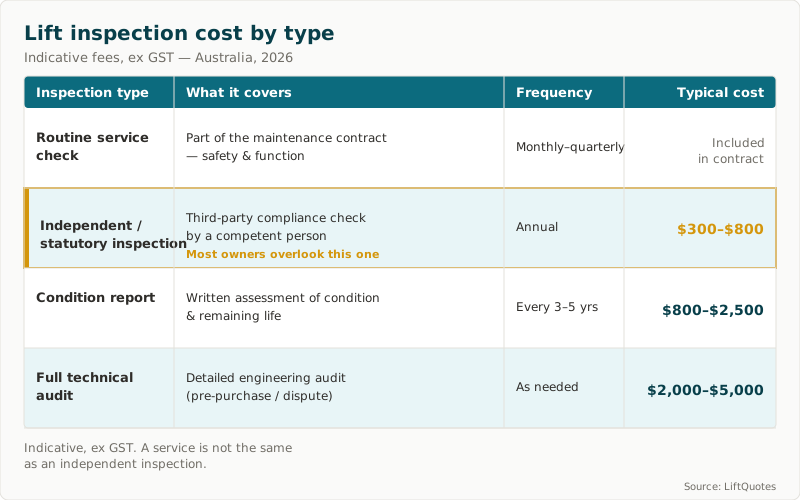
The table below sets out the four inspection types a building owner or facility manager deals with, what each covers, how often it is needed and the indicative fee.
Servicing, inspection and audit are three different things
The most expensive mistake in this area is assuming the maintenance contractor's monthly visit already covers everything. It does not. A routine service check is the contractor keeping their own installed equipment safe and functioning — it is part of the lift maintenance cost you already pay, and the contractor has a commercial interest in the result. An independent inspection is a third party, with no stake in the contract, verifying that the lift is compliant and safe. A condition report goes further again: a written assessment of the lift's current state and remaining service life, used to plan capital works. Each answers a different question, and a facility manager needs to know which one the building actually requires.
Who can inspect a lift in Australia?
Routine servicing is done by the maintenance contractor's technicians. An independent or statutory inspection must be carried out by a competent person — someone with the training, qualifications and experience to assess the lift against the relevant standard, and independent of the party that maintains it. For statutory and plant-registration purposes, that is often a registered lift inspector or a lift engineer. The AS 1735 series of Australian lift standards sets the technical baseline the inspection is measured against, and a full engineering audit is usually the work of a specialist lift consultant.
Is a lift inspection a legal requirement?
Under Schedule 5 of the model Work Health and Safety (WHS) Regulations, lifts are registrable plant, and the duty holder must ensure the lift is inspected and maintained so it is safe to operate. Our lift plant registration guide sets out the state-by-state detail — including that Victoria runs its own OHS scheme through WorkSafe Victoria rather than the harmonised WHS laws. The regulations frame the obligation as keeping plant safe rather than prescribing one national inspection fee, so the practical requirement is an inspection regime appropriate to the lift, documented and available for audit. LiftQuotes does not provide legal or compliance advice — verify your obligations with your state regulator or a qualified professional.
How often does a lift need inspecting?
Routine servicing typically happens monthly to quarterly under a maintenance contract. An independent or statutory inspection is usually annual. A condition report is commissioned every three to five years, or sooner when a lift is ageing, changing hands, or being considered for modernisation. A full technical audit is one-off — triggered by a purchase, a dispute, or a serious reliability problem rather than a fixed schedule.
What drives the cost
Four things move the fee: the lift's age and type, how many levels it serves, how accessible the machinery and pit are, and the depth of the assessment. A single hydraulic passenger lift in an accessible plant room is quick to inspect; a traction lift in a high-rise, or a bank of lifts in a strata building, takes longer and costs more. For a whole building, an audit is priced per lift, so a portfolio review scales with the number of units — the same logic that shapes strata lift costs more broadly.
What this means for your budget
Budget the routine servicing inside your maintenance contract, then add an independent annual inspection ($300 to $800 per lift) and a condition report every few years ($800 to $2,500) as separate lines. Keep the reports on file — they are exactly what a regulator or insurer asks to see. If you manage several lifts, the facility manager lift compliance checklist sets out what to retain and when. All figures here are indicative, ex GST, and last checked in July 2026.
Inspection fees are quoted on the specifics of your lift and site, so comparing providers is the only way to see a real price. Get free quotes from vetted Australian lift companies and independent inspectors, and compare the inspection scope — service, independent inspection or full audit — not just the headline fee.
How we research these costs
Cost figures on this page are indicative ranges, ex GST, per lift, last checked in July 2026. They cover the paid inspections an owner or facility manager arranges — independent inspections, condition reports and engineering audits — and exclude routine servicing bundled into a maintenance contract, as well as any remedial work an inspection identifies. Inspection and audit fees are quoted on the specifics of each lift and site, so every figure is a planning range to confirm against site-specific quotes.
Sources: supplier-stated inspection and lift-consultant fees collated by LiftQuotes (2026); Standards Australia AS 1735 series designations for lift inspection scope; Safe Work Australia model WHS Regulations Schedule 5 on lifts as registrable plant and the duty to keep plant safe. Figures exclude remedial work and are quoted per lift.
Last reviewed
10 July 2026
Next review due
10 January 2027
Get quotes tailored to your project
Tell us about your home and receive personalised pricing from local installers.
What are you looking for today?
I need a lift installed
I have a lift that needs attention
An independent annual lift inspection costs about $300 to $800 per lift in Australia as of Q2 2026. A written condition report runs $800 to $2,500, and a full engineering audit — the kind commissioned before a purchase or in a dispute — sits at $2,000 to $5,000. Routine servicing is separate: it is bundled into your maintenance contract and carries no standalone fee.
The distinction matters because these things are easy to confuse and priced entirely differently. A routine service check is your maintenance contractor keeping their own equipment running. An independent inspection is a third party, with no stake in the contract, verifying the lift is compliant and safe. A condition report is a written assessment of the lift's state and remaining life, used to plan capital works.
This page gives indicative 2026 fees for each, explains who is allowed to carry out an inspection, how often each is needed, and what drives the cost up or down — written for facility managers and owners corporations budgeting the real cost of keeping a lift compliant.
Indicative Australian lift inspection fees, ex GST, per lift. These cover the paid inspections an owner or facility manager arranges on top of the routine servicing already bundled into a maintenance contract. Last checked July 2026.
| Scenario | Cost range (AUD, ex GST) | Notes |
|---|---|---|
| Independent / statutory inspection (annual) | $300–$800 | A third-party compliance check by a competent person, independent of your maintenance contractor. Per lift, annual. Higher end for older or traction lifts and difficult access. Indicative, ex GST; LiftQuotes collation, July 2026. |
| Lift condition report | $800–$2,500 | A written assessment of the lift's condition and remaining service life, used to plan capital works. Commissioned every 3–5 years. Indicative, ex GST. |
| Full technical / engineering audit | $2,000–$5,000 | A detailed engineering audit by a specialist lift consultant, commissioned for a pre-purchase check or a dispute. As needed. Indicative range, ex GST. |
| Strata building lift audit (per lift) | $1,500–$4,000 | A whole-of-building condition audit priced per lift, so the total scales with the number of units. Common before a modernisation or maintenance tender. Indicative, ex GST. |
Ranges combine supplier-stated inspection and lift-consultant fees collated by LiftQuotes, cross-checked against published maintenance and audit pricing. Figures are per lift, ex GST, and exclude any remedial work the inspection identifies. Inspection and audit work is quoted on the specifics of each lift and site, so treat every figure as a planning range and confirm against site-specific quotes.
Last checked: 10 July 2026
Four things move an inspection fee — and for a facility manager, scope is the one that shifts the number most, because a service, an inspection and an audit are priced entirely differently.
Lift age and type
An older lift, or a traction lift with more components to check, takes longer to inspect than a simple modern hydraulic unit. Age also raises the odds that a condition report finds obsolete parts, which turns a routine check into a longer conversation about modernisation and its cost.
Access and travel
The number of levels the lift serves, and how easy the pit, car top and machine room are to reach, drive the time on site. A single-stop platform lift is quick to work through; a multi-storey traction lift, or a bank of lifts sharing a machine room, costs more.
Who carries it out
A maintenance technician's routine check is bundled into the contract. An independent competent person or registered inspector charges a standalone fee, and a specialist lift consultant's engineering audit is dearer again — you are paying for independence and depth, not just time on site.
Scope of the assessment
A pass or fail compliance inspection is the cheapest paid option. A written condition report that assesses remaining service life costs more, and a full technical audit used for a purchase or a dispute is the most detailed and the most expensive. Match the scope to the decision you are actually making.
Lift companies in Australia
Browse profiles, compare service areas, and check reviews.
Lift Shop
★ 5.0 (1551 reviews)
Australia's largest dedicated home lift specialist since 1996. 10,000+ installations. Exclusive Italian-crafted lifts with industry-leading 8-year warranty.
View profile →
Compact Home Lifts
NDIS★ 5.0 (465 reviews)
Melbourne branch of Compact Home Lifts. Compact residential lift specialist providing maintenance and repair services across Victoria.
View profile →
Next Level Elevators
★ 5.0 (454 reviews)
Award-winning provider of premium Italian-designed all-electric home elevators. Certified Eltec Partner. Showrooms in Melbourne, Sydney, and Brisbane.
View profile →
Shotton Lifts
NDIS★ 5.0 (9 reviews)
Family-owned Australian lift manufacturer since 1977. 80+ staff. Design, engineer, manufacture, install and service from Dandenong South VIC. NDIS registered.
View profile →
LiftFit Australia
NDIS★ 5.0 (8 reviews)
Victoria-based NDIS registered lift provider, est. 2011. Partners with Cibes, Savaria, and Kalea. Residential, commercial, and platform lifts.
View profile →
Easy Living Home Elevators
★ 5.0 (7 reviews)
Australia's #1 home elevator supplier since 1998. 100% Australian-owned. 11,000+ elevators in service across 6 states.
View profile →
LiftQuotes is a comparison platform. Companies shown are filtered by relevance to this page. Listing does not imply endorsement. LiftQuotes may receive a referral fee when you request quotes.
How much does a lift inspection cost?
An independent annual lift inspection costs about $300 to $800 per lift in Australia as of Q2 2026. A written condition report runs $800 to $2,500, and a full engineering audit — the kind commissioned before a purchase or in a dispute — sits at $2,000 to $5,000. Routine safety checks are a separate matter: they are bundled into your maintenance contract and carry no standalone fee.
The table below sets out the four inspection types a building owner or facility manager deals with, what each covers, how often it is needed and the indicative fee.
Servicing, inspection and audit are three different things
The most expensive mistake in this area is assuming the maintenance contractor's monthly visit already covers everything. It does not. A routine service check is the contractor keeping their own installed equipment safe and functioning — it is part of the lift maintenance cost you already pay, and the contractor has a commercial interest in the result. An independent inspection is a third party, with no stake in the contract, verifying that the lift is compliant and safe. A condition report goes further again: a written assessment of the lift's current state and remaining service life, used to plan capital works. Each answers a different question, and a facility manager needs to know which one the building actually requires.
Who can inspect a lift in Australia?
Routine servicing is done by the maintenance contractor's technicians. An independent or statutory inspection must be carried out by a competent person — someone with the training, qualifications and experience to assess the lift against the relevant standard, and independent of the party that maintains it. For statutory and plant-registration purposes, that is often a registered lift inspector or a lift engineer. The AS 1735 series of Australian lift standards sets the technical baseline the inspection is measured against, and a full engineering audit is usually the work of a specialist lift consultant.
Is a lift inspection a legal requirement?
Under Schedule 5 of the model Work Health and Safety (WHS) Regulations, lifts are registrable plant, and the duty holder must ensure the lift is inspected and maintained so it is safe to operate. Our lift plant registration guide sets out the state-by-state detail — including that Victoria runs its own OHS scheme through WorkSafe Victoria rather than the harmonised WHS laws. The regulations frame the obligation as keeping plant safe rather than prescribing one national inspection fee, so the practical requirement is an inspection regime appropriate to the lift, documented and available for audit. LiftQuotes does not provide legal or compliance advice — verify your obligations with your state regulator or a qualified professional.
How often does a lift need inspecting?
Routine servicing typically happens monthly to quarterly under a maintenance contract. An independent or statutory inspection is usually annual. A condition report is commissioned every three to five years, or sooner when a lift is ageing, changing hands, or being considered for modernisation. A full technical audit is one-off — triggered by a purchase, a dispute, or a serious reliability problem rather than a fixed schedule.
What drives the cost
Four things move the fee: the lift's age and type, how many levels it serves, how accessible the machinery and pit are, and the depth of the assessment. A single hydraulic passenger lift in an accessible plant room is quick to inspect; a traction lift in a high-rise, or a bank of lifts in a strata building, takes longer and costs more. For a whole building, an audit is priced per lift, so a portfolio review scales with the number of units — the same logic that shapes strata lift costs more broadly.
What this means for your budget
Budget the routine servicing inside your maintenance contract, then add an independent annual inspection ($300 to $800 per lift) and a condition report every few years ($800 to $2,500) as separate lines. Keep the reports on file — they are exactly what a regulator or insurer asks to see. If you manage several lifts, the facility manager lift compliance checklist sets out what to retain and when. All figures here are indicative, ex GST, and last checked in July 2026.
Inspection fees are quoted on the specifics of your lift and site, so comparing providers is the only way to see a real price. Get free quotes from vetted Australian lift companies and independent inspectors, and compare the inspection scope — service, independent inspection or full audit — not just the headline fee.
How we research these costs
Cost figures on this page are indicative ranges, ex GST, per lift, last checked in July 2026. They cover the paid inspections an owner or facility manager arranges — independent inspections, condition reports and engineering audits — and exclude routine servicing bundled into a maintenance contract, as well as any remedial work an inspection identifies. Inspection and audit fees are quoted on the specifics of each lift and site, so every figure is a planning range to confirm against site-specific quotes.
Sources: supplier-stated inspection and lift-consultant fees collated by LiftQuotes (2026); Standards Australia AS 1735 series designations for lift inspection scope; Safe Work Australia model WHS Regulations Schedule 5 on lifts as registrable plant and the duty to keep plant safe. Figures exclude remedial work and are quoted per lift.
Last reviewed
10 July 2026
Next review due
10 January 2027
Get quotes tailored to your project
Tell us about your home and receive personalised pricing from local installers.
What are you looking for today?
I need a lift installed
I have a lift that needs attention
Common questions about lift inspection costs
An independent annual lift inspection costs about $300 to $800 per lift in Australia as of Q2 2026. A written condition report runs $800 to $2,500, and a full engineering audit $2,000 to $5,000. Routine servicing is separate — it is bundled into your maintenance contract and carries no standalone fee. All figures are indicative and ex GST.
Related guides
Guide
Our Editorial Methodology: How LiftQuotes Researches Content
How LiftQuotes researches, sources and reviews every lift guide and cost page: the standards we cite, our linked-source rule for cost data, and how often we update.
Guide
Lift Compliance Checklist for Facility Managers (Australia)
A facility manager's lift compliance checklist for Australia: plant registration, inspection, log books, 4G VoLTE emergency phones and DDA access duties.
Comparison
Stairlift vs Platform Lift: Which Access Solution Fits?
A stairlift carries a seated user along the stairs from about $3,000; a platform lift raises a wheelchair vertically from about $15,000. Compare cost, access and fit.
Location
Lift Companies in Melbourne: Compare Local Installers
Compare lift companies in Melbourne for home, platform and commercial lifts. WorkSafe Victoria compliance, local installer coverage and indicative VIC costs.
Compare lift inspection quotes
Get free, no-obligation quotes from vetted Australian lift companies and independent inspectors — and compare the inspection scope, from a routine service to a full engineering audit, not just the headline fee.
Join 1,000+ Australians who've requested quotes through LiftQuotes
Get free quotes