Strata Lift Costs in Australia
A strata scheme should budget roughly $3,700 to $10,400 per lift a year for recurrent costs — plus a separate capital works provision for audits, major repairs and modernisation.
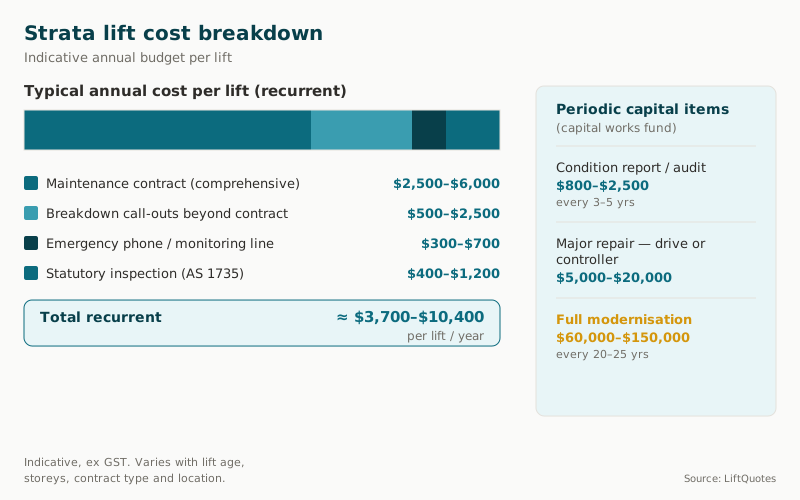
A strata scheme should budget roughly $3,700 to $10,400 per lift each year for recurrent costs — the maintenance contract, out-of-scope breakdown call-outs, the emergency phone line and statutory inspection. Those figures are indicative and ex GST. Where your building lands depends on the age of the lift, the number of storeys it serves, whether you hold a comprehensive or non-comprehensive contract, and your location.
Recurrent cost is only half the picture. The lift is really two budgets: a recurrent line that keeps it running safely year to year, and a capital works (sinking fund) provision for the big, infrequent items — a controller replacement, a drive upgrade, or a full modernisation once every 20 to 25 years. Fund only the first, and the second arrives as a special levy nobody voted for.
This page maps both halves with cited Australian ranges, then names the drivers that move your scheme's number up or down. It is written for committees and strata managers setting the annual budget and topping up the capital works fund — not for homeowners pricing a lift for the first time.
Indicative annual and periodic costs per lift for an Australian strata building, ex GST. Recurrent figures assume a single passenger lift on a comprehensive-style contract; capital items are one-off or cyclical. Last checked July 2026.
| Scenario | Cost range (AUD, ex GST) | Notes |
|---|---|---|
| Maintenance contract (comprehensive) | $2,500–$6,000 | Annual fee for a comprehensive contract covering scheduled servicing, parts and labour. A non-comprehensive (labour-only) contract starts lower but bills parts separately. Supplier-stated pricing collated by LiftQuotes, July 2026. |
| Breakdown call-outs beyond contract | $500–$2,500 | Out-of-hours or out-of-scope call-outs a non-comprehensive contract does not absorb. Older lifts sit at the top of the range because they fail more often. Indicative, July 2026. |
| Emergency phone / monitoring line | $300–$700 | Annual 4G VoLTE emergency phone connection and 24/7 monitoring, verified as part of routine maintenance. Indicative supplier pricing, 2026. |
| Statutory inspection (AS 1735) | $400–$1,200 | Periodic inspection by a competent person against the AS 1735 series. Frequency and fee vary with lift type and jurisdiction. Indicative, 2026. |
| Total recurrent per lift / year | $3,700–$10,400 | Sum of the four recurrent lines above. A newer lift on a simple contract sits near the floor; an ageing lift with frequent call-outs sits near the ceiling. |
| Condition report / audit (every 3–5 yrs) | $800–$2,500 | Independent condition assessment commissioned periodically to inform capital planning. Funded from capital works. Indicative, 2026. |
| Major repair — drive or controller | $5,000–$20,000 | One-off replacement of a major component such as a drive, controller or door operator. Funded from capital works, not the admin fund. Indicative, 2026. |
| Full modernisation (every 20–25 yrs) | $60,000–$150,000 | Comprehensive upgrade of a lift near end of life. A major capital project planned years ahead. Indicative, 2026. |
Recurrent ranges combine supplier-stated maintenance and monitoring pricing collated by LiftQuotes with the statutory inspection obligations of the AS 1735 series. Capital figures are indicative for a standard low- to mid-rise strata passenger lift and exclude shaft or building works. Verify every figure against quotes for your specific lift, contract and jurisdiction.
Last checked: 21 July 2026
Five variables move a strata lift from the floor of the recurrent range to the ceiling. Name them before you tender, and the quotes you receive become comparable.
Lift age
Age is the single biggest driver. A lift under 10 years old rarely fails and its parts are current, so it sits near the bottom of every range. Past 15 to 20 years, components wear, spare parts grow scarce, and call-outs rise — which is why contractors price older lifts higher and why comprehensive cover becomes the cheaper option. An ageing lift also signals a modernisation on the horizon, a capital item to start provisioning for now.
Number of storeys and stops
Every additional floor adds a landing door, call station and length of travel to service and inspect. A lift serving four levels carries more equipment — and more that can fail — than a two-stop lift, so both the maintenance fee and the inspection scope scale with the number of stops.
Contract type — comprehensive vs non-comprehensive
A comprehensive contract folds scheduled servicing, parts and labour into one predictable annual fee, which suits committee budgeting and older lifts. A non-comprehensive contract has a lower headline price but bills parts and out-of-scope call-outs separately, so a single major failure can erase the saving. The right choice depends on the lift's age and your appetite for a variable bill.
Number of lifts in the building
More lifts mean more total cost, but often a lower fee per lift — contractors discount a multi-lift site because one visit services several cars. A single-lift building carries the full call-out and travel cost alone, which is part of why smaller schemes pay more per lift than large towers.
Location and after-hours response
Metropolitan schemes have more contractors competing and shorter travel times, which keeps call-out costs down. Regional buildings pay a premium for distance and for guaranteed after-hours response. A tight response-time SLA — valuable when a stuck lift traps a resident — also lifts the annual fee.
Lift companies in Australia
Browse profiles, compare service areas, and check reviews.

Lift Shop
★ 5.0 (1551 reviews)
Australia's largest dedicated home lift specialist since 1996. 10,000+ installations. Exclusive Italian-crafted lifts with industry-leading 8-year warranty.
View profile →

Compact Home Lifts
NDIS★ 5.0 (465 reviews)
Melbourne branch of Compact Home Lifts. Compact residential lift specialist providing maintenance and repair services across Victoria.
View profile →

Next Level Elevators
★ 5.0 (454 reviews)
Award-winning provider of premium Italian-designed all-electric home elevators. Certified Eltec Partner. Showrooms in Melbourne, Sydney, and Brisbane.
View profile →

Shotton Lifts
NDIS★ 5.0 (9 reviews)
Family-owned Australian lift manufacturer since 1977. 80+ staff. Design, engineer, manufacture, install and service from Dandenong South VIC. NDIS registered.
View profile →

LiftFit Australia
NDIS★ 5.0 (8 reviews)
Victoria-based NDIS registered lift provider, est. 2011. Partners with Cibes, Savaria, and Kalea. Residential, commercial, and platform lifts.
View profile →

Easy Living Home Elevators
★ 5.0 (7 reviews)
Australia's #1 home elevator supplier since 1998. 100% Australian-owned. 11,000+ elevators in service across 6 states.
View profile →
LiftQuotes is a comparison platform. Companies shown are filtered by relevance to this page. Listing does not imply endorsement. LiftQuotes may receive a referral fee when you request quotes.
What should a strata scheme budget for its lift?
Budget about $3,700 to $10,400 per lift a year for recurrent costs, and provision separately for capital works. The recurrent figure covers four lines: the maintenance contract, breakdown call-outs your contract does not absorb, the emergency phone and monitoring line, and statutory inspection. A newer lift on a simple contract in a metro building sits near the floor; an ageing lift with frequent call-outs in a regional scheme sits near the ceiling.
That is the number for keeping the lift running. It does not include the periodic capital items — condition audits, a drive or controller replacement, or an eventual modernisation — which are funded from the capital works (sinking) fund, not the recurrent admin budget. The two belong in different places, and treating them as one line is the most common strata budgeting mistake. Our strata lift maintenance guide covers how to structure and tender the recurrent contract in detail.
The recurrent budget: what keeps the lift running
The maintenance contract is the largest recurrent line — indicatively $2,500 to $6,000 a year for a comprehensive contract on a single passenger lift (supplier-stated pricing, LiftQuotes, July 2026). It buys scheduled servicing that keeps the safety systems, doors and drive in good order. Our lift maintenance cost guide breaks down what comprehensive and non-comprehensive contracts include across residential, strata and commercial lifts.
Breakdown call-outs fall outside the base fee on a non-comprehensive contract — budget $500 to $2,500 a year depending on the lift's age and how often it stops. The emergency phone and monitoring line runs $300 to $700 a year: every lift car needs a phone that auto-dials 24/7 monitoring and works on power failure. Since the copper network was decommissioned, these run on 4G VoLTE, and confirming the connection is live is now a routine compliance check rather than a migration project — see lift emergency phone compliance for what to verify. Finally, statutory inspection against the AS 1735 series — the Australian Standard series covering lift installation, maintenance and inspection — costs $400 to $1,200 a year through a competent person.
Comprehensive vs non-comprehensive contracts
The contract type is the lever a committee can actually pull. A comprehensive contract bundles servicing, parts and labour into one fixed annual fee. It costs more up front but caps your exposure — a failed door operator or controller board is the contractor's cost, not a surprise levy. For a lift past 15 years, comprehensive cover is usually cheaper over a full year once parts are counted.
A non-comprehensive contract covers labour and scheduled servicing only, billing parts and out-of-scope call-outs separately. The headline price is lower, which appeals to a committee watching the admin fund — but one major component failure can wipe out the saving. For a newer lift under warranty, non-comprehensive can be the rational choice; for an ageing lift, it shifts risk onto the scheme.
Capital works: the costs that arrive in a lump
The recurrent budget keeps the lift running. The capital works fund pays for the items that do not recur every year but are certain to arrive. A condition report or audit — an independent assessment of the lift's remaining life — costs $800 to $2,500 and is worth commissioning every three to five years to steer capital planning. A major repair, such as replacing a drive, controller or door operator, runs $5,000 to $20,000 as a one-off; see lift repair cost for how those jobs are priced.
The largest capital item is modernisation — a comprehensive upgrade of a lift near end of life, indicatively $60,000 to $150,000 per lift, typically needed every 20 to 25 years. This is a planned project, not an emergency, and a scheme that has been topping up its capital works fund meets it without a special levy. Our lift modernisation cost guide and the strata lift modernisation guide cover scoping and staging the work.
Admin fund or sinking fund?
The recurrent costs — the maintenance contract, call-outs, the emergency phone line and inspection — are recurrent operating expenses and belong in the administrative fund (the recurrent budget levied each year). The capital items — audits, major repairs and modernisation — are the reason the capital works fund (called the sinking fund in some states, the maintenance fund in others) exists. Provisioning for modernisation across the 20-plus years of a lift's life is precisely what a capital works forecast is for.
Getting the split right protects owners from bill shock. A scheme that runs its lift out of the admin fund alone will eventually face a five- or six-figure modernisation with nothing set aside — and a special levy that lands hardest on owners least able to pay it.
What drives your scheme's number up or down
Age, storeys, contract type, the number of lifts and location together decide where your building sits in the ranges above. An ageing single lift in a regional building on a non-comprehensive contract will approach the top of the recurrent range and needs a serious capital provision; a near-new pair of lifts in a metro tower on a shared comprehensive contract sits far lower per lift. Before your next tender, record each lift's age, brand and storeys so contractors quote like-for-like.
Every building is different, which is why comparing contractors on a like-for-like brief pays off more than accepting a renewal. Get free quotes from vetted Australian lift companies to benchmark your maintenance contract and capital planning before the next budget.
How we research these costs
Cost figures on this page are indicative ranges for a standard low- to mid-rise strata passenger lift in Australia, ex GST. Recurrent figures combine supplier-stated maintenance, call-out and emergency-phone monitoring pricing collated by LiftQuotes with the periodic inspection obligations of the AS 1735 series (published by Standards Australia). Capital figures — condition audits, major component repairs and full modernisation — are indicative and exclude shaft or building works. They are a planning guide, not a quote: the age, storeys, contract type, number of lifts and location of your specific building will move the figure, which is why tendering on a like-for-like brief matters.
Sources: AS 1735 series (Standards Australia) for inspection and maintenance obligations; state WHS/OHS plant duties (Safe Work Australia model regulations; Victoria operates under its own OHS Act); supplier-stated maintenance, monitoring and modernisation pricing collated by LiftQuotes. Figures exclude shaft and building works and are indicative ex GST.
Last reviewed
21 July 2026
Next review due
21 January 2027
Get quotes tailored to your project
Tell us about your home and receive personalised pricing from local installers.
What are you looking for today?
I need a lift installed
I have a lift that needs attention
A strata scheme should budget roughly $3,700 to $10,400 per lift each year for recurrent costs — the maintenance contract, out-of-scope breakdown call-outs, the emergency phone line and statutory inspection. Those figures are indicative and ex GST. Where your building lands depends on the age of the lift, the number of storeys it serves, whether you hold a comprehensive or non-comprehensive contract, and your location.
Recurrent cost is only half the picture. The lift is really two budgets: a recurrent line that keeps it running safely year to year, and a capital works (sinking fund) provision for the big, infrequent items — a controller replacement, a drive upgrade, or a full modernisation once every 20 to 25 years. Fund only the first, and the second arrives as a special levy nobody voted for.
This page maps both halves with cited Australian ranges, then names the drivers that move your scheme's number up or down. It is written for committees and strata managers setting the annual budget and topping up the capital works fund — not for homeowners pricing a lift for the first time.
Indicative annual and periodic costs per lift for an Australian strata building, ex GST. Recurrent figures assume a single passenger lift on a comprehensive-style contract; capital items are one-off or cyclical. Last checked July 2026.
| Scenario | Cost range (AUD, ex GST) | Notes |
|---|---|---|
| Maintenance contract (comprehensive) | $2,500–$6,000 | Annual fee for a comprehensive contract covering scheduled servicing, parts and labour. A non-comprehensive (labour-only) contract starts lower but bills parts separately. Supplier-stated pricing collated by LiftQuotes, July 2026. |
| Breakdown call-outs beyond contract | $500–$2,500 | Out-of-hours or out-of-scope call-outs a non-comprehensive contract does not absorb. Older lifts sit at the top of the range because they fail more often. Indicative, July 2026. |
| Emergency phone / monitoring line | $300–$700 | Annual 4G VoLTE emergency phone connection and 24/7 monitoring, verified as part of routine maintenance. Indicative supplier pricing, 2026. |
| Statutory inspection (AS 1735) | $400–$1,200 | Periodic inspection by a competent person against the AS 1735 series. Frequency and fee vary with lift type and jurisdiction. Indicative, 2026. |
| Total recurrent per lift / year | $3,700–$10,400 | Sum of the four recurrent lines above. A newer lift on a simple contract sits near the floor; an ageing lift with frequent call-outs sits near the ceiling. |
| Condition report / audit (every 3–5 yrs) | $800–$2,500 | Independent condition assessment commissioned periodically to inform capital planning. Funded from capital works. Indicative, 2026. |
| Major repair — drive or controller | $5,000–$20,000 | One-off replacement of a major component such as a drive, controller or door operator. Funded from capital works, not the admin fund. Indicative, 2026. |
| Full modernisation (every 20–25 yrs) | $60,000–$150,000 | Comprehensive upgrade of a lift near end of life. A major capital project planned years ahead. Indicative, 2026. |
Recurrent ranges combine supplier-stated maintenance and monitoring pricing collated by LiftQuotes with the statutory inspection obligations of the AS 1735 series. Capital figures are indicative for a standard low- to mid-rise strata passenger lift and exclude shaft or building works. Verify every figure against quotes for your specific lift, contract and jurisdiction.
Last checked: 21 July 2026
Five variables move a strata lift from the floor of the recurrent range to the ceiling. Name them before you tender, and the quotes you receive become comparable.
Lift age
Age is the single biggest driver. A lift under 10 years old rarely fails and its parts are current, so it sits near the bottom of every range. Past 15 to 20 years, components wear, spare parts grow scarce, and call-outs rise — which is why contractors price older lifts higher and why comprehensive cover becomes the cheaper option. An ageing lift also signals a modernisation on the horizon, a capital item to start provisioning for now.
Number of storeys and stops
Every additional floor adds a landing door, call station and length of travel to service and inspect. A lift serving four levels carries more equipment — and more that can fail — than a two-stop lift, so both the maintenance fee and the inspection scope scale with the number of stops.
Contract type — comprehensive vs non-comprehensive
A comprehensive contract folds scheduled servicing, parts and labour into one predictable annual fee, which suits committee budgeting and older lifts. A non-comprehensive contract has a lower headline price but bills parts and out-of-scope call-outs separately, so a single major failure can erase the saving. The right choice depends on the lift's age and your appetite for a variable bill.
Number of lifts in the building
More lifts mean more total cost, but often a lower fee per lift — contractors discount a multi-lift site because one visit services several cars. A single-lift building carries the full call-out and travel cost alone, which is part of why smaller schemes pay more per lift than large towers.
Location and after-hours response
Metropolitan schemes have more contractors competing and shorter travel times, which keeps call-out costs down. Regional buildings pay a premium for distance and for guaranteed after-hours response. A tight response-time SLA — valuable when a stuck lift traps a resident — also lifts the annual fee.
Lift companies in Australia
Browse profiles, compare service areas, and check reviews.
Lift Shop
★ 5.0 (1551 reviews)
Australia's largest dedicated home lift specialist since 1996. 10,000+ installations. Exclusive Italian-crafted lifts with industry-leading 8-year warranty.
View profile →
Compact Home Lifts
NDIS★ 5.0 (465 reviews)
Melbourne branch of Compact Home Lifts. Compact residential lift specialist providing maintenance and repair services across Victoria.
View profile →
Next Level Elevators
★ 5.0 (454 reviews)
Award-winning provider of premium Italian-designed all-electric home elevators. Certified Eltec Partner. Showrooms in Melbourne, Sydney, and Brisbane.
View profile →
Shotton Lifts
NDIS★ 5.0 (9 reviews)
Family-owned Australian lift manufacturer since 1977. 80+ staff. Design, engineer, manufacture, install and service from Dandenong South VIC. NDIS registered.
View profile →
LiftFit Australia
NDIS★ 5.0 (8 reviews)
Victoria-based NDIS registered lift provider, est. 2011. Partners with Cibes, Savaria, and Kalea. Residential, commercial, and platform lifts.
View profile →
Easy Living Home Elevators
★ 5.0 (7 reviews)
Australia's #1 home elevator supplier since 1998. 100% Australian-owned. 11,000+ elevators in service across 6 states.
View profile →
LiftQuotes is a comparison platform. Companies shown are filtered by relevance to this page. Listing does not imply endorsement. LiftQuotes may receive a referral fee when you request quotes.
What should a strata scheme budget for its lift?
Budget about $3,700 to $10,400 per lift a year for recurrent costs, and provision separately for capital works. The recurrent figure covers four lines: the maintenance contract, breakdown call-outs your contract does not absorb, the emergency phone and monitoring line, and statutory inspection. A newer lift on a simple contract in a metro building sits near the floor; an ageing lift with frequent call-outs in a regional scheme sits near the ceiling.
That is the number for keeping the lift running. It does not include the periodic capital items — condition audits, a drive or controller replacement, or an eventual modernisation — which are funded from the capital works (sinking) fund, not the recurrent admin budget. The two belong in different places, and treating them as one line is the most common strata budgeting mistake. Our strata lift maintenance guide covers how to structure and tender the recurrent contract in detail.
The recurrent budget: what keeps the lift running
The maintenance contract is the largest recurrent line — indicatively $2,500 to $6,000 a year for a comprehensive contract on a single passenger lift (supplier-stated pricing, LiftQuotes, July 2026). It buys scheduled servicing that keeps the safety systems, doors and drive in good order. Our lift maintenance cost guide breaks down what comprehensive and non-comprehensive contracts include across residential, strata and commercial lifts.
Breakdown call-outs fall outside the base fee on a non-comprehensive contract — budget $500 to $2,500 a year depending on the lift's age and how often it stops. The emergency phone and monitoring line runs $300 to $700 a year: every lift car needs a phone that auto-dials 24/7 monitoring and works on power failure. Since the copper network was decommissioned, these run on 4G VoLTE, and confirming the connection is live is now a routine compliance check rather than a migration project — see lift emergency phone compliance for what to verify. Finally, statutory inspection against the AS 1735 series — the Australian Standard series covering lift installation, maintenance and inspection — costs $400 to $1,200 a year through a competent person.
Comprehensive vs non-comprehensive contracts
The contract type is the lever a committee can actually pull. A comprehensive contract bundles servicing, parts and labour into one fixed annual fee. It costs more up front but caps your exposure — a failed door operator or controller board is the contractor's cost, not a surprise levy. For a lift past 15 years, comprehensive cover is usually cheaper over a full year once parts are counted.
A non-comprehensive contract covers labour and scheduled servicing only, billing parts and out-of-scope call-outs separately. The headline price is lower, which appeals to a committee watching the admin fund — but one major component failure can wipe out the saving. For a newer lift under warranty, non-comprehensive can be the rational choice; for an ageing lift, it shifts risk onto the scheme.
Capital works: the costs that arrive in a lump
The recurrent budget keeps the lift running. The capital works fund pays for the items that do not recur every year but are certain to arrive. A condition report or audit — an independent assessment of the lift's remaining life — costs $800 to $2,500 and is worth commissioning every three to five years to steer capital planning. A major repair, such as replacing a drive, controller or door operator, runs $5,000 to $20,000 as a one-off; see lift repair cost for how those jobs are priced.
The largest capital item is modernisation — a comprehensive upgrade of a lift near end of life, indicatively $60,000 to $150,000 per lift, typically needed every 20 to 25 years. This is a planned project, not an emergency, and a scheme that has been topping up its capital works fund meets it without a special levy. Our lift modernisation cost guide and the strata lift modernisation guide cover scoping and staging the work.
Admin fund or sinking fund?
The recurrent costs — the maintenance contract, call-outs, the emergency phone line and inspection — are recurrent operating expenses and belong in the administrative fund (the recurrent budget levied each year). The capital items — audits, major repairs and modernisation — are the reason the capital works fund (called the sinking fund in some states, the maintenance fund in others) exists. Provisioning for modernisation across the 20-plus years of a lift's life is precisely what a capital works forecast is for.
Getting the split right protects owners from bill shock. A scheme that runs its lift out of the admin fund alone will eventually face a five- or six-figure modernisation with nothing set aside — and a special levy that lands hardest on owners least able to pay it.
What drives your scheme's number up or down
Age, storeys, contract type, the number of lifts and location together decide where your building sits in the ranges above. An ageing single lift in a regional building on a non-comprehensive contract will approach the top of the recurrent range and needs a serious capital provision; a near-new pair of lifts in a metro tower on a shared comprehensive contract sits far lower per lift. Before your next tender, record each lift's age, brand and storeys so contractors quote like-for-like.
Every building is different, which is why comparing contractors on a like-for-like brief pays off more than accepting a renewal. Get free quotes from vetted Australian lift companies to benchmark your maintenance contract and capital planning before the next budget.
How we research these costs
Cost figures on this page are indicative ranges for a standard low- to mid-rise strata passenger lift in Australia, ex GST. Recurrent figures combine supplier-stated maintenance, call-out and emergency-phone monitoring pricing collated by LiftQuotes with the periodic inspection obligations of the AS 1735 series (published by Standards Australia). Capital figures — condition audits, major component repairs and full modernisation — are indicative and exclude shaft or building works. They are a planning guide, not a quote: the age, storeys, contract type, number of lifts and location of your specific building will move the figure, which is why tendering on a like-for-like brief matters.
Sources: AS 1735 series (Standards Australia) for inspection and maintenance obligations; state WHS/OHS plant duties (Safe Work Australia model regulations; Victoria operates under its own OHS Act); supplier-stated maintenance, monitoring and modernisation pricing collated by LiftQuotes. Figures exclude shaft and building works and are indicative ex GST.
Last reviewed
21 July 2026
Next review due
21 January 2027
Get quotes tailored to your project
Tell us about your home and receive personalised pricing from local installers.
What are you looking for today?
I need a lift installed
I have a lift that needs attention
Common questions about strata lift costs
Budget roughly $2,500 to $6,000 a year for a comprehensive maintenance contract on a single strata passenger lift, ex GST (supplier-stated, July 2026). Add breakdown call-outs, the emergency phone line and statutory inspection and the total recurrent cost is about $3,700 to $10,400 per lift a year. Older lifts and single-lift buildings sit at the top of the range.
Related guides
Guide
Our Editorial Methodology: How LiftQuotes Researches Content
How LiftQuotes researches, sources and reviews every lift guide and cost page: the standards we cite, our linked-source rule for cost data, and how often we update.
Guide
Lift Compliance Checklist for Facility Managers (Australia)
A facility manager's lift compliance checklist for Australia: plant registration, inspection, log books, 4G VoLTE emergency phones and DDA access duties.
Comparison
Stairlift vs Platform Lift: Which Access Solution Fits?
A stairlift carries a seated user along the stairs from about $3,000; a platform lift raises a wheelchair vertically from about $15,000. Compare cost, access and fit.
Location
Lift Companies in Melbourne: Compare Local Installers
Compare lift companies in Melbourne for home, platform and commercial lifts. WorkSafe Victoria compliance, local installer coverage and indicative VIC costs.
Benchmark your strata lift contract
Get free, no-obligation quotes from vetted Australian lift companies — and compare maintenance contracts and modernisation budgets on a like-for-like brief before your next tender.
Join 1,000+ Australians who've requested quotes through LiftQuotes
Get free quotes