Do Home Lifts Need Council Approval?
In most cases, yes — a building permit is required, and some installations also need development approval. Here is what applies in each Australian state.
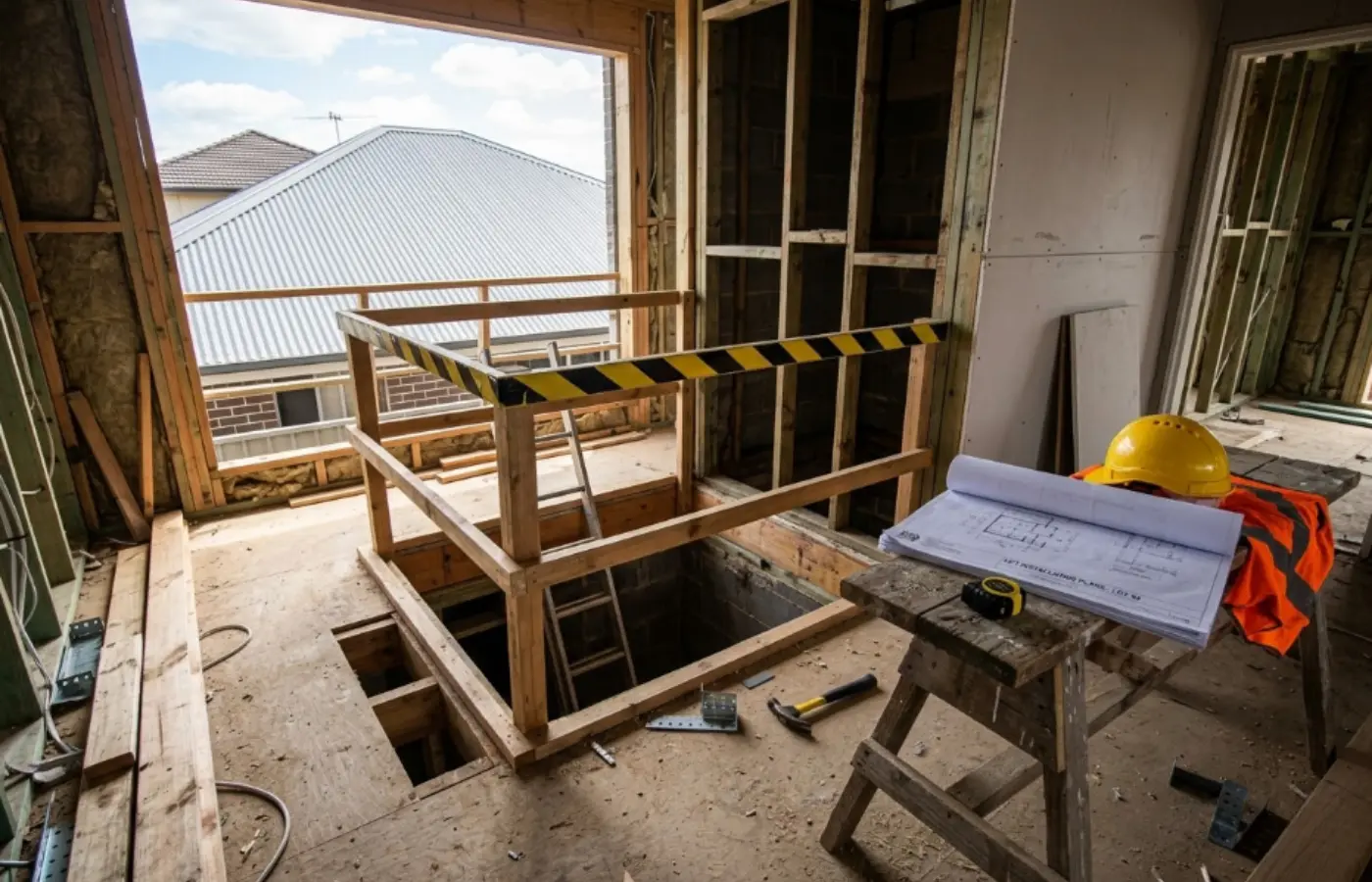
In almost all Australian states and territories, installing a home lift requires a building permit. This is because a lift installation involves structural work — a floor opening, shaft framing, and landing door openings — that must be assessed against the National Construction Code and AS 1735.18.
A building permit is different from council development approval (a planning permit or DA). You will almost always need a building permit. Whether you also need development approval from your local council depends on the state you are in and the specifics of the installation.
This guide explains both requirements, covers the state-by-state position, and notes any exemptions that may apply — particularly for disability-related modifications under NDIS or aged care programs.
In almost all cases, a building permit is required. Development approval (council DA) depends on your state and the specifics of the installation.
Building permit vs development approval
A building permit (also called a building approval, building consent, or construction certificate depending on jurisdiction) covers the structural and safety aspects of the work. It is assessed against the National Construction Code (NCC) and relevant Australian Standards. A licensed building surveyor or private certifier issues it.
A development approval (also called a planning permit, DA, or development consent) covers the planning and land use aspects — whether the modification is permitted under your local planning scheme. This is what people generally mean when they ask about council approval.
For most internal home lift installations, you need a building permit. Development approval is only required if the installation triggers a planning assessment under your local scheme.
When development approval is more likely
- The property is heritage-listed or in a heritage conservation area
- The installation involves external structural changes visible from the street or neighbouring properties
- The local planning scheme requires approval for any structural alteration regardless of type
When development approval is less likely
- The lift is wholly internal with no external changes
- The installation qualifies as exempt development under your state planning code
- The installation is a disability modification under a recognised program
State-by-state position
New South Wales — A building permit (Construction Certificate or Complying Development Certificate) is required. Internal lift installations may qualify as complying development, avoiding a full Development Application. Confirm with a licensed certifier. The lift must be registered with SafeWork NSW as plant before first use.
Victoria — A building permit from a registered building surveyor is required. Victoria operates under the OHS Act rather than WHS — the lift must be registered with WorkSafe Victoria before use.
Queensland — A building approval from a private certifier or council building assessment officer is required. The lift must be registered with Workplace Health and Safety Queensland.
South Australia — A development approval from the relevant planning authority is required. Registration with SafeWork SA applies on completion.
Western Australia — A building permit is required from a local council or a private building surveyor. Registration with WorkSafe WA is required before first use.
ACT, Tasmania, and Northern Territory — A building permit is required in all three jurisdictions. Confirm plant registration requirements with the relevant territory workplace safety authority.
Disability modification exemptions
Some states have streamlined pathways for accessibility modifications, particularly for installations funded through the NDIS or aged care home modification programs. A home modification assessment by a certified assessor or occupational therapist may support a simplified approval pathway. Confirm with your local council and plan manager before assuming an exemption applies — do not proceed on the assumption of exemption without written confirmation.
Do not assume an NDIS exemption applies without written confirmation from your local council.
For home lift product and cost information, see our home lifts overview and home lift cost guide. When you are ready to proceed, get quotes from lift suppliers — most will advise on the approval process as part of their initial assessment.
Lift companies in Australia
Browse profiles, compare service areas, and check reviews.

Lift Shop
★ 5.0 (1551 reviews)
Australia's largest dedicated home lift specialist since 1996. 10,000+ installations. Exclusive Italian-crafted lifts with industry-leading 8-year warranty.
View profile →

Compact Home Lifts
NDIS★ 5.0 (465 reviews)
Melbourne branch of Compact Home Lifts. Compact residential lift specialist providing maintenance and repair services across Victoria.
View profile →

Next Level Elevators
★ 5.0 (454 reviews)
Award-winning provider of premium Italian-designed all-electric home elevators. Certified Eltec Partner. Showrooms in Melbourne, Sydney, and Brisbane.
View profile →

Shotton Lifts
NDIS★ 5.0 (9 reviews)
Family-owned Australian lift manufacturer since 1977. 80+ staff. Design, engineer, manufacture, install and service from Dandenong South VIC. NDIS registered.
View profile →

LiftFit Australia
NDIS★ 5.0 (8 reviews)
Victoria-based NDIS registered lift provider, est. 2011. Partners with Cibes, Savaria, and Kalea. Residential, commercial, and platform lifts.
View profile →

Easy Living Home Elevators
★ 5.0 (7 reviews)
Australia's #1 home elevator supplier since 1998. 100% Australian-owned. 11,000+ elevators in service across 6 states.
View profile →
LiftQuotes is a comparison platform. Companies shown are filtered by relevance to this page. Listing does not imply endorsement. LiftQuotes may receive a referral fee when you request quotes.
Put this into action
When you're ready to move forward, get free quotes from verified Australian lift installers.
What are you looking for today?
I need a lift installed
I have a lift that needs attention
In almost all cases, a building permit is required. Development approval (council DA) depends on your state and the specifics of the installation.
Building permit vs development approval
A building permit (also called a building approval, building consent, or construction certificate depending on jurisdiction) covers the structural and safety aspects of the work. It is assessed against the National Construction Code (NCC) and relevant Australian Standards. A licensed building surveyor or private certifier issues it.
A development approval (also called a planning permit, DA, or development consent) covers the planning and land use aspects — whether the modification is permitted under your local planning scheme. This is what people generally mean when they ask about council approval.
For most internal home lift installations, you need a building permit. Development approval is only required if the installation triggers a planning assessment under your local scheme.
When development approval is more likely
- The property is heritage-listed or in a heritage conservation area
- The installation involves external structural changes visible from the street or neighbouring properties
- The local planning scheme requires approval for any structural alteration regardless of type
When development approval is less likely
- The lift is wholly internal with no external changes
- The installation qualifies as exempt development under your state planning code
- The installation is a disability modification under a recognised program
State-by-state position
New South Wales — A building permit (Construction Certificate or Complying Development Certificate) is required. Internal lift installations may qualify as complying development, avoiding a full Development Application. Confirm with a licensed certifier. The lift must be registered with SafeWork NSW as plant before first use.
Victoria — A building permit from a registered building surveyor is required. Victoria operates under the OHS Act rather than WHS — the lift must be registered with WorkSafe Victoria before use.
Queensland — A building approval from a private certifier or council building assessment officer is required. The lift must be registered with Workplace Health and Safety Queensland.
South Australia — A development approval from the relevant planning authority is required. Registration with SafeWork SA applies on completion.
Western Australia — A building permit is required from a local council or a private building surveyor. Registration with WorkSafe WA is required before first use.
ACT, Tasmania, and Northern Territory — A building permit is required in all three jurisdictions. Confirm plant registration requirements with the relevant territory workplace safety authority.
Disability modification exemptions
Some states have streamlined pathways for accessibility modifications, particularly for installations funded through the NDIS or aged care home modification programs. A home modification assessment by a certified assessor or occupational therapist may support a simplified approval pathway. Confirm with your local council and plan manager before assuming an exemption applies — do not proceed on the assumption of exemption without written confirmation.
Do not assume an NDIS exemption applies without written confirmation from your local council.
For home lift product and cost information, see our home lifts overview and home lift cost guide. When you are ready to proceed, get quotes from lift suppliers — most will advise on the approval process as part of their initial assessment.
Lift companies in Australia
Browse profiles, compare service areas, and check reviews.
Lift Shop
★ 5.0 (1551 reviews)
Australia's largest dedicated home lift specialist since 1996. 10,000+ installations. Exclusive Italian-crafted lifts with industry-leading 8-year warranty.
View profile →
Compact Home Lifts
NDIS★ 5.0 (465 reviews)
Melbourne branch of Compact Home Lifts. Compact residential lift specialist providing maintenance and repair services across Victoria.
View profile →
Next Level Elevators
★ 5.0 (454 reviews)
Award-winning provider of premium Italian-designed all-electric home elevators. Certified Eltec Partner. Showrooms in Melbourne, Sydney, and Brisbane.
View profile →
Shotton Lifts
NDIS★ 5.0 (9 reviews)
Family-owned Australian lift manufacturer since 1977. 80+ staff. Design, engineer, manufacture, install and service from Dandenong South VIC. NDIS registered.
View profile →
LiftFit Australia
NDIS★ 5.0 (8 reviews)
Victoria-based NDIS registered lift provider, est. 2011. Partners with Cibes, Savaria, and Kalea. Residential, commercial, and platform lifts.
View profile →
Easy Living Home Elevators
★ 5.0 (7 reviews)
Australia's #1 home elevator supplier since 1998. 100% Australian-owned. 11,000+ elevators in service across 6 states.
View profile →
LiftQuotes is a comparison platform. Companies shown are filtered by relevance to this page. Listing does not imply endorsement. LiftQuotes may receive a referral fee when you request quotes.
Put this into action
When you're ready to move forward, get free quotes from verified Australian lift installers.
What are you looking for today?
I need a lift installed
I have a lift that needs attention
Related guides
Location
Commercial Lifts Melbourne: Costs, Compliance & Installers
Commercial lift costs, Victorian OHS compliance and the Melbourne installer market — indicative prices, WorkSafe Victoria rules and NCC requirements for VIC projects.
Location
Commercial Lifts Sydney: Costs, Compliance & Installers
Commercial lift costs, NSW compliance and the Sydney installer market — indicative prices, SafeWork NSW rules and NCC requirements for CBD and metro projects.
Guide
What Size Lift Do I Need for a Wheelchair? (Australia)
A home lift for a wheelchair needs roughly 1,100 x 1,400 mm inside and a 900 mm clear door. See minimum sizes for a wheelchair, a carer, and turning space.
Guide
Support at Home & Lift Funding: The 2026 Guide
Can Support at Home fund a home lift or stairlift? How aged care funding works, the OT assessment, means-tested contributions, and how it differs from the NDIS.
Get quotes from home lift suppliers
Lift suppliers will assess your home and guide you through the permit process. Get competing quotes, free and no obligation.
Join 1,000+ Australians who've requested quotes through LiftQuotes
Get free quotes