Home Lift Safety Features Explained
Home lifts in Australia are built to AS/NZS 1735.18 with battery backup, emergency communication, door interlocks and mechanical safety gear — layered systems designed so no single failure can put a passenger at risk.
Home lifts are engineered around a simple principle: no single failure should ever put a passenger at risk. A residential lift installed in Australia is built to AS/NZS 1735.18:2002 and combines battery backup, emergency communication, door interlocks and mechanical safety gear — layered systems that each cover a different risk.
The result is a lift that is genuinely safe to use every day, including by children and older residents when it is specified with the right controls. It also means the lift will refuse to operate if something is wrong — an open door, an overload, or a fault in the drive — rather than run in an unsafe state.
This guide explains each safety feature in plain language, then answers the three questions buyers ask most: is a home lift actually safe, what happens in a power cut, and could a child get trapped.
Are home lifts safe?
Yes. A home lift installed in Australia is built to AS/NZS 1735.18:2002 — the Australian Standard for automatically controlled passenger lifts in private residences — and carries several independent safety systems, so that no single fault can put a passenger at risk. Braking, door control, overload protection and an emergency call system all work together, and the lift simply will not run if any one of them is not satisfied.
Safety is designed in, not added on. The standard sets requirements for how the car is suspended and braked, how the doors behave, and how a passenger calls for help — and a compliant installation has to meet all of them. For the full regulatory picture, see our guide to lift standards in Australia.
The safety features every home lift has
A modern residential lift combines eight safety systems, and each one addresses a specific risk:
- Battery backup and automatic lowering — if mains power fails, a battery brings the car gently to the nearest floor and opens the doors, so no one is left stranded between levels.
- Emergency alarm — an audible alarm button summons help from inside the car.
- Phone or intercom — a two-way voice link connects a passenger to a nominated contact or a 24/7 monitoring centre.
- Door interlocks — the car cannot move unless every door is closed and locked, and a door cannot be opened while the car is travelling.
- Safety sensors and light curtains — an infrared beam across the doorway stops the doors closing on a person, pet or object.
- Over-speed governor and safety gear — if the car ever descends faster than its rated speed, mechanical safety gear grips the guide rails and holds the car in place.
- Key switch and child-safety controls — a key switch can lock out unsupervised use, and constant-pressure controls stop the car moving unless a button is held.
- Rated safe working load — the lift monitors weight and will not operate if it is loaded beyond its rated capacity.
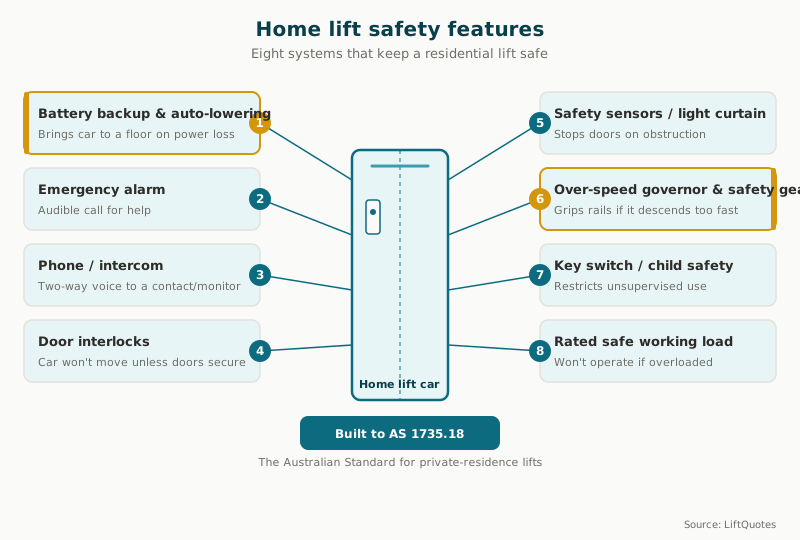
Together these systems cover the three things buyers worry about most: a power cut, a mechanical failure, and a child using the lift unsupervised. The next sections answer those fears directly.
What happens if the power goes out?
The car does not stop between floors and trap you. Every home lift has a battery backup that takes over the moment mains power fails, driving the car slowly to the nearest landing and releasing the doors so passengers can step out. The emergency alarm and phone also run on backup power, so a call for help still works during an outage.
Battery capacity and how many trips it supports vary between models, so this is one feature worth confirming in writing when you compare installers. Our home lift installation guide covers what to check at specification stage, including where the controller and battery are sited.
Could a child get trapped?
No — and several features exist specifically to prevent it. Door interlocks mean the car will not move with a door open, and a door will not open onto an empty shaft. The light curtain holds the doors open if anything crosses the threshold. A key switch lets a household lock the lift out of use entirely, which is the simplest safeguard in a home with young children.
These same protections make a lift a safer choice than stairs for older residents, which is why they matter in our guide to home lifts for elderly users. A compact lift can be specified with the same full safety set — see small lifts for homes for the space-saving options that still meet AS/NZS 1735.18.
Safety you can plan for
The safest home lift is one that is correctly specified, professionally installed, and kept in good order with regular servicing — the interlocks, governor and battery only protect you if they are maintained. When you request quotes, ask each installer to confirm the lift meets AS/NZS 1735.18 and to walk you through its battery backup, emergency communication and child-safety options.
To compare safety features and inclusions across suppliers, get free quotes from qualified Australian lift companies, or start with our home lifts hub for the full range of residential options.
Lift companies in Australia
Browse profiles, compare service areas, and check reviews.

Lift Shop
★ 5.0 (1551 reviews)
Australia's largest dedicated home lift specialist since 1996. 10,000+ installations. Exclusive Italian-crafted lifts with industry-leading 8-year warranty.
View profile →

Compact Home Lifts
NDIS★ 5.0 (465 reviews)
Melbourne branch of Compact Home Lifts. Compact residential lift specialist providing maintenance and repair services across Victoria.
View profile →

Next Level Elevators
★ 5.0 (454 reviews)
Award-winning provider of premium Italian-designed all-electric home elevators. Certified Eltec Partner. Showrooms in Melbourne, Sydney, and Brisbane.
View profile →

Shotton Lifts
NDIS★ 5.0 (9 reviews)
Family-owned Australian lift manufacturer since 1977. 80+ staff. Design, engineer, manufacture, install and service from Dandenong South VIC. NDIS registered.
View profile →

LiftFit Australia
NDIS★ 5.0 (8 reviews)
Victoria-based NDIS registered lift provider, est. 2011. Partners with Cibes, Savaria, and Kalea. Residential, commercial, and platform lifts.
View profile →

Easy Living Home Elevators
★ 5.0 (7 reviews)
Australia's #1 home elevator supplier since 1998. 100% Australian-owned. 11,000+ elevators in service across 6 states.
View profile →
LiftQuotes is a comparison platform. Companies shown are filtered by relevance to this page. Listing does not imply endorsement. LiftQuotes may receive a referral fee when you request quotes.
Put this into action
When you're ready to move forward, get free quotes from verified Australian lift installers.
What are you looking for today?
I need a lift installed
I have a lift that needs attention
Are home lifts safe?
Yes. A home lift installed in Australia is built to AS/NZS 1735.18:2002 — the Australian Standard for automatically controlled passenger lifts in private residences — and carries several independent safety systems, so that no single fault can put a passenger at risk. Braking, door control, overload protection and an emergency call system all work together, and the lift simply will not run if any one of them is not satisfied.
Safety is designed in, not added on. The standard sets requirements for how the car is suspended and braked, how the doors behave, and how a passenger calls for help — and a compliant installation has to meet all of them. For the full regulatory picture, see our guide to lift standards in Australia.
The safety features every home lift has
A modern residential lift combines eight safety systems, and each one addresses a specific risk:
- Battery backup and automatic lowering — if mains power fails, a battery brings the car gently to the nearest floor and opens the doors, so no one is left stranded between levels.
- Emergency alarm — an audible alarm button summons help from inside the car.
- Phone or intercom — a two-way voice link connects a passenger to a nominated contact or a 24/7 monitoring centre.
- Door interlocks — the car cannot move unless every door is closed and locked, and a door cannot be opened while the car is travelling.
- Safety sensors and light curtains — an infrared beam across the doorway stops the doors closing on a person, pet or object.
- Over-speed governor and safety gear — if the car ever descends faster than its rated speed, mechanical safety gear grips the guide rails and holds the car in place.
- Key switch and child-safety controls — a key switch can lock out unsupervised use, and constant-pressure controls stop the car moving unless a button is held.
- Rated safe working load — the lift monitors weight and will not operate if it is loaded beyond its rated capacity.
Together these systems cover the three things buyers worry about most: a power cut, a mechanical failure, and a child using the lift unsupervised. The next sections answer those fears directly.
What happens if the power goes out?
The car does not stop between floors and trap you. Every home lift has a battery backup that takes over the moment mains power fails, driving the car slowly to the nearest landing and releasing the doors so passengers can step out. The emergency alarm and phone also run on backup power, so a call for help still works during an outage.
Battery capacity and how many trips it supports vary between models, so this is one feature worth confirming in writing when you compare installers. Our home lift installation guide covers what to check at specification stage, including where the controller and battery are sited.
Could a child get trapped?
No — and several features exist specifically to prevent it. Door interlocks mean the car will not move with a door open, and a door will not open onto an empty shaft. The light curtain holds the doors open if anything crosses the threshold. A key switch lets a household lock the lift out of use entirely, which is the simplest safeguard in a home with young children.
These same protections make a lift a safer choice than stairs for older residents, which is why they matter in our guide to home lifts for elderly users. A compact lift can be specified with the same full safety set — see small lifts for homes for the space-saving options that still meet AS/NZS 1735.18.
Safety you can plan for
The safest home lift is one that is correctly specified, professionally installed, and kept in good order with regular servicing — the interlocks, governor and battery only protect you if they are maintained. When you request quotes, ask each installer to confirm the lift meets AS/NZS 1735.18 and to walk you through its battery backup, emergency communication and child-safety options.
To compare safety features and inclusions across suppliers, get free quotes from qualified Australian lift companies, or start with our home lifts hub for the full range of residential options.
Lift companies in Australia
Browse profiles, compare service areas, and check reviews.
Lift Shop
★ 5.0 (1551 reviews)
Australia's largest dedicated home lift specialist since 1996. 10,000+ installations. Exclusive Italian-crafted lifts with industry-leading 8-year warranty.
View profile →
Compact Home Lifts
NDIS★ 5.0 (465 reviews)
Melbourne branch of Compact Home Lifts. Compact residential lift specialist providing maintenance and repair services across Victoria.
View profile →
Next Level Elevators
★ 5.0 (454 reviews)
Award-winning provider of premium Italian-designed all-electric home elevators. Certified Eltec Partner. Showrooms in Melbourne, Sydney, and Brisbane.
View profile →
Shotton Lifts
NDIS★ 5.0 (9 reviews)
Family-owned Australian lift manufacturer since 1977. 80+ staff. Design, engineer, manufacture, install and service from Dandenong South VIC. NDIS registered.
View profile →
LiftFit Australia
NDIS★ 5.0 (8 reviews)
Victoria-based NDIS registered lift provider, est. 2011. Partners with Cibes, Savaria, and Kalea. Residential, commercial, and platform lifts.
View profile →
Easy Living Home Elevators
★ 5.0 (7 reviews)
Australia's #1 home elevator supplier since 1998. 100% Australian-owned. 11,000+ elevators in service across 6 states.
View profile →
LiftQuotes is a comparison platform. Companies shown are filtered by relevance to this page. Listing does not imply endorsement. LiftQuotes may receive a referral fee when you request quotes.
Put this into action
When you're ready to move forward, get free quotes from verified Australian lift installers.
What are you looking for today?
I need a lift installed
I have a lift that needs attention
Built to a residential standard
Australian home lifts are designed to AS/NZS 1735.18:2002, the standard that sets the safety requirements for automatically controlled lifts in private homes.
Safe in a power cut
Battery backup lowers the car to the nearest floor and opens the doors automatically, so no one is stranded when mains power fails.
Protected against faults
Door interlocks, a light curtain and an over-speed governor with safety gear stop the lift moving in any unsafe condition.
Child-safe by design
A key switch and constant-pressure controls restrict unsupervised use, and the doors will not close on anyone in the way.
Common questions about home lift safety
Yes. A home lift installed in Australia is built to AS/NZS 1735.18:2002, the standard for automatically controlled passenger lifts in private residences, and carries several independent safety systems so that no single fault can put a passenger at risk. Braking, door interlocks, overload protection and an emergency call system all work together, and the lift will not run unless every one of them is satisfied. Used and maintained as intended, a modern home lift is a very safe way to move between levels.
Related guides
Location
Commercial Lifts Melbourne: Costs, Compliance & Installers
Commercial lift costs, Victorian OHS compliance and the Melbourne installer market — indicative prices, WorkSafe Victoria rules and NCC requirements for VIC projects.
Location
Commercial Lifts Sydney: Costs, Compliance & Installers
Commercial lift costs, NSW compliance and the Sydney installer market — indicative prices, SafeWork NSW rules and NCC requirements for CBD and metro projects.
Guide
What Size Lift Do I Need for a Wheelchair? (Australia)
A home lift for a wheelchair needs roughly 1,100 x 1,400 mm inside and a 900 mm clear door. See minimum sizes for a wheelchair, a carer, and turning space.
Guide
Support at Home & Lift Funding: The 2026 Guide
Can Support at Home fund a home lift or stairlift? How aged care funding works, the OT assessment, means-tested contributions, and how it differs from the NDIS.
Compare home lift safety features
Get quotes from qualified Australian lift companies and compare safety inclusions — battery backup, emergency phone, child-safety controls — side by side.
Join 1,000+ Australians who've requested quotes through LiftQuotes
Get free quotes