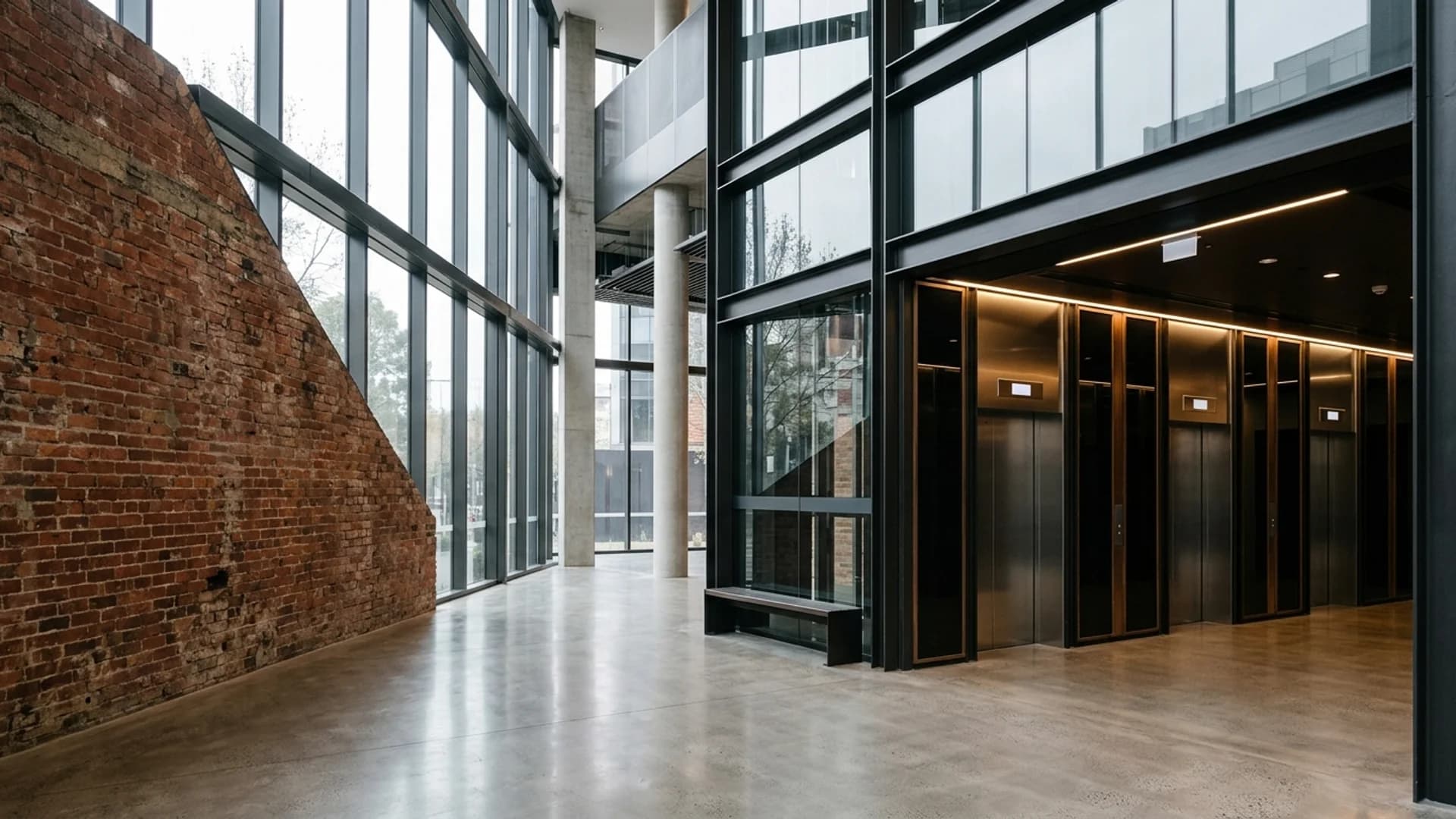
Commercial Lifts in Melbourne
Passenger, goods and accessible lifts for Melbourne offices, retail, healthcare and multi-storey developments — with local installers who understand Victoria's own OHS framework and inner-city heritage sites.
A low-rise commercial passenger lift for a two- to four-storey Melbourne building costs roughly $50,000 to $95,000 per lift, ex GST, as of Q2 2026 — and that figure climbs with building height, cabin specification and site access. Melbourne is the second-deepest commercial lift market in Australia after Sydney, with strong competition among global OEMs and established local independents that often keeps pricing a touch keener than the Sydney CBD premium.
The single most important thing to understand about buying a commercial lift in Melbourne is that Victoria does not follow the national model Work Health and Safety (WHS) laws. It runs its own Occupational Health and Safety (OHS) framework, regulated by WorkSafe Victoria — a distinction that national content routinely gets wrong and that changes how your lift is registered and inspected.
Whether you are a developer specifying lifts at permit stage, a facility manager planning a modernisation, or an owners corporation upgrading an ageing building, this page covers the Victoria-specific market, costs and compliance that actually apply to your project.
Melbourne, VIC
Victoria is the key exception to Australia's harmonised safety laws. Rather than the model Work Health and Safety (WHS) Act adopted by most states, Victoria operates under its own Occupational Health and Safety Act 2004 and the Occupational Health and Safety Regulations 2017, regulated by WorkSafe Victoria. For commercial lifts this matters directly: lifts are registrable plant under the Victorian OHS Regulations, so both the plant design and each installed item are registered with WorkSafe Victoria — not with a national WHS regulator.
Melbourne's building stock runs from CBD and Docklands high-rise towers to inner-city heritage buildings in suburbs like Fitzroy, Richmond and South Melbourne, and out to the growth-corridor commercial estates in Melbourne's north and west. Heritage overlays are common across the inner city and can constrain shaft placement and facade changes on retrofit projects. For strata and mixed-use buildings, the owners corporation holds the compliance duty over common-property plant.
Compliance notes
Commercial lifts in Victoria sit across three compliance layers. Building compliance runs through the National Construction Code (NCC) Volume One and its referenced AS 1735 series standards, with structural work approved via a building permit issued by a registered building surveyor under the Victorian Building Authority (VBA) system. Disability access compliance is governed by the Premises Standards 2010, the NCC access provisions and AS 1735.12:2020 for accessible lifts. Workplace safety and plant obligations sit with WorkSafe Victoria under the state OHS Act and Regulations, including design and item registration and ongoing inspection records. LiftQuotes does not provide legal or compliance advice — verify current requirements with WorkSafe Victoria, your building surveyor and the ABCB.
Lift companies in Melbourne
Browse profiles, compare service areas, and check reviews.

Lift Shop
★ 5.0 (1551 reviews)
Australia's largest dedicated home lift specialist since 1996. 10,000+ installations. Exclusive Italian-crafted lifts with industry-leading 8-year warranty.
View profile →

Compact Home Lifts
NDIS★ 5.0 (465 reviews)
Melbourne branch of Compact Home Lifts. Compact residential lift specialist providing maintenance and repair services across Victoria.
View profile →

Next Level Elevators
★ 5.0 (454 reviews)
Award-winning provider of premium Italian-designed all-electric home elevators. Certified Eltec Partner. Showrooms in Melbourne, Sydney, and Brisbane.
View profile →

Shotton Lifts
NDIS★ 5.0 (9 reviews)
Family-owned Australian lift manufacturer since 1977. 80+ staff. Design, engineer, manufacture, install and service from Dandenong South VIC. NDIS registered.
View profile →

LiftFit Australia
NDIS★ 5.0 (8 reviews)
Victoria-based NDIS registered lift provider, est. 2011. Partners with Cibes, Savaria, and Kalea. Residential, commercial, and platform lifts.
View profile →

Easy Living Home Elevators
★ 5.0 (7 reviews)
Australia's #1 home elevator supplier since 1998. 100% Australian-owned. 11,000+ elevators in service across 6 states.
View profile →
LiftQuotes is a comparison platform. Companies shown are filtered by relevance to this page. Listing does not imply endorsement. LiftQuotes may receive a referral fee when you request quotes.
What commercial lifts cost in Melbourne
As of Q2 2026, a low-rise commercial lift for a two- to four-storey Melbourne building runs at an indicative $50,000 to $95,000 per lift, ex GST. Mid-rise buildings of five to ten storeys typically land between $95,000 and $180,000 per lift, and high-rise or premium specifications climb well beyond that. These are indicative ranges for the lift equipment and installation — shaft construction, builder's work, electrical supply and any facade changes are additional and often the biggest variable on an inner-city site.
Melbourne pricing tends to sit slightly below the Sydney CBD premium. The city has a deep field of global OEMs and established local independents, and that competition works in a buyer's favour on price, lead time and maintenance terms. Growth-corridor new builds in the north and west are usually cheaper to install than tight inner-city heritage retrofits, where crane access, out-of-hours delivery and period-building constraints add real cost. For a full breakdown of what drives these numbers, see our commercial lift cost guide.
Who regulates commercial lifts in Victoria
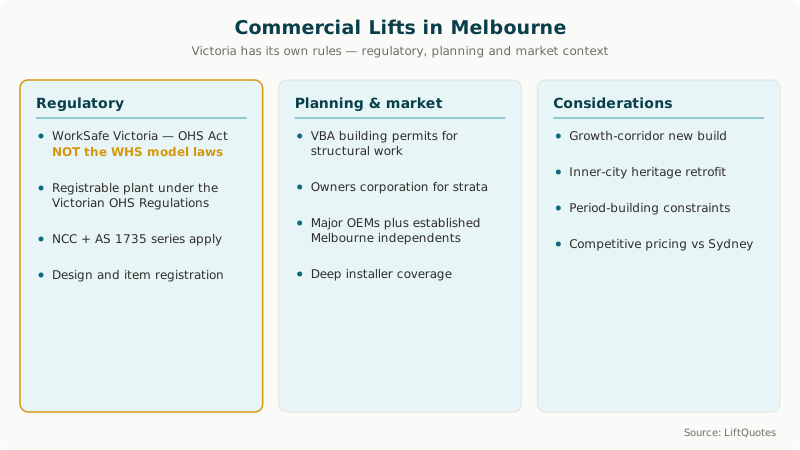
This is where Victoria departs from the rest of the country. WorkSafe Victoria is the workplace safety regulator for lifts, operating under the Victorian Occupational Health and Safety Act 2004 and the OHS Regulations 2017 — not the model WHS laws used in New South Wales, Queensland and most other states. Lifts are classified as registrable plant, which means the lift design must be registered and each installed unit item-registered with WorkSafe Victoria before it is put into service, with ongoing inspection by a competent person and proper record-keeping.
That OHS duty is only one of three compliance layers. Building compliance flows from the NCC, and disability access is governed separately — a distinction that trips up many first-time commercial buyers. Our guides to NCC lift requirements and DDA lift compliance set out exactly which layer applies to which part of your project.
Building permits and heritage in Melbourne
Most commercial lift projects that involve structural work — a new shaft, a lift addition, or significant facade changes — require a building permit issued by a registered building surveyor under the Victorian Building Authority (VBA) framework, and often a planning permit from the local council where a planning scheme trigger such as a heritage overlay applies. Confirm both pathways early with your building surveyor.
Heritage is the Melbourne-specific wildcard. Heritage overlays are common across the CBD and inner suburbs, and a listing can restrict where a shaft can go, how a lift interfaces with a protected facade, and what external plant is permitted. Factor heritage assessment into the programme from the outset — retrofitting a lift into a period building is a longer and more constrained exercise than a new-build installation in a growth-corridor estate.
The Melbourne installer market
Melbourne has the second-strongest commercial lift presence in Australia. The global OEMs — Schindler, KONE, Otis and TK Elevator — all maintain full Melbourne operations geared toward commercial and high-rise work, alongside a healthy field of local independents and mid-tier specialists. That depth gives buyers genuine competitive tension on price, lead time and maintenance terms.
For commercial developers, timeline certainty matters as much as headline price. When comparing installers, weigh their Victorian project references, their in-house Melbourne service team and callout response times, whether they can handle both the lift supply and the builder's work, and how they price inner-city access logistics. For residential projects, see our home lifts in Melbourne guide, and for national cost context our lift costs overview.
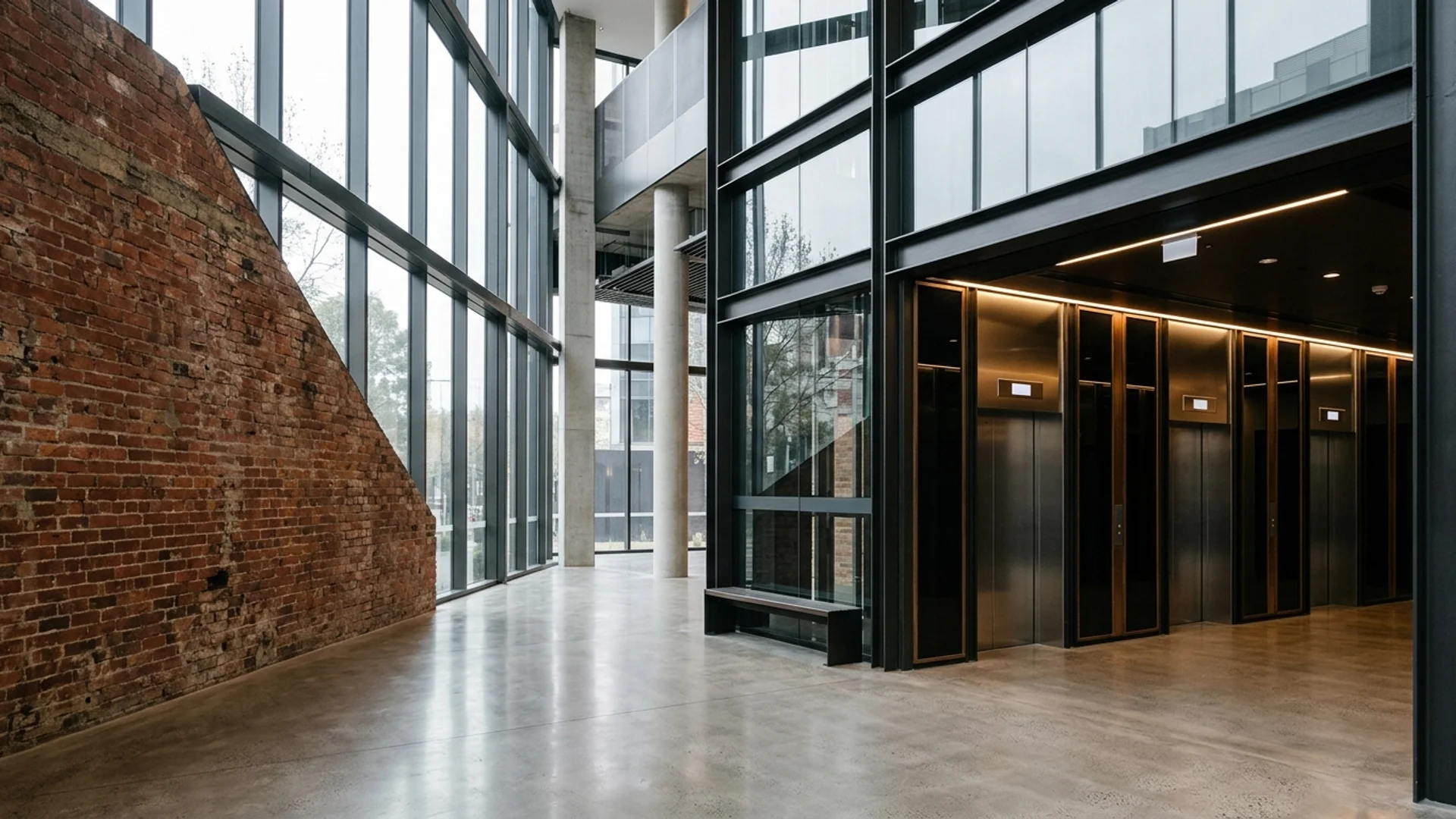
Melbourne's market depth works in your favour only if you compare like for like. To put realistic figures against your specific building, request free quotes from commercial lift companies serving Greater Melbourne and ask each for an indicative all-in cost, a programme, and how they handle WorkSafe Victoria plant registration.
Compare lift installers in Melbourne
Get free, no-obligation quotes from lift companies serving Melbourne and surrounding areas.
What are you looking for today?
I need a lift installed
I have a lift that needs attention
A low-rise commercial passenger lift for a two- to four-storey Melbourne building costs roughly $50,000 to $95,000 per lift, ex GST, as of Q2 2026 — and that figure climbs with building height, cabin specification and site access. Melbourne is the second-deepest commercial lift market in Australia after Sydney, with strong competition among global OEMs and established local independents that often keeps pricing a touch keener than the Sydney CBD premium.
The single most important thing to understand about buying a commercial lift in Melbourne is that Victoria does not follow the national model Work Health and Safety (WHS) laws. It runs its own Occupational Health and Safety (OHS) framework, regulated by WorkSafe Victoria — a distinction that national content routinely gets wrong and that changes how your lift is registered and inspected.
Whether you are a developer specifying lifts at permit stage, a facility manager planning a modernisation, or an owners corporation upgrading an ageing building, this page covers the Victoria-specific market, costs and compliance that actually apply to your project.
Melbourne, VIC
Victoria is the key exception to Australia's harmonised safety laws. Rather than the model Work Health and Safety (WHS) Act adopted by most states, Victoria operates under its own Occupational Health and Safety Act 2004 and the Occupational Health and Safety Regulations 2017, regulated by WorkSafe Victoria. For commercial lifts this matters directly: lifts are registrable plant under the Victorian OHS Regulations, so both the plant design and each installed item are registered with WorkSafe Victoria — not with a national WHS regulator.
Melbourne's building stock runs from CBD and Docklands high-rise towers to inner-city heritage buildings in suburbs like Fitzroy, Richmond and South Melbourne, and out to the growth-corridor commercial estates in Melbourne's north and west. Heritage overlays are common across the inner city and can constrain shaft placement and facade changes on retrofit projects. For strata and mixed-use buildings, the owners corporation holds the compliance duty over common-property plant.
Compliance notes
Commercial lifts in Victoria sit across three compliance layers. Building compliance runs through the National Construction Code (NCC) Volume One and its referenced AS 1735 series standards, with structural work approved via a building permit issued by a registered building surveyor under the Victorian Building Authority (VBA) system. Disability access compliance is governed by the Premises Standards 2010, the NCC access provisions and AS 1735.12:2020 for accessible lifts. Workplace safety and plant obligations sit with WorkSafe Victoria under the state OHS Act and Regulations, including design and item registration and ongoing inspection records. LiftQuotes does not provide legal or compliance advice — verify current requirements with WorkSafe Victoria, your building surveyor and the ABCB.
Lift companies in Melbourne
Browse profiles, compare service areas, and check reviews.
Lift Shop
★ 5.0 (1551 reviews)
Australia's largest dedicated home lift specialist since 1996. 10,000+ installations. Exclusive Italian-crafted lifts with industry-leading 8-year warranty.
View profile →
Compact Home Lifts
NDIS★ 5.0 (465 reviews)
Melbourne branch of Compact Home Lifts. Compact residential lift specialist providing maintenance and repair services across Victoria.
View profile →
Next Level Elevators
★ 5.0 (454 reviews)
Award-winning provider of premium Italian-designed all-electric home elevators. Certified Eltec Partner. Showrooms in Melbourne, Sydney, and Brisbane.
View profile →
Shotton Lifts
NDIS★ 5.0 (9 reviews)
Family-owned Australian lift manufacturer since 1977. 80+ staff. Design, engineer, manufacture, install and service from Dandenong South VIC. NDIS registered.
View profile →
LiftFit Australia
NDIS★ 5.0 (8 reviews)
Victoria-based NDIS registered lift provider, est. 2011. Partners with Cibes, Savaria, and Kalea. Residential, commercial, and platform lifts.
View profile →
Easy Living Home Elevators
★ 5.0 (7 reviews)
Australia's #1 home elevator supplier since 1998. 100% Australian-owned. 11,000+ elevators in service across 6 states.
View profile →
LiftQuotes is a comparison platform. Companies shown are filtered by relevance to this page. Listing does not imply endorsement. LiftQuotes may receive a referral fee when you request quotes.
What commercial lifts cost in Melbourne
As of Q2 2026, a low-rise commercial lift for a two- to four-storey Melbourne building runs at an indicative $50,000 to $95,000 per lift, ex GST. Mid-rise buildings of five to ten storeys typically land between $95,000 and $180,000 per lift, and high-rise or premium specifications climb well beyond that. These are indicative ranges for the lift equipment and installation — shaft construction, builder's work, electrical supply and any facade changes are additional and often the biggest variable on an inner-city site.
Melbourne pricing tends to sit slightly below the Sydney CBD premium. The city has a deep field of global OEMs and established local independents, and that competition works in a buyer's favour on price, lead time and maintenance terms. Growth-corridor new builds in the north and west are usually cheaper to install than tight inner-city heritage retrofits, where crane access, out-of-hours delivery and period-building constraints add real cost. For a full breakdown of what drives these numbers, see our commercial lift cost guide.
Who regulates commercial lifts in Victoria
This is where Victoria departs from the rest of the country. WorkSafe Victoria is the workplace safety regulator for lifts, operating under the Victorian Occupational Health and Safety Act 2004 and the OHS Regulations 2017 — not the model WHS laws used in New South Wales, Queensland and most other states. Lifts are classified as registrable plant, which means the lift design must be registered and each installed unit item-registered with WorkSafe Victoria before it is put into service, with ongoing inspection by a competent person and proper record-keeping.
That OHS duty is only one of three compliance layers. Building compliance flows from the NCC, and disability access is governed separately — a distinction that trips up many first-time commercial buyers. Our guides to NCC lift requirements and DDA lift compliance set out exactly which layer applies to which part of your project.
Building permits and heritage in Melbourne
Most commercial lift projects that involve structural work — a new shaft, a lift addition, or significant facade changes — require a building permit issued by a registered building surveyor under the Victorian Building Authority (VBA) framework, and often a planning permit from the local council where a planning scheme trigger such as a heritage overlay applies. Confirm both pathways early with your building surveyor.
Heritage is the Melbourne-specific wildcard. Heritage overlays are common across the CBD and inner suburbs, and a listing can restrict where a shaft can go, how a lift interfaces with a protected facade, and what external plant is permitted. Factor heritage assessment into the programme from the outset — retrofitting a lift into a period building is a longer and more constrained exercise than a new-build installation in a growth-corridor estate.
The Melbourne installer market
Melbourne has the second-strongest commercial lift presence in Australia. The global OEMs — Schindler, KONE, Otis and TK Elevator — all maintain full Melbourne operations geared toward commercial and high-rise work, alongside a healthy field of local independents and mid-tier specialists. That depth gives buyers genuine competitive tension on price, lead time and maintenance terms.
For commercial developers, timeline certainty matters as much as headline price. When comparing installers, weigh their Victorian project references, their in-house Melbourne service team and callout response times, whether they can handle both the lift supply and the builder's work, and how they price inner-city access logistics. For residential projects, see our home lifts in Melbourne guide, and for national cost context our lift costs overview.
Melbourne's market depth works in your favour only if you compare like for like. To put realistic figures against your specific building, request free quotes from commercial lift companies serving Greater Melbourne and ask each for an indicative all-in cost, a programme, and how they handle WorkSafe Victoria plant registration.
Compare lift installers in Melbourne
Get free, no-obligation quotes from lift companies serving Melbourne and surrounding areas.
What are you looking for today?
I need a lift installed
I have a lift that needs attention
Passenger lifts
Low-rise 2–4 storey office and retail lifts from an indicative $50,000 to $95,000 per lift, ex GST (Q2 2026). Mid-rise and high-rise scale well above this.
Accessible lifts
DDA-compliant passenger lifts meeting AS 1735.12:2020 and the Premises Standards 2010. Mandatory where the NCC access provisions are triggered in a new build.
Goods and service lifts
Goods, goods-passenger and service lifts for Melbourne warehouses, hospitality and healthcare. Capacity, pit depth and plant registration drive the cost.
Compliance and maintenance
WorkSafe Victoria regulates lift plant registration under the state OHS Act — not the WHS model. Design and item registration required, plus ongoing inspections.
Common questions about commercial lifts in Melbourne
As of Q2 2026, a low-rise commercial passenger lift for a two- to four-storey Melbourne building costs an indicative $50,000 to $95,000 per lift, ex GST. Mid-rise buildings of five to ten storeys typically run $95,000 to $180,000 per lift, and high-rise or premium specifications climb higher again. These ranges cover the lift equipment and installation only — shaft construction, builder's work and electrical supply are additional. Melbourne pricing usually sits a touch below the Sydney CBD premium thanks to a deep field of competing OEMs and local independents, though inner-city heritage sites add cost for access and period-building constraints.
You might also need
Location
Commercial Lifts Sydney: Costs, Compliance & Installers
Commercial lift costs, NSW compliance and the Sydney installer market — indicative prices, SafeWork NSW rules and NCC requirements for CBD and metro projects.
Guide
What Size Lift Do I Need for a Wheelchair? (Australia)
A home lift for a wheelchair needs roughly 1,100 x 1,400 mm inside and a 900 mm clear door. See minimum sizes for a wheelchair, a carer, and turning space.
Guide
Support at Home & Lift Funding: The 2026 Guide
Can Support at Home fund a home lift or stairlift? How aged care funding works, the OT assessment, means-tested contributions, and how it differs from the NDIS.
Comparison
Stairlift vs Platform Lift: Which Access Solution Fits?
A stairlift carries a seated user along the stairs from about $3,000; a platform lift raises a wheelchair vertically from about $15,000. Compare cost, access and fit.
Compare Melbourne commercial lift installers
Get quotes from commercial lift companies serving Greater Melbourne and compare all-in cost, programme and Victorian OHS compliance side by side.
Join 1,000+ Australians who've requested quotes through LiftQuotes
Get free quotes