Lift Modernisation Cost Guide
Understand what lift modernisation costs in Australia — and whether modernising or replacing is the right call for your building.
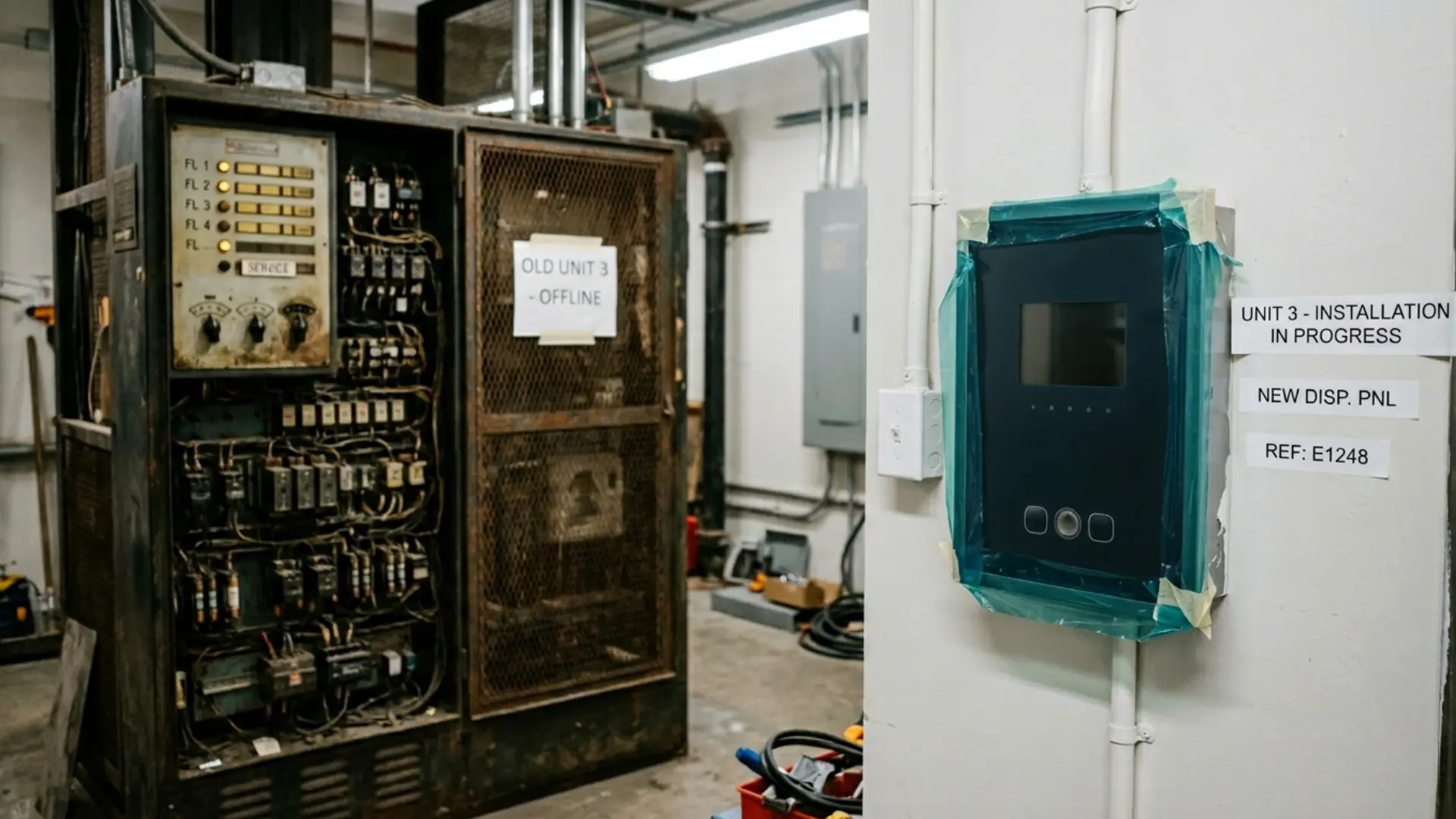
Lift modernisation is the process of upgrading key components of an existing lift without replacing the entire installation. In most cases, a 20–30 year old lift has a perfectly serviceable shaft, pit, and structure — what is failing is the control system, drive, or cab finishes. Modernising those components at a fraction of full replacement cost can extend the working life of the lift by 15–25 years.
This guide covers the cost of each modernisation scope — controls only, drive and controls, full cab refurbishment, and complete modernisation — along with what drives cost variation and how to decide between modernising and full replacement.
Lift modernisation costs vary significantly by scope. Prices below are indicative installed costs excluding GST for Australian commercial and residential buildings. Heritage sites, restricted access, and older non-standard equipment add cost.
| Scenario | Cost range (AUD, ex GST) | Notes |
|---|---|---|
| Controls upgrade only | $15,000–$35,000 | New controller, landing buttons, and indicators. Most common modernisation scope for 15–25 year old lifts with serviceable drives. |
| Drive system + controls | $30,000–$70,000 | Variable-frequency drive replacement alongside controls. Significantly improves energy efficiency and ride quality. |
| Cab refurbishment | $20,000–$50,000 | New cab lining, flooring, lighting, handrails, and door fronts. Does not address mechanical or electrical systems. |
| Complete modernisation (all systems) | $60,000–$150,000 | Controls, drive, cab, door operators, and safety systems. Effectively renews the lift for 15–25 years at 40–60% of full replacement cost. |
| Full replacement (for comparison) | $120,000–$350,000 | New lift installation including all equipment and builder's work. The benchmark against which modernisation cost is assessed. |
Ranges based on contractor pricing data from Australian lift modernisation specialists. Actual costs depend on lift type, age, manufacturer, access constraints, and scope of works.
Last checked: 19 March 2026
These factors most commonly cause modernisation costs to vary from published ranges.
Lift age and manufacturer
Lifts over 30 years old from discontinued manufacturers can face significant parts sourcing challenges. Modernisation contractors must fabricate or source compatible components, increasing cost. Lifts from current major manufacturers (Schindler, Kone, Otis, ThyssenKrupp) have better parts availability.
Scope creep from inspection findings
Once a modernisation contractor opens a lift, they may identify additional safety or compliance issues not visible during the initial survey — worn guide shoes, deteriorated roping, hydraulic seal failures. These are typically quoted as variations once uncovered.
Building access constraints
Machine room access, working at height, and lift shaft access in occupied buildings all add time and cost. Heritage buildings with narrow corridors or no goods lift make component delivery significantly more expensive.
Regulatory compliance upgrades
Older lifts may require safety upgrades to comply with current standards before they can be re-commissioned — particularly fire service operation, emergency lighting, and communication systems. These are non-optional additions to any modernisation scope.
Number of stops and travel height
More stops = more landing equipment (buttons, indicators, door operators). Multi-stop modernisations in high-rise buildings cost proportionally more than a 2-stop residential installation.
Lift Modernisation companies in Australia
Browse profiles, compare service areas, and check reviews.
Elevator Project Management
★ 5.0 (4 reviews)
Melbourne-based elevator project management, modernisation consulting, and maintenance advisory firm.
View profile →

EcoLift
★ 5.0 (3 reviews)
Family-owned Sydney lift company. European-parts-based installations for reliability and cost-efficient servicing.
View profile →
EMS Elevator Group
★ 5.0 (2 reviews)
Sydney-based bespoke elevator company specialising in installation, modernisation, and maintenance. 24/7 support.
View profile →

Grant Elevators
★ 4.8 (22 reviews)
Perth's premier luxury lift company with 50+ years experience and 3,000+ projects across 6 countries. Four generations of family ownership.
View profile →

Lift Services Sydney
★ 4.4 (7 reviews)
Independent Australian-owned Sydney lift company with 60+ years combined experience. Maintenance, new installations, and modernisation.
View profile →

Hamilton Elevators
★ 4.3
Sydney-based elevator company delivering personal, high-quality service for residential and commercial lift projects. AEA member.
View profile →
LiftQuotes is a comparison platform. Companies shown are filtered by relevance to this page. Listing does not imply endorsement. LiftQuotes may receive a referral fee when you request quotes.
How we research these costs
Cost ranges on this page are based on pricing data gathered from Australian lift modernisation contractors across residential and commercial sectors. Prices reflect installed costs as of early 2026 and exclude GST. They represent typical mid-market scenarios — heritage sites, difficult access, and non-standard equipment will fall outside these ranges.
Primary sources: AS 1735.12:2020 (lift standards), AS/NZS 1735.18 (maintenance requirements), and pricing data from Australian lift service providers. This page does not constitute a formal quote — obtain at least two contractor quotes before proceeding.
Last reviewed
19 September 2026
Get quotes tailored to your project
Tell us about your home and receive personalised pricing from local installers.
What are you looking for today?
I need a lift installed
I have a lift that needs attention
Lift modernisation costs vary significantly by scope. Prices below are indicative installed costs excluding GST for Australian commercial and residential buildings. Heritage sites, restricted access, and older non-standard equipment add cost.
| Scenario | Cost range (AUD, ex GST) | Notes |
|---|---|---|
| Controls upgrade only | $15,000–$35,000 | New controller, landing buttons, and indicators. Most common modernisation scope for 15–25 year old lifts with serviceable drives. |
| Drive system + controls | $30,000–$70,000 | Variable-frequency drive replacement alongside controls. Significantly improves energy efficiency and ride quality. |
| Cab refurbishment | $20,000–$50,000 | New cab lining, flooring, lighting, handrails, and door fronts. Does not address mechanical or electrical systems. |
| Complete modernisation (all systems) | $60,000–$150,000 | Controls, drive, cab, door operators, and safety systems. Effectively renews the lift for 15–25 years at 40–60% of full replacement cost. |
| Full replacement (for comparison) | $120,000–$350,000 | New lift installation including all equipment and builder's work. The benchmark against which modernisation cost is assessed. |
Ranges based on contractor pricing data from Australian lift modernisation specialists. Actual costs depend on lift type, age, manufacturer, access constraints, and scope of works.
Last checked: 19 March 2026
These factors most commonly cause modernisation costs to vary from published ranges.
Lift age and manufacturer
Lifts over 30 years old from discontinued manufacturers can face significant parts sourcing challenges. Modernisation contractors must fabricate or source compatible components, increasing cost. Lifts from current major manufacturers (Schindler, Kone, Otis, ThyssenKrupp) have better parts availability.
Scope creep from inspection findings
Once a modernisation contractor opens a lift, they may identify additional safety or compliance issues not visible during the initial survey — worn guide shoes, deteriorated roping, hydraulic seal failures. These are typically quoted as variations once uncovered.
Building access constraints
Machine room access, working at height, and lift shaft access in occupied buildings all add time and cost. Heritage buildings with narrow corridors or no goods lift make component delivery significantly more expensive.
Regulatory compliance upgrades
Older lifts may require safety upgrades to comply with current standards before they can be re-commissioned — particularly fire service operation, emergency lighting, and communication systems. These are non-optional additions to any modernisation scope.
Number of stops and travel height
More stops = more landing equipment (buttons, indicators, door operators). Multi-stop modernisations in high-rise buildings cost proportionally more than a 2-stop residential installation.
Lift Modernisation companies in Australia
Browse profiles, compare service areas, and check reviews.
Elevator Project Management
★ 5.0 (4 reviews)
Melbourne-based elevator project management, modernisation consulting, and maintenance advisory firm.
View profile →
EcoLift
★ 5.0 (3 reviews)
Family-owned Sydney lift company. European-parts-based installations for reliability and cost-efficient servicing.
View profile →
EMS Elevator Group
★ 5.0 (2 reviews)
Sydney-based bespoke elevator company specialising in installation, modernisation, and maintenance. 24/7 support.
View profile →
Grant Elevators
★ 4.8 (22 reviews)
Perth's premier luxury lift company with 50+ years experience and 3,000+ projects across 6 countries. Four generations of family ownership.
View profile →
Lift Services Sydney
★ 4.4 (7 reviews)
Independent Australian-owned Sydney lift company with 60+ years combined experience. Maintenance, new installations, and modernisation.
View profile →
Hamilton Elevators
★ 4.3
Sydney-based elevator company delivering personal, high-quality service for residential and commercial lift projects. AEA member.
View profile →
LiftQuotes is a comparison platform. Companies shown are filtered by relevance to this page. Listing does not imply endorsement. LiftQuotes may receive a referral fee when you request quotes.
How we research these costs
Cost ranges on this page are based on pricing data gathered from Australian lift modernisation contractors across residential and commercial sectors. Prices reflect installed costs as of early 2026 and exclude GST. They represent typical mid-market scenarios — heritage sites, difficult access, and non-standard equipment will fall outside these ranges.
Primary sources: AS 1735.12:2020 (lift standards), AS/NZS 1735.18 (maintenance requirements), and pricing data from Australian lift service providers. This page does not constitute a formal quote — obtain at least two contractor quotes before proceeding.
Last reviewed
19 September 2026
Get quotes tailored to your project
Tell us about your home and receive personalised pricing from local installers.
What are you looking for today?
I need a lift installed
I have a lift that needs attention
Related guides
Location
Commercial Lifts Melbourne: Costs, Compliance & Installers
Commercial lift costs, Victorian OHS compliance and the Melbourne installer market — indicative prices, WorkSafe Victoria rules and NCC requirements for VIC projects.
Location
Commercial Lifts Sydney: Costs, Compliance & Installers
Commercial lift costs, NSW compliance and the Sydney installer market — indicative prices, SafeWork NSW rules and NCC requirements for CBD and metro projects.
Guide
What Size Lift Do I Need for a Wheelchair? (Australia)
A home lift for a wheelchair needs roughly 1,100 x 1,400 mm inside and a 900 mm clear door. See minimum sizes for a wheelchair, a carer, and turning space.
Guide
Support at Home & Lift Funding: The 2026 Guide
Can Support at Home fund a home lift or stairlift? How aged care funding works, the OT assessment, means-tested contributions, and how it differs from the NDIS.
Get Lift Modernisation Quotes
Compare verified installers and get free, no-obligation quotes tailored to your project.
Join 1,000+ Australians who've requested quotes through LiftQuotes
Get Free Quotes