Platform Lifts in Australia
Platform lifts provide wheelchair and limited-mobility access from around $22,000 installed. Here is what determines that cost, what platform sizes you need, and how to choose the right type for your property.
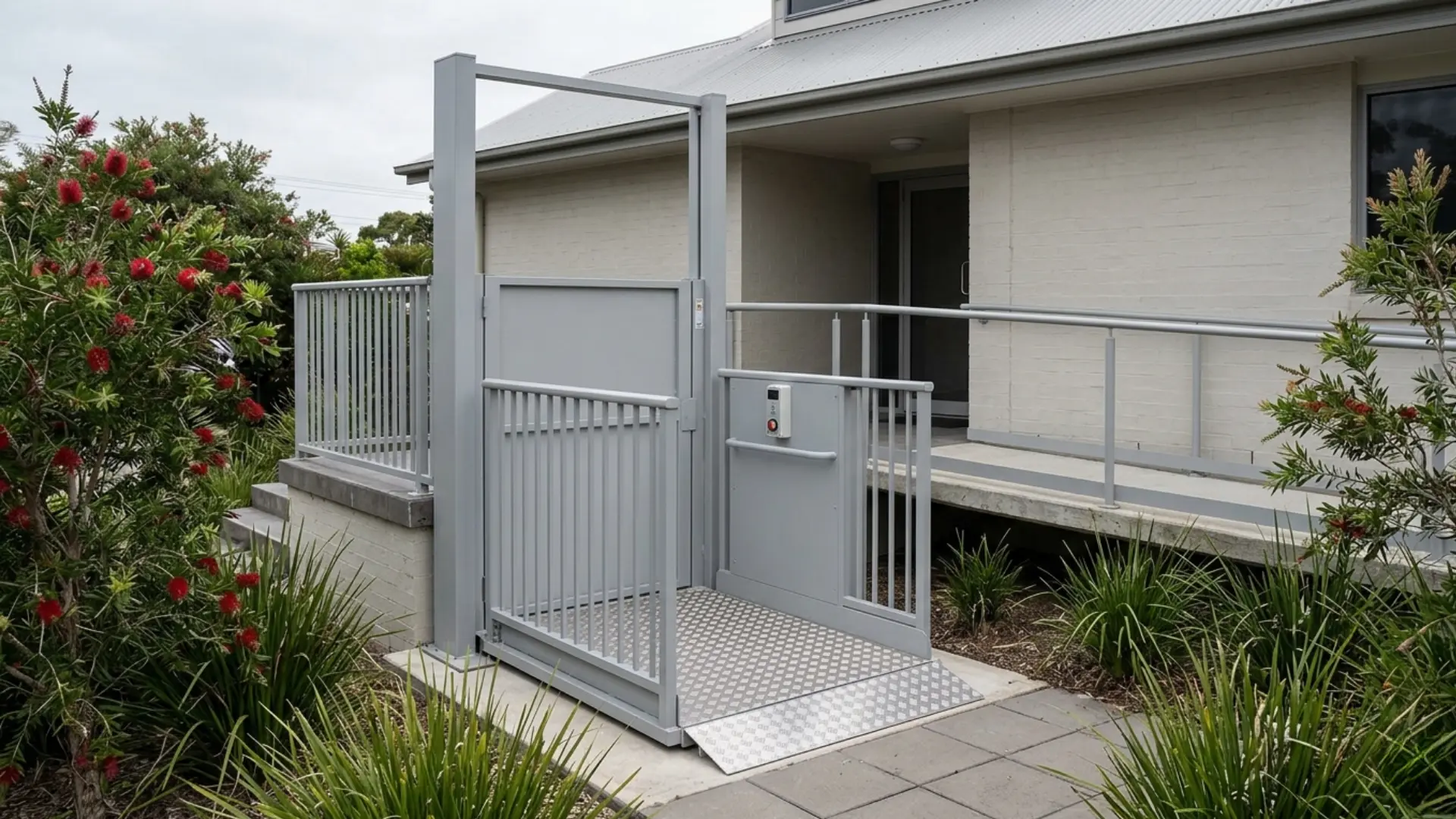
A platform lift is a low-rise vertically or inclined moving platform designed to provide wheelchair and limited-mobility access over short rises. Basic models start from around $22,000, with vertical platform lifts starting from approximately $29,000 in some markets — both figures exclude site preparation and structural building works. Platform lifts are distinct from home lifts: they serve a different access need, are governed by different standards, and suit applications where a full enclosed lift shaft is not required.
Common applications include outdoor entry access, stair bypasses in existing homes or commercial premises, low-rise access between two building levels, and aged care or strata settings where the rise is too short to justify a full lift but a ramp is not practicable. Platform lifts are also used in commercial reception areas and public buildings where they supplement or replace ramp access.
The primary Australian standard governing platform lifts is AS 1735.14, which covers low-rise platforms for limited mobility applications. In commercial buildings with public access, the Disability (Access to Premises — Buildings) Standards 2010 and AS 1735.12:2020 may also apply depending on building class and travel height. AS 1428.1:2021, the standard for access design in new building work, informs minimum platform size and approach space requirements.
Some buyers reach platform lifts through disability or aged care funding pathways. NDIS and the Australian Government's Support at Home programme both include home modification funding that can cover platform lifts when recommended by an occupational therapist. The NDIS and Support at Home websites are the authoritative sources for current eligibility and processes. LiftQuotes does not provide funding advice.
Types, standards and choosing the right solution
Types of platform lift
Vertical platform lifts (VPL) rise straight up within a compact frame, covering rises up to approximately 2–3 metres. They are the most common type for home and commercial entry access, available in both indoor and outdoor configurations.
Inclined platform lifts (IPL) travel along a staircase rail with the platform folding flat when not in use. They suit sites where a vertical lift is not structurally viable — typically alongside an existing staircase.
Low-rise and kerb-access platforms handle very small height differences: a single step, an entry threshold, or a short external rise. These are the simplest and lowest-cost option.
For a side-by-side comparison with home lifts, see home lift vs platform lift.
What a platform lift costs
Indicative installed costs (ex GST; last checked March 2026): enclosed indoor platform lifts $28,000–$45,000, open indoor platform lifts $22,000–$35,000, weather-rated outdoor models $30,000–$50,000. Building works — a pit (if required), structural support, and electrical supply — are typically additional.
For a detailed breakdown, see platform lift costs. For cost comparisons across all lift types, see lift costs in Australia. If the primary need is wheelchair access specifically, see wheelchair lift costs.
Standards and compliance
AS 1735.14 governs low-rise platforms for limited mobility applications — this is the primary standard your installer and building certifier will reference. In commercial buildings open to the public, the Premises Standards 2010 and AS 1735.12:2020 may impose additional requirements.
Platform lifts that meet the definition of registrable plant under Schedule 5 of the Model WHS Regulations require item registration with your state WHS regulator. Victoria operates under the OHS Regulations 2017 rather than the model WHS framework.
Platform lift or home lift?
Platform lifts suit short rises and wheelchair access where a full enclosed shaft is not needed. Home lifts suit travel between full storeys. If you need multi-floor access across a home, a home lift is the appropriate solution. If the rise is short and the primary need is wheelchair access, a platform lift is likely sufficient.
Funding pathways
NDIS and the Australian Government's Support at Home programme both include home modification funding that can cover platform lifts when recommended by an occupational therapist. Visit ndis.gov.au and the Services Australia website for current eligibility information.
Find installers
For location-specific context, see platform lifts Sydney and platform lifts Melbourne.
Platform Lifts companies in Australia
Browse profiles, compare service areas, and check reviews.

Shotton Lifts
NDIS★ 5.0 (9 reviews)
Family-owned Australian lift manufacturer since 1977. 80+ staff. Design, engineer, manufacture, install and service from Dandenong South VIC. NDIS registered.
View profile →

LiftFit Australia
NDIS★ 5.0 (8 reviews)
Victoria-based NDIS registered lift provider, est. 2011. Partners with Cibes, Savaria, and Kalea. Residential, commercial, and platform lifts.
View profile →

Easy Living Home Elevators
★ 5.0 (7 reviews)
Australia's #1 home elevator supplier since 1998. 100% Australian-owned. 11,000+ elevators in service across 6 states.
View profile →

Platinum Elevators
NDIS★ 4.9 (134 reviews)
Keysborough VIC-based residential and commercial elevator specialist. 100% Italian-made products. NDIS registered provider (until Oct 2028).
View profile →
West Coast Elevators
NDIS★ 4.9 (96 reviews)
Perth-based home and commercial lift specialist serving Western Australia. NDIS registered provider.
View profile →

Infinity Lifts
★ 4.6 (32 reviews)
Boutique Sydney lift company on the Northern Beaches, est. 2014. European-designed residential traction and hydraulic lifts, plus custom glass shaft structures.
View profile →
LiftQuotes is a comparison platform. Companies shown are filtered by relevance to this page. Listing does not imply endorsement. LiftQuotes may receive a referral fee when you request quotes.
Get quotes from local installers
Your home's layout and access needs will determine the right product. Get quotes to find out.
What are you looking for today?
I need a lift installed
I have a lift that needs attention
A platform lift is a low-rise vertically or inclined moving platform designed to provide wheelchair and limited-mobility access over short rises. Basic models start from around $22,000, with vertical platform lifts starting from approximately $29,000 in some markets — both figures exclude site preparation and structural building works. Platform lifts are distinct from home lifts: they serve a different access need, are governed by different standards, and suit applications where a full enclosed lift shaft is not required.
Common applications include outdoor entry access, stair bypasses in existing homes or commercial premises, low-rise access between two building levels, and aged care or strata settings where the rise is too short to justify a full lift but a ramp is not practicable. Platform lifts are also used in commercial reception areas and public buildings where they supplement or replace ramp access.
The primary Australian standard governing platform lifts is AS 1735.14, which covers low-rise platforms for limited mobility applications. In commercial buildings with public access, the Disability (Access to Premises — Buildings) Standards 2010 and AS 1735.12:2020 may also apply depending on building class and travel height. AS 1428.1:2021, the standard for access design in new building work, informs minimum platform size and approach space requirements.
Some buyers reach platform lifts through disability or aged care funding pathways. NDIS and the Australian Government's Support at Home programme both include home modification funding that can cover platform lifts when recommended by an occupational therapist. The NDIS and Support at Home websites are the authoritative sources for current eligibility and processes. LiftQuotes does not provide funding advice.
Types, standards and choosing the right solution
Types of platform lift
Vertical platform lifts (VPL) rise straight up within a compact frame, covering rises up to approximately 2–3 metres. They are the most common type for home and commercial entry access, available in both indoor and outdoor configurations.
Inclined platform lifts (IPL) travel along a staircase rail with the platform folding flat when not in use. They suit sites where a vertical lift is not structurally viable — typically alongside an existing staircase.
Low-rise and kerb-access platforms handle very small height differences: a single step, an entry threshold, or a short external rise. These are the simplest and lowest-cost option.
For a side-by-side comparison with home lifts, see home lift vs platform lift.
What a platform lift costs
Indicative installed costs (ex GST; last checked March 2026): enclosed indoor platform lifts $28,000–$45,000, open indoor platform lifts $22,000–$35,000, weather-rated outdoor models $30,000–$50,000. Building works — a pit (if required), structural support, and electrical supply — are typically additional.
For a detailed breakdown, see platform lift costs. For cost comparisons across all lift types, see lift costs in Australia. If the primary need is wheelchair access specifically, see wheelchair lift costs.
Standards and compliance
AS 1735.14 governs low-rise platforms for limited mobility applications — this is the primary standard your installer and building certifier will reference. In commercial buildings open to the public, the Premises Standards 2010 and AS 1735.12:2020 may impose additional requirements.
Platform lifts that meet the definition of registrable plant under Schedule 5 of the Model WHS Regulations require item registration with your state WHS regulator. Victoria operates under the OHS Regulations 2017 rather than the model WHS framework.
Platform lift or home lift?
Platform lifts suit short rises and wheelchair access where a full enclosed shaft is not needed. Home lifts suit travel between full storeys. If you need multi-floor access across a home, a home lift is the appropriate solution. If the rise is short and the primary need is wheelchair access, a platform lift is likely sufficient.
Funding pathways
NDIS and the Australian Government's Support at Home programme both include home modification funding that can cover platform lifts when recommended by an occupational therapist. Visit ndis.gov.au and the Services Australia website for current eligibility information.
Find installers
For location-specific context, see platform lifts Sydney and platform lifts Melbourne.
Platform Lifts companies in Australia
Browse profiles, compare service areas, and check reviews.
Shotton Lifts
NDIS★ 5.0 (9 reviews)
Family-owned Australian lift manufacturer since 1977. 80+ staff. Design, engineer, manufacture, install and service from Dandenong South VIC. NDIS registered.
View profile →
LiftFit Australia
NDIS★ 5.0 (8 reviews)
Victoria-based NDIS registered lift provider, est. 2011. Partners with Cibes, Savaria, and Kalea. Residential, commercial, and platform lifts.
View profile →
Easy Living Home Elevators
★ 5.0 (7 reviews)
Australia's #1 home elevator supplier since 1998. 100% Australian-owned. 11,000+ elevators in service across 6 states.
View profile →
Platinum Elevators
NDIS★ 4.9 (134 reviews)
Keysborough VIC-based residential and commercial elevator specialist. 100% Italian-made products. NDIS registered provider (until Oct 2028).
View profile →
West Coast Elevators
NDIS★ 4.9 (96 reviews)
Perth-based home and commercial lift specialist serving Western Australia. NDIS registered provider.
View profile →
Infinity Lifts
★ 4.6 (32 reviews)
Boutique Sydney lift company on the Northern Beaches, est. 2014. European-designed residential traction and hydraulic lifts, plus custom glass shaft structures.
View profile →
LiftQuotes is a comparison platform. Companies shown are filtered by relevance to this page. Listing does not imply endorsement. LiftQuotes may receive a referral fee when you request quotes.
Get quotes from local installers
Your home's layout and access needs will determine the right product. Get quotes to find out.
What are you looking for today?
I need a lift installed
I have a lift that needs attention
Types, platform sizes and applications at a glance
Types of platform lift
Vertical platform lifts (VPL) rise straight up on a column-supported frame, typically covering rises up to around 2–3 metres, and suit indoor and outdoor entry access. Inclined platform lifts (IPL) travel along a staircase rail with the platform folding flat when not in use — used where a vertical lift is not structurally viable. Low-rise and kerb-access platforms handle very short height differences: a single step or entry threshold. The right type depends on the rise height, available space, and site conditions.
Platform size and wheelchair access
Platform size is a critical specification for wheelchair users. AS 1428.1:2021 — the Australian Standard for access design in new building work — sets minimum dimensions for accessible platforms. A platform sized for a standard manual wheelchair will not accommodate a powered chair or scooter. When requesting quotes, specify the type of wheelchair or mobility device that will use the platform, and ask the installer to confirm the platform dimensions meet AS 1428.1:2021 requirements for your use case.
Indoor and outdoor installation
Platform lifts are available in configurations for both indoor and outdoor installation. Outdoor models require weatherproof enclosures, corrosion-resistant materials, and in some climates, protection against UV, moisture, or salt air. Coastal and tropical sites require higher-specification weatherproofing than sheltered indoor installations. Confirm with your installer that the specified model is rated for the exposure conditions at your site.
Funding pathways
Platform lifts can be funded through NDIS home modification plans for eligible participants, and through the Australian Government's Support at Home programme for aged care home modifications. Both pathways require assessment by an occupational therapist. Complex modifications under NDIS may also require an independent home modification project manager. LiftQuotes does not provide funding advice — visit ndis.gov.au and the Services Australia website for current eligibility information.
Frequently asked questions about platform lifts
Basic platform lift models start from around $22,000 installed in Australia, based on supplier-stated starting prices (last checked March 2026). Vertical platform lifts start from approximately $29,000 in some markets. These figures are indicative — final costs depend on lift type, travel height, platform size, whether the installation is indoors or outdoors, and the extent of site preparation and building works required. Supplier starting prices typically exclude concrete footings, structural modifications, electrical supply, and DA or building approval costs.
Related guides
Location
Commercial Lifts Melbourne: Costs, Compliance & Installers
Commercial lift costs, Victorian OHS compliance and the Melbourne installer market — indicative prices, WorkSafe Victoria rules and NCC requirements for VIC projects.
Location
Commercial Lifts Sydney: Costs, Compliance & Installers
Commercial lift costs, NSW compliance and the Sydney installer market — indicative prices, SafeWork NSW rules and NCC requirements for CBD and metro projects.
Guide
What Size Lift Do I Need for a Wheelchair? (Australia)
A home lift for a wheelchair needs roughly 1,100 x 1,400 mm inside and a 900 mm clear door. See minimum sizes for a wheelchair, a carer, and turning space.
Guide
Support at Home & Lift Funding: The 2026 Guide
Can Support at Home fund a home lift or stairlift? How aged care funding works, the OT assessment, means-tested contributions, and how it differs from the NDIS.
Get platform lift quotes for your property
Platform lift costs vary based on type, travel height, platform size, and whether the installation is indoors or outdoors. Getting quotes from local installers gives you an accurate figure for your specific access need.
Join 1,000+ Australians who've requested quotes through LiftQuotes
Get free quotes