Do Home Lifts Work in a Power Outage?
Almost every home lift in Australia has a battery backup that lowers the car to a landing and opens the doors when the mains supply fails — so a blackout never leaves you stranded.
Battery backup is standard
Almost every residential lift sold in Australia includes a battery backup (a UPS) as a standard safety feature, not a paid extra.
Lowering, not normal service
The backup does not keep the lift running trips. It powers one job: a slow, controlled descent to the nearest landing so you can step out.
Light, alarm and phone stay on
During an outage the cabin light, alarm button, and emergency phone keep working, so you can always call for help if you need it.
Generator or solar for long outages
For blackouts lasting hours, a home battery or standby generator can keep the lift in full service — worth specifying at the quoting stage.
Yes — in the way that matters most. A home lift will not keep running normal trips on battery power, but almost every model sold in Australia is designed to get you safely to a landing and let you out when the mains supply drops. That is the job of the battery backup: not to keep the lift in service, but to make sure a power cut never leaves anyone stranded between floors.
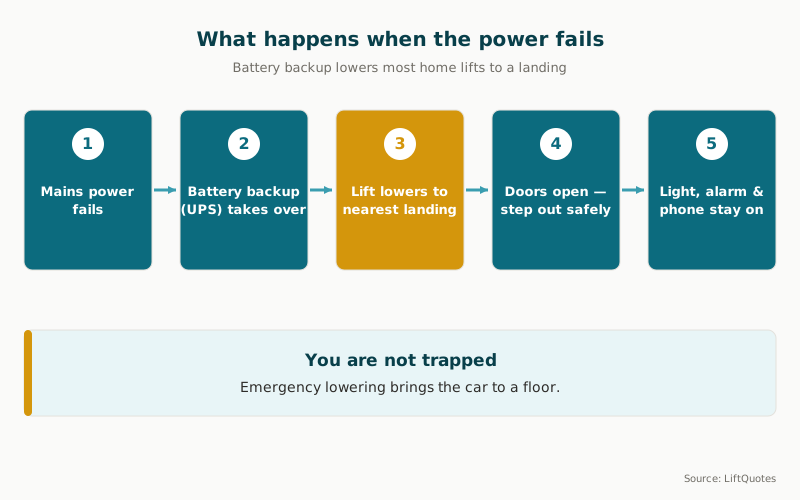
The moment mains power is lost, an uninterruptible power supply (UPS) built into the lift takes over. It powers a slow, controlled descent to the nearest landing, opens the doors, and keeps the cabin light, alarm, and emergency phone running. You walk out at a floor — not into a dark box halfway up a shaft.
The blackout fear is common, and it is worth answering plainly, because the reality is reassuring. This guide explains what happens when the power fails, how battery backup and emergency lowering actually work, how long the battery lasts, and when a generator or home battery is worth adding.
Do home lifts work during a power cut?
Yes — in the way that matters most. A home lift will not keep running normal trips on battery power, but almost every model sold in Australia is designed to get you safely to a landing and let you out when the mains supply drops. That is the job of the battery backup: not to keep the lift in service, but to make sure a power cut never leaves anyone stranded between floors.
The moment mains power is lost, an uninterruptible power supply (UPS) built into the lift takes over. It powers a controlled descent to the nearest landing, opens the doors, and keeps the cabin light, alarm, and emergency phone running. You walk out at a floor, not into a dark box halfway up a shaft.
Battery backup is a standard safety feature on residential lifts, not an optional extra. It is one of the core protections covered in our guide to home lift safety features, alongside door sensors, alarms, and emergency communication.
What happens if the power goes out while you are inside
Nothing dramatic. If you are in the car when the supply fails, the lift pauses for a moment, switches to battery, and then lowers itself slowly to the nearest landing under its own control. The doors open automatically and you step out. The whole sequence usually takes less than a minute.
No action is needed from you. There is no crank to turn and no lever to find. The cabin light stays on throughout, and if anything does go wrong, the emergency phone connects you to help.
How battery backup and emergency lowering work
The battery backup is a small sealed battery pack, kept charged from the mains, that sits in the lift controller. Lift makers call the controlled descent automatic emergency lowering, or automatic rescue.
On a hydraulic home lift, lowering is simple: a valve releases pressure gently and gravity brings the car down while the battery powers the controls and door. On a traction or screw-drive lift, the battery instead drives the motor at low speed to move the car to a landing. Either way, the descent is slow and controlled by design.
Three functions are kept alive that matter in a blackout: the cabin light, the alarm button, and the emergency phone or intercom. Under AS/NZS 1735.18:2002 — the Australian Standard for lifts in private residences — a home lift must provide for emergency operation and communication, which is why these functions are engineered to survive a power loss.
How long does the battery last?
Long enough for the job, with margin to spare. The backup is sized for rescue, not for a full day of trips. As of 2026, a typical home lift battery will complete the emergency lowering cycle and then keep the light, alarm, and phone running for a period measured in hours, not minutes — commonly rated for several emergency descents on a single charge.
Batteries wear. A backup battery generally needs replacing every three to five years, and checking it is a routine part of servicing. To see where standby power sits in the wider budget, our guide to home lift running costs breaks down electricity, servicing, and battery replacement.
Can a home lift run on a generator or solar?
It can, and for outages that last hours rather than seconds this is the real way to keep a lift in full service. A home lift draws modest power — most residential models run on a standard single-phase supply — so a suitably sized backup generator or a home battery system can keep it operating normally through a longer blackout.
Two options are common. A whole-of-home battery, paired with rooftop solar, will run the lift as just another appliance for as long as its charge lasts. Alternatively, a standby generator wired through an automatic transfer switch starts when the grid drops and carries the lift along with the rest of the house. Either approach is worth raising with your installer at the quoting stage, especially if you rely on the lift daily or live where outages are common. Compact residential models, including the small lifts for homes that suit tight footprints, are generally the easiest to back up this way because of their low power draw.
What this means for your safety
The blackout fear is understandable, and the answer is reassuring: a properly specified and maintained home lift will not trap you when the power goes out. The battery backup exists precisely so that a mains failure ends with you standing on a landing, not waiting for rescue. Keep the backup battery on its replacement schedule, test the emergency phone as part of routine servicing, and the protection stays in place.
Planning a lift and want to compare battery backup, emergency lowering, and standby power options across suppliers? Get free quotes from qualified Australian lift companies and ask each one exactly how their lift behaves in a power outage. For the full picture of residential options, start with our home lifts hub.
Lift companies in Australia
Browse profiles, compare service areas, and check reviews.

Lift Shop
★ 5.0 (1551 reviews)
Australia's largest dedicated home lift specialist since 1996. 10,000+ installations. Exclusive Italian-crafted lifts with industry-leading 8-year warranty.
View profile →

Compact Home Lifts
NDIS★ 5.0 (465 reviews)
Melbourne branch of Compact Home Lifts. Compact residential lift specialist providing maintenance and repair services across Victoria.
View profile →

Next Level Elevators
★ 5.0 (454 reviews)
Award-winning provider of premium Italian-designed all-electric home elevators. Certified Eltec Partner. Showrooms in Melbourne, Sydney, and Brisbane.
View profile →

Shotton Lifts
NDIS★ 5.0 (9 reviews)
Family-owned Australian lift manufacturer since 1977. 80+ staff. Design, engineer, manufacture, install and service from Dandenong South VIC. NDIS registered.
View profile →

LiftFit Australia
NDIS★ 5.0 (8 reviews)
Victoria-based NDIS registered lift provider, est. 2011. Partners with Cibes, Savaria, and Kalea. Residential, commercial, and platform lifts.
View profile →

Easy Living Home Elevators
★ 5.0 (7 reviews)
Australia's #1 home elevator supplier since 1998. 100% Australian-owned. 11,000+ elevators in service across 6 states.
View profile →
LiftQuotes is a comparison platform. Companies shown are filtered by relevance to this page. Listing does not imply endorsement. LiftQuotes may receive a referral fee when you request quotes.
Put this into action
When you're ready to move forward, get free quotes from verified Australian lift installers.
What are you looking for today?
I need a lift installed
I have a lift that needs attention
Yes — in the way that matters most. A home lift will not keep running normal trips on battery power, but almost every model sold in Australia is designed to get you safely to a landing and let you out when the mains supply drops. That is the job of the battery backup: not to keep the lift in service, but to make sure a power cut never leaves anyone stranded between floors.
The moment mains power is lost, an uninterruptible power supply (UPS) built into the lift takes over. It powers a slow, controlled descent to the nearest landing, opens the doors, and keeps the cabin light, alarm, and emergency phone running. You walk out at a floor — not into a dark box halfway up a shaft.
The blackout fear is common, and it is worth answering plainly, because the reality is reassuring. This guide explains what happens when the power fails, how battery backup and emergency lowering actually work, how long the battery lasts, and when a generator or home battery is worth adding.
Do home lifts work during a power cut?
Yes — in the way that matters most. A home lift will not keep running normal trips on battery power, but almost every model sold in Australia is designed to get you safely to a landing and let you out when the mains supply drops. That is the job of the battery backup: not to keep the lift in service, but to make sure a power cut never leaves anyone stranded between floors.
The moment mains power is lost, an uninterruptible power supply (UPS) built into the lift takes over. It powers a controlled descent to the nearest landing, opens the doors, and keeps the cabin light, alarm, and emergency phone running. You walk out at a floor, not into a dark box halfway up a shaft.
Battery backup is a standard safety feature on residential lifts, not an optional extra. It is one of the core protections covered in our guide to home lift safety features, alongside door sensors, alarms, and emergency communication.
What happens if the power goes out while you are inside
Nothing dramatic. If you are in the car when the supply fails, the lift pauses for a moment, switches to battery, and then lowers itself slowly to the nearest landing under its own control. The doors open automatically and you step out. The whole sequence usually takes less than a minute.
No action is needed from you. There is no crank to turn and no lever to find. The cabin light stays on throughout, and if anything does go wrong, the emergency phone connects you to help.
How battery backup and emergency lowering work
The battery backup is a small sealed battery pack, kept charged from the mains, that sits in the lift controller. Lift makers call the controlled descent automatic emergency lowering, or automatic rescue.
On a hydraulic home lift, lowering is simple: a valve releases pressure gently and gravity brings the car down while the battery powers the controls and door. On a traction or screw-drive lift, the battery instead drives the motor at low speed to move the car to a landing. Either way, the descent is slow and controlled by design.
Three functions are kept alive that matter in a blackout: the cabin light, the alarm button, and the emergency phone or intercom. Under AS/NZS 1735.18:2002 — the Australian Standard for lifts in private residences — a home lift must provide for emergency operation and communication, which is why these functions are engineered to survive a power loss.
How long does the battery last?
Long enough for the job, with margin to spare. The backup is sized for rescue, not for a full day of trips. As of 2026, a typical home lift battery will complete the emergency lowering cycle and then keep the light, alarm, and phone running for a period measured in hours, not minutes — commonly rated for several emergency descents on a single charge.
Batteries wear. A backup battery generally needs replacing every three to five years, and checking it is a routine part of servicing. To see where standby power sits in the wider budget, our guide to home lift running costs breaks down electricity, servicing, and battery replacement.
Can a home lift run on a generator or solar?
It can, and for outages that last hours rather than seconds this is the real way to keep a lift in full service. A home lift draws modest power — most residential models run on a standard single-phase supply — so a suitably sized backup generator or a home battery system can keep it operating normally through a longer blackout.
Two options are common. A whole-of-home battery, paired with rooftop solar, will run the lift as just another appliance for as long as its charge lasts. Alternatively, a standby generator wired through an automatic transfer switch starts when the grid drops and carries the lift along with the rest of the house. Either approach is worth raising with your installer at the quoting stage, especially if you rely on the lift daily or live where outages are common. Compact residential models, including the small lifts for homes that suit tight footprints, are generally the easiest to back up this way because of their low power draw.
What this means for your safety
The blackout fear is understandable, and the answer is reassuring: a properly specified and maintained home lift will not trap you when the power goes out. The battery backup exists precisely so that a mains failure ends with you standing on a landing, not waiting for rescue. Keep the backup battery on its replacement schedule, test the emergency phone as part of routine servicing, and the protection stays in place.
Planning a lift and want to compare battery backup, emergency lowering, and standby power options across suppliers? Get free quotes from qualified Australian lift companies and ask each one exactly how their lift behaves in a power outage. For the full picture of residential options, start with our home lifts hub.
Lift companies in Australia
Browse profiles, compare service areas, and check reviews.
Lift Shop
★ 5.0 (1551 reviews)
Australia's largest dedicated home lift specialist since 1996. 10,000+ installations. Exclusive Italian-crafted lifts with industry-leading 8-year warranty.
View profile →
Compact Home Lifts
NDIS★ 5.0 (465 reviews)
Melbourne branch of Compact Home Lifts. Compact residential lift specialist providing maintenance and repair services across Victoria.
View profile →
Next Level Elevators
★ 5.0 (454 reviews)
Award-winning provider of premium Italian-designed all-electric home elevators. Certified Eltec Partner. Showrooms in Melbourne, Sydney, and Brisbane.
View profile →
Shotton Lifts
NDIS★ 5.0 (9 reviews)
Family-owned Australian lift manufacturer since 1977. 80+ staff. Design, engineer, manufacture, install and service from Dandenong South VIC. NDIS registered.
View profile →
LiftFit Australia
NDIS★ 5.0 (8 reviews)
Victoria-based NDIS registered lift provider, est. 2011. Partners with Cibes, Savaria, and Kalea. Residential, commercial, and platform lifts.
View profile →
Easy Living Home Elevators
★ 5.0 (7 reviews)
Australia's #1 home elevator supplier since 1998. 100% Australian-owned. 11,000+ elevators in service across 6 states.
View profile →
LiftQuotes is a comparison platform. Companies shown are filtered by relevance to this page. Listing does not imply endorsement. LiftQuotes may receive a referral fee when you request quotes.
Put this into action
When you're ready to move forward, get free quotes from verified Australian lift installers.
What are you looking for today?
I need a lift installed
I have a lift that needs attention
Common questions about home lifts and power outages
In the way that matters most, yes. A home lift will not keep running normal trips on battery power, but almost every residential lift sold in Australia has a battery backup that automatically lowers the car to the nearest landing and opens the doors when the mains supply fails. The cabin light, alarm, and emergency phone also stay on. You are brought to a floor and let out — you are not left stranded between levels.
Related guides
Location
Commercial Lifts Melbourne: Costs, Compliance & Installers
Commercial lift costs, Victorian OHS compliance and the Melbourne installer market — indicative prices, WorkSafe Victoria rules and NCC requirements for VIC projects.
Location
Commercial Lifts Sydney: Costs, Compliance & Installers
Commercial lift costs, NSW compliance and the Sydney installer market — indicative prices, SafeWork NSW rules and NCC requirements for CBD and metro projects.
Guide
What Size Lift Do I Need for a Wheelchair? (Australia)
A home lift for a wheelchair needs roughly 1,100 x 1,400 mm inside and a 900 mm clear door. See minimum sizes for a wheelchair, a carer, and turning space.
Guide
Support at Home & Lift Funding: The 2026 Guide
Can Support at Home fund a home lift or stairlift? How aged care funding works, the OT assessment, means-tested contributions, and how it differs from the NDIS.
Compare home lifts on battery backup and safety
Get quotes from qualified Australian lift companies and compare battery backup, emergency lowering, and standby power options side by side.
Join 1,000+ Australians who've requested quotes through LiftQuotes
Get free quotes