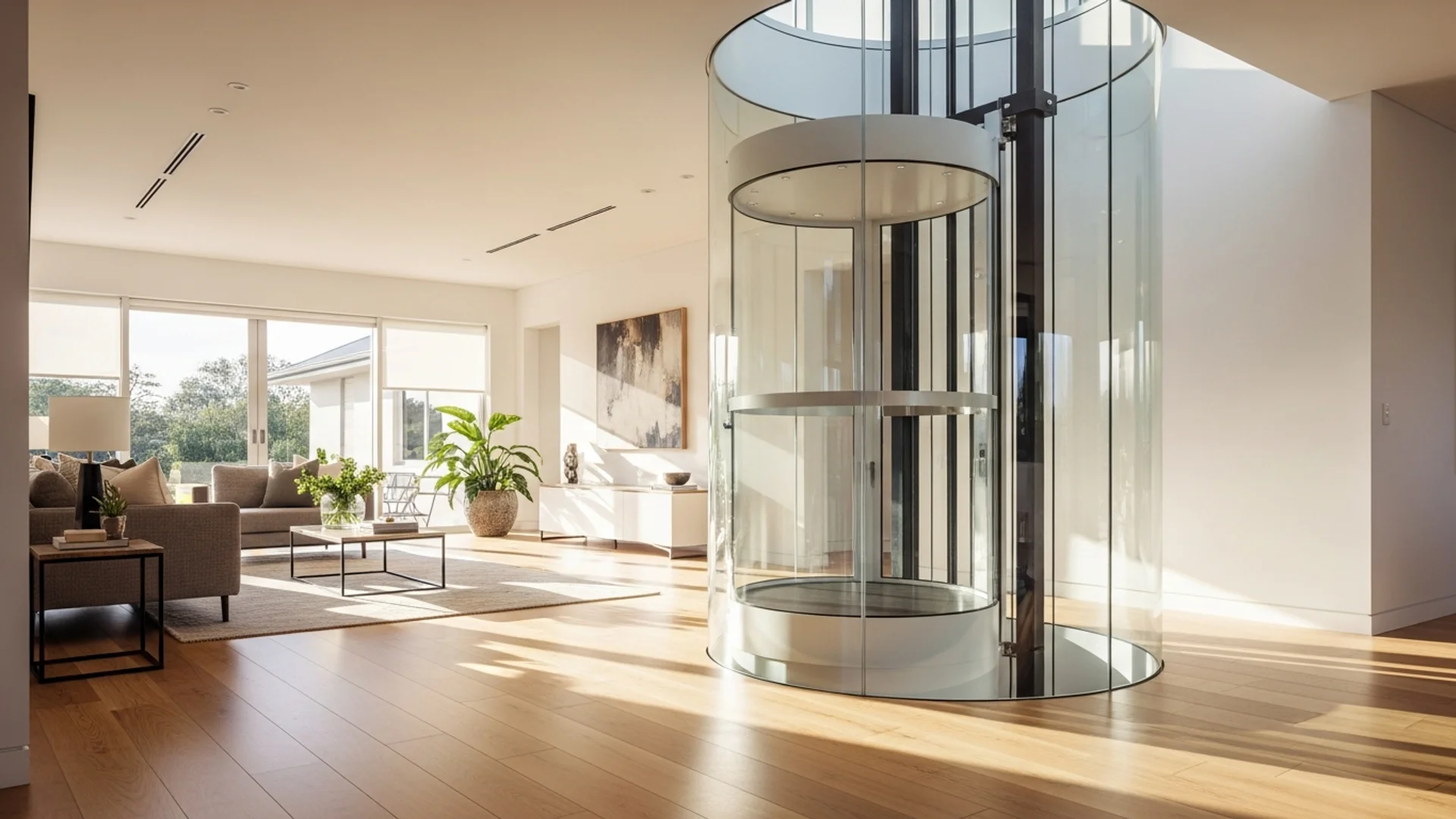
Vacuum Lift vs Hydraulic Home Lift
A vacuum lift is a self-contained cylindrical tube that needs no pit and no machine room, so it installs in days — but it carries only one to three people. A hydraulic lift can take a larger car and heavier load, at the cost of a shallow pit and space for a power pack. This guide sets out the real choice.
Air versus oil
A vacuum lift changes air pressure inside a sealed tube to move the car; a hydraulic lift pumps oil into a ram. That one difference drives the whole comparison.
Vacuum wins on install
No pit, no machine room and a few days on site make the vacuum lift the least disruptive to retrofit, especially in slab-on-ground homes.
Hydraulic wins on capacity
A vacuum lift carries one to three people; a hydraulic lift takes a larger car and heavier load, so it suits homes needing more than a personal lift.
Building works decide cost
A vacuum unit is a fixed imported package; a hydraulic lift varies with car size and site works. For either type the building works, not the lift, set the final price.
The core difference is how each lift moves the car. A vacuum lift — also called a pneumatic or air-driven lift — raises its cabin by changing the air pressure inside a sealed cylindrical tube: pumps draw air out above the car to lift it, and let air back in to lower it gently. A hydraulic lift pushes the car up with a ram driven by pumped oil, and lowers it by releasing that oil back to a tank. One runs on air and stands on its own; the other runs on fluid and needs somewhere to put the power pack.
That single distinction shapes everything a buyer cares about: whether you need to dig a pit, whether you need a machine cupboard, how many people can ride at once, how the lift looks in your home, and what it costs to install and maintain. A vacuum lift wins on being self-contained and quick to fit; a hydraulic lift wins on capacity and car size. This page compares the two the way a homeowner would weigh them, so you can tell an installer which way you are leaning before the first site visit.
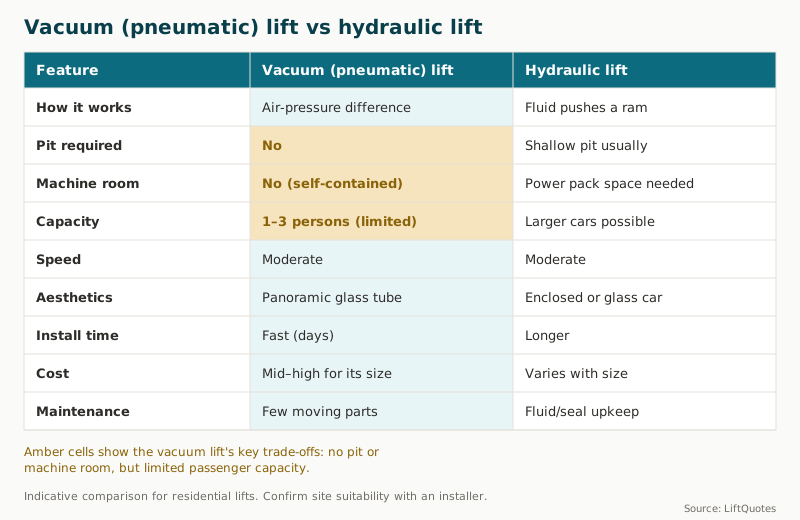
The two drive types compared across the factors that actually shape a home lift decision. The vacuum lift is the simpler, self-contained fit for one to three people; the hydraulic lift is the choice when you need a larger car or more capacity.
Swipe to compare →
| Factor | Vacuum (pneumatic) lift | Hydraulic lift |
|---|---|---|
| How it works | Air-pressure difference lifts the car | A pump forces oil into a ram to push the car |
| Pit required | No — sits on the floor | Shallow pit usually needed |
| Machine room | No — fully self-contained | Power pack space or cabinet needed |
| Capacity | 1 to 3 persons — limited | Larger cars and heavier loads possible |
| Speed | Moderate — around 0.15 m/s | Moderate — around 0.15 to 0.3 m/s |
| Aesthetics | Panoramic 360-degree glass tube | Enclosed or glass car to suit the home |
| Install time | Fast — often a few days | Longer — more building work |
| Maintenance | Few moving parts, no oil | Oil, seals and ram need periodic upkeep |
| Typical installed cost | Mid to high for a compact 2 to 3 stop unit | Varies widely with car size and building works |
Indicative positioning as of Q2 2026, based on LiftQuotes cost research and supplier-stated ranges for standard residential installations, ex GST. Building works are additional. Confirm capacity, pit and headroom with an installer.
Lift companies in Australia
Browse profiles, compare service areas, and check reviews.

Lift Shop
★ 5.0 (1551 reviews)
Australia's largest dedicated home lift specialist since 1996. 10,000+ installations. Exclusive Italian-crafted lifts with industry-leading 8-year warranty.
View profile →

Compact Home Lifts
NDIS★ 5.0 (465 reviews)
Melbourne branch of Compact Home Lifts. Compact residential lift specialist providing maintenance and repair services across Victoria.
View profile →

Next Level Elevators
★ 5.0 (454 reviews)
Award-winning provider of premium Italian-designed all-electric home elevators. Certified Eltec Partner. Showrooms in Melbourne, Sydney, and Brisbane.
View profile →

Shotton Lifts
NDIS★ 5.0 (9 reviews)
Family-owned Australian lift manufacturer since 1977. 80+ staff. Design, engineer, manufacture, install and service from Dandenong South VIC. NDIS registered.
View profile →

LiftFit Australia
NDIS★ 5.0 (8 reviews)
Victoria-based NDIS registered lift provider, est. 2011. Partners with Cibes, Savaria, and Kalea. Residential, commercial, and platform lifts.
View profile →

Easy Living Home Elevators
★ 5.0 (7 reviews)
Australia's #1 home elevator supplier since 1998. 100% Australian-owned. 11,000+ elevators in service across 6 states.
View profile →
LiftQuotes is a comparison platform. Companies shown are filtered by relevance to this page. Listing does not imply endorsement. LiftQuotes may receive a referral fee when you request quotes.
How a vacuum lift and a hydraulic lift actually differ
Both lifts carry people between the floors of a home, but they use opposite forces to do it. A vacuum lift is a sealed polycarbonate-and-aluminium cylinder with a cabin inside it. A set of turbines at the top of the tube pumps air out of the space above the car, and the higher pressure below simply pushes the cabin up. To descend, the system lets air back in slowly and the car settles under gravity in a controlled way. The whole unit is self-contained — the tube is the shaft, the structure and the guide all at once — so it stands on your floor and plugs into power.
A hydraulic lift works more like a car hoist. A motor drives a pump that forces oil into a cylinder, and a ram raises the car. To come down, a valve releases the oil back to the tank and the car lowers under its own weight. The pump, tank and controller sit in a compact power pack that has to live somewhere — a cupboard or cabinet within a few metres of the shaft — and the ram usually needs a shallow pit beneath the lowest floor.
That difference in where the mechanism sits, and what has to be built to support it, drives the rest of this comparison. If you want the full background on the air-driven type before weighing it up, our guide to vacuum lifts in Australia covers how they work in more depth, and the broader home lifts hub explains where each drive type fits.
Pit, machine room and building work
This is where the vacuum lift is hard to beat. Because it is fully self-contained, it needs no pit and no machine room — it sits on a level floor and requires only a hole cut through the upper slab for the tube to pass through. That makes it one of the least disruptive lifts to retrofit into an existing home, and a natural fit for slab-on-ground builds where digging a pit is costly or impossible. If a tight footprint is your main constraint, our guide to small lifts for homes shows just how little floor space these compact towers claim.
A hydraulic lift asks more of the building. It usually needs a shallow pit for the ram and buffer, and a ventilated space for the power pack. None of this is a dealbreaker, but in a retrofit it means more construction, more mess and a slightly larger overall footprint than dropping in a vacuum tube.
Capacity: the vacuum lift's real limit
The trade-off for all that convenience is capacity. A vacuum lift is limited by the diameter of its tube, so the largest models carry about three people or a single wheelchair user in the biggest cabins, and the smaller units suit one or two people. It is a personal lift, not a people-mover. A hydraulic lift has no such ceiling: car size is set by your shaft, so it comfortably handles larger cabins, heavier loads and, in bigger builds, a wheelchair plus a carer. If your priority is moving more than a couple of people, or a full-size mobility scooter, hydraulic is the safer bet.
Ride, speed, noise and looks
Both lifts run at similar, deliberately gentle speeds around 0.15 metres per second — normal for a residential lift and well within the expectations set by AS/NZS 1735.18:2002, the Australian Standard for passenger lifts in private residences. Where they differ is character. A vacuum lift makes a noticeable airflow sound as the turbines run, and its all-glass 360-degree tube is a genuine design feature — a transparent cylinder that becomes part of the room. A hydraulic lift is generally quieter in the cabin because the pump sits away from the car, and it can be finished as an enclosed car or a glass one to blend into the home rather than stand out. If you are also weighing a cable-driven traction lift, that is a separate decision covered in our hydraulic vs electric lift comparison.
Maintenance and long-term ownership
A vacuum lift is the simpler machine to live with. It has very few moving parts, no oil tank and no ram seals, so routine servicing is light and there is little to weep or leak as it ages. A hydraulic lift needs its oil, seals and ram checked periodically, and seals can seep over the years, which adds a small ongoing task to the maintenance schedule. Both are registrable plant considerations under the model Work Health and Safety framework and must be installed and maintained to AS/NZS 1735.18:2002. Victoria is the exception on the safety-law side — it operates under its own Occupational Health and Safety Act rather than the model WHS laws, with WorkSafe Victoria as the regulator — so confirm the current requirement with your state regulator or installer.
Cost: what each really costs installed
As of Q2 2026, a vacuum lift tends to carry a mid-to-high price for its size: the unit itself is a fixed, imported package, so a compact two- or three-stop tube is not cheap per person carried, but it saves on building works because there is no pit or machine room to construct. A hydraulic home lift varies far more widely, because the car can be small or large and the building works swing the total — a simple two-stop install can undercut a vacuum lift, while a larger hydraulic car with a proper shaft and pit costs well above it. The honest rule for either type is that the building works, not the lift alone, decide your final number. For a full breakdown of what sits inside these figures, see our home lift cost guide.
Choose a vacuum lift if, choose hydraulic if
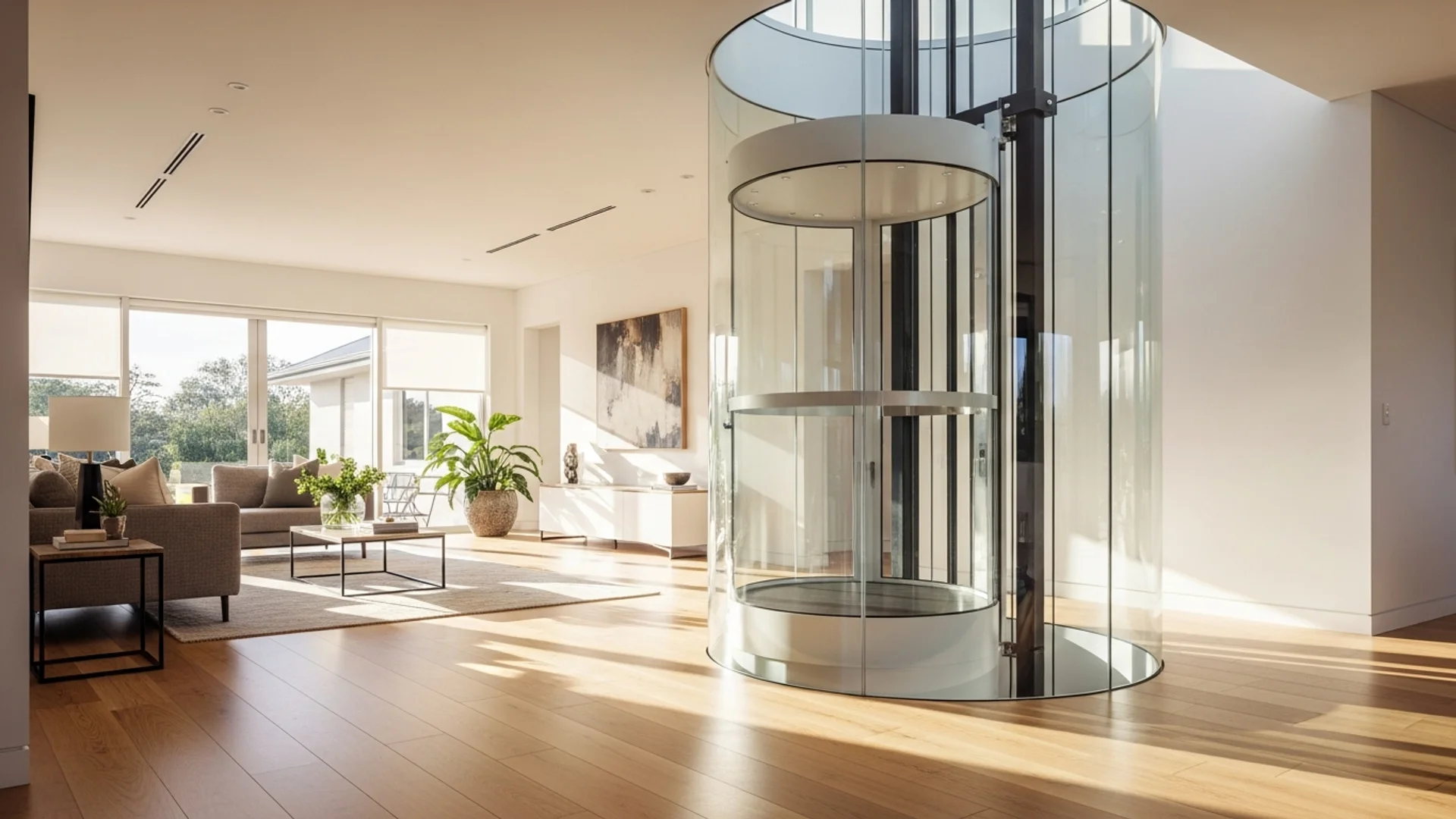
Choose a vacuum lift if you want the least disruptive install possible — no pit, no machine room, a few days on site — and you are moving one to three people in a striking glass tube. It is ideal for finished homes, slab-on-ground builds and anyone who values a clean, self-contained fit over maximum capacity. Choose a hydraulic lift if you need a larger car, more capacity or a heavier load, want a quieter cabin, and your home can accommodate a shallow pit and a cupboard for the power pack.
For most Australian homes the decision comes down to a single question: is a compact, quick-to-fit lift for a couple of people enough, or do you need to carry more? Get free quotes from installers who supply both, and ask each to explain which type they would put in your home and why.
Still deciding? Get quotes for both options
Installers will assess your site and recommend the right specification.
What are you looking for today?
I need a lift installed
I have a lift that needs attention
The core difference is how each lift moves the car. A vacuum lift — also called a pneumatic or air-driven lift — raises its cabin by changing the air pressure inside a sealed cylindrical tube: pumps draw air out above the car to lift it, and let air back in to lower it gently. A hydraulic lift pushes the car up with a ram driven by pumped oil, and lowers it by releasing that oil back to a tank. One runs on air and stands on its own; the other runs on fluid and needs somewhere to put the power pack.
That single distinction shapes everything a buyer cares about: whether you need to dig a pit, whether you need a machine cupboard, how many people can ride at once, how the lift looks in your home, and what it costs to install and maintain. A vacuum lift wins on being self-contained and quick to fit; a hydraulic lift wins on capacity and car size. This page compares the two the way a homeowner would weigh them, so you can tell an installer which way you are leaning before the first site visit.
The two drive types compared across the factors that actually shape a home lift decision. The vacuum lift is the simpler, self-contained fit for one to three people; the hydraulic lift is the choice when you need a larger car or more capacity.
Swipe to compare →
| Factor | Vacuum (pneumatic) lift | Hydraulic lift |
|---|---|---|
| How it works | Air-pressure difference lifts the car | A pump forces oil into a ram to push the car |
| Pit required | No — sits on the floor | Shallow pit usually needed |
| Machine room | No — fully self-contained | Power pack space or cabinet needed |
| Capacity | 1 to 3 persons — limited | Larger cars and heavier loads possible |
| Speed | Moderate — around 0.15 m/s | Moderate — around 0.15 to 0.3 m/s |
| Aesthetics | Panoramic 360-degree glass tube | Enclosed or glass car to suit the home |
| Install time | Fast — often a few days | Longer — more building work |
| Maintenance | Few moving parts, no oil | Oil, seals and ram need periodic upkeep |
| Typical installed cost | Mid to high for a compact 2 to 3 stop unit | Varies widely with car size and building works |
Indicative positioning as of Q2 2026, based on LiftQuotes cost research and supplier-stated ranges for standard residential installations, ex GST. Building works are additional. Confirm capacity, pit and headroom with an installer.
Lift companies in Australia
Browse profiles, compare service areas, and check reviews.
Lift Shop
★ 5.0 (1551 reviews)
Australia's largest dedicated home lift specialist since 1996. 10,000+ installations. Exclusive Italian-crafted lifts with industry-leading 8-year warranty.
View profile →
Compact Home Lifts
NDIS★ 5.0 (465 reviews)
Melbourne branch of Compact Home Lifts. Compact residential lift specialist providing maintenance and repair services across Victoria.
View profile →
Next Level Elevators
★ 5.0 (454 reviews)
Award-winning provider of premium Italian-designed all-electric home elevators. Certified Eltec Partner. Showrooms in Melbourne, Sydney, and Brisbane.
View profile →
Shotton Lifts
NDIS★ 5.0 (9 reviews)
Family-owned Australian lift manufacturer since 1977. 80+ staff. Design, engineer, manufacture, install and service from Dandenong South VIC. NDIS registered.
View profile →
LiftFit Australia
NDIS★ 5.0 (8 reviews)
Victoria-based NDIS registered lift provider, est. 2011. Partners with Cibes, Savaria, and Kalea. Residential, commercial, and platform lifts.
View profile →
Easy Living Home Elevators
★ 5.0 (7 reviews)
Australia's #1 home elevator supplier since 1998. 100% Australian-owned. 11,000+ elevators in service across 6 states.
View profile →
LiftQuotes is a comparison platform. Companies shown are filtered by relevance to this page. Listing does not imply endorsement. LiftQuotes may receive a referral fee when you request quotes.
How a vacuum lift and a hydraulic lift actually differ
Both lifts carry people between the floors of a home, but they use opposite forces to do it. A vacuum lift is a sealed polycarbonate-and-aluminium cylinder with a cabin inside it. A set of turbines at the top of the tube pumps air out of the space above the car, and the higher pressure below simply pushes the cabin up. To descend, the system lets air back in slowly and the car settles under gravity in a controlled way. The whole unit is self-contained — the tube is the shaft, the structure and the guide all at once — so it stands on your floor and plugs into power.
A hydraulic lift works more like a car hoist. A motor drives a pump that forces oil into a cylinder, and a ram raises the car. To come down, a valve releases the oil back to the tank and the car lowers under its own weight. The pump, tank and controller sit in a compact power pack that has to live somewhere — a cupboard or cabinet within a few metres of the shaft — and the ram usually needs a shallow pit beneath the lowest floor.
That difference in where the mechanism sits, and what has to be built to support it, drives the rest of this comparison. If you want the full background on the air-driven type before weighing it up, our guide to vacuum lifts in Australia covers how they work in more depth, and the broader home lifts hub explains where each drive type fits.
Pit, machine room and building work
This is where the vacuum lift is hard to beat. Because it is fully self-contained, it needs no pit and no machine room — it sits on a level floor and requires only a hole cut through the upper slab for the tube to pass through. That makes it one of the least disruptive lifts to retrofit into an existing home, and a natural fit for slab-on-ground builds where digging a pit is costly or impossible. If a tight footprint is your main constraint, our guide to small lifts for homes shows just how little floor space these compact towers claim.
A hydraulic lift asks more of the building. It usually needs a shallow pit for the ram and buffer, and a ventilated space for the power pack. None of this is a dealbreaker, but in a retrofit it means more construction, more mess and a slightly larger overall footprint than dropping in a vacuum tube.
Capacity: the vacuum lift's real limit
The trade-off for all that convenience is capacity. A vacuum lift is limited by the diameter of its tube, so the largest models carry about three people or a single wheelchair user in the biggest cabins, and the smaller units suit one or two people. It is a personal lift, not a people-mover. A hydraulic lift has no such ceiling: car size is set by your shaft, so it comfortably handles larger cabins, heavier loads and, in bigger builds, a wheelchair plus a carer. If your priority is moving more than a couple of people, or a full-size mobility scooter, hydraulic is the safer bet.
Ride, speed, noise and looks
Both lifts run at similar, deliberately gentle speeds around 0.15 metres per second — normal for a residential lift and well within the expectations set by AS/NZS 1735.18:2002, the Australian Standard for passenger lifts in private residences. Where they differ is character. A vacuum lift makes a noticeable airflow sound as the turbines run, and its all-glass 360-degree tube is a genuine design feature — a transparent cylinder that becomes part of the room. A hydraulic lift is generally quieter in the cabin because the pump sits away from the car, and it can be finished as an enclosed car or a glass one to blend into the home rather than stand out. If you are also weighing a cable-driven traction lift, that is a separate decision covered in our hydraulic vs electric lift comparison.
Maintenance and long-term ownership
A vacuum lift is the simpler machine to live with. It has very few moving parts, no oil tank and no ram seals, so routine servicing is light and there is little to weep or leak as it ages. A hydraulic lift needs its oil, seals and ram checked periodically, and seals can seep over the years, which adds a small ongoing task to the maintenance schedule. Both are registrable plant considerations under the model Work Health and Safety framework and must be installed and maintained to AS/NZS 1735.18:2002. Victoria is the exception on the safety-law side — it operates under its own Occupational Health and Safety Act rather than the model WHS laws, with WorkSafe Victoria as the regulator — so confirm the current requirement with your state regulator or installer.
Cost: what each really costs installed
As of Q2 2026, a vacuum lift tends to carry a mid-to-high price for its size: the unit itself is a fixed, imported package, so a compact two- or three-stop tube is not cheap per person carried, but it saves on building works because there is no pit or machine room to construct. A hydraulic home lift varies far more widely, because the car can be small or large and the building works swing the total — a simple two-stop install can undercut a vacuum lift, while a larger hydraulic car with a proper shaft and pit costs well above it. The honest rule for either type is that the building works, not the lift alone, decide your final number. For a full breakdown of what sits inside these figures, see our home lift cost guide.
Choose a vacuum lift if, choose hydraulic if
Choose a vacuum lift if you want the least disruptive install possible — no pit, no machine room, a few days on site — and you are moving one to three people in a striking glass tube. It is ideal for finished homes, slab-on-ground builds and anyone who values a clean, self-contained fit over maximum capacity. Choose a hydraulic lift if you need a larger car, more capacity or a heavier load, want a quieter cabin, and your home can accommodate a shallow pit and a cupboard for the power pack.
For most Australian homes the decision comes down to a single question: is a compact, quick-to-fit lift for a couple of people enough, or do you need to carry more? Get free quotes from installers who supply both, and ask each to explain which type they would put in your home and why.
Still deciding? Get quotes for both options
Installers will assess your site and recommend the right specification.
What are you looking for today?
I need a lift installed
I have a lift that needs attention
Common Questions About Vacuum and Hydraulic Home Lifts
A vacuum lift, also called a pneumatic or air-driven lift, is a self-contained cylindrical lift that moves its cabin by changing the air pressure inside a sealed tube. Turbines at the top pump air out of the space above the car so the higher pressure below lifts it, and let air back in to lower it gently under gravity. Because the tube is the shaft, structure and guide all in one, a vacuum lift needs no pit and no machine room — it stands on the floor and plugs into power, which makes it one of the least disruptive home lifts to install.
Related guides
Guide
Our Editorial Methodology: How LiftQuotes Researches Content
How LiftQuotes researches, sources and reviews every lift guide and cost page: the standards we cite, our linked-source rule for cost data, and how often we update.
Guide
Lift Compliance Checklist for Facility Managers (Australia)
A facility manager's lift compliance checklist for Australia: plant registration, inspection, log books, 4G VoLTE emergency phones and DDA access duties.
Comparison
Stairlift vs Platform Lift: Which Access Solution Fits?
A stairlift carries a seated user along the stairs from about $3,000; a platform lift raises a wheelchair vertically from about $15,000. Compare cost, access and fit.
Location
Lift Companies in Melbourne: Compare Local Installers
Compare lift companies in Melbourne for home, platform and commercial lifts. WorkSafe Victoria compliance, local installer coverage and indicative VIC costs.
Deciding between a vacuum and hydraulic lift?
Tell us about your home and we will connect you with installers who supply both types — so you can compare their advice, not just their price. Free, with no obligation.
Join 1,000+ Australians who've requested quotes through LiftQuotes
Get free quotes