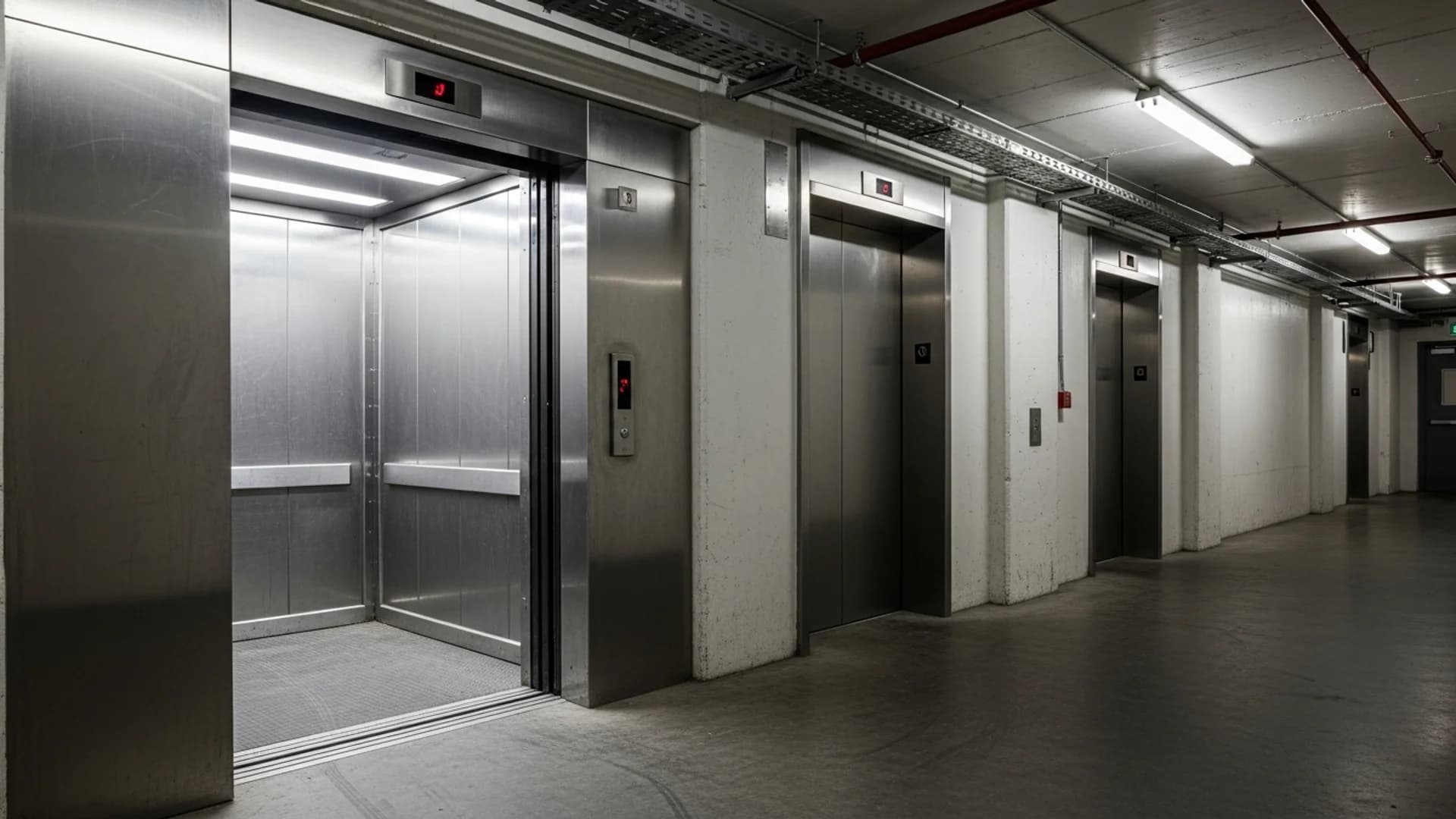
Passenger Lift vs Goods Lift
A passenger lift is built to carry people, with a finished car and ride comfort to a high standard. A goods lift is built to carry freight, and most goods-only lifts prohibit passengers unless the lift is specifically rated as a goods-and-passenger lift. That single distinction drives the specification, the standards and the cost.
A passenger lift and a goods lift do different jobs, and the difference is not cosmetic. A passenger lift is designed and rated to carry people: it has a finished car, automatic doors, faster travel and ride-quality requirements set to a passenger standard. A goods lift is designed to carry freight: it is robust and utilitarian, usually slower, often fitted with manual or vertical bi-parting doors, and — critically — a goods-only lift is not permitted to carry passengers at all. The one exception is a lift specifically rated and marked as a goods-and-passenger lift, which is engineered to carry both.
For anyone specifying a building, this is the distinction that most often goes wrong. Choosing a cheaper goods lift to move the occasional pallet, then quietly letting staff ride in it, is a compliance and safety problem, not a shortcut. This page sets out where the two types genuinely differ — purpose, capacity, speed, doors, the governing standard and cost — so you can specify the right lift the first time, and know exactly when a goods-and-passenger lift is the answer.
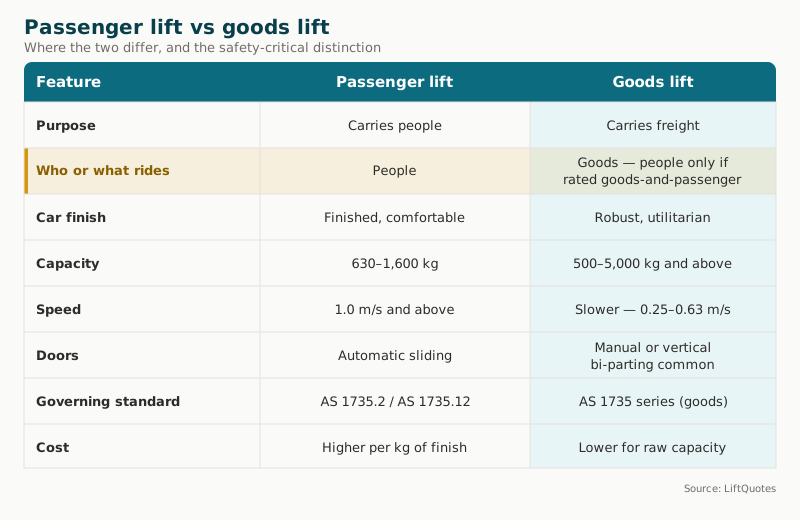
The two lift types compared across the factors that decide a specification. The safety-critical row is who or what may ride: a goods-only lift is not a people-mover unless it is rated as a goods-and-passenger lift.
Swipe to compare →
| Factor | Passenger lift | Goods lift |
|---|---|---|
| Best for | Moving people between floors | Moving freight, stock and equipment |
| Purpose | Carries people | Carries freight |
| Who or what may ride | People | Goods only — people only if rated goods-and-passenger |
| Car finish | Finished and comfortable, to a passenger ride standard | Robust and utilitarian, built for load |
| Typical capacity | 630–1,600 kg | 500–5,000 kg and above |
| Typical speed | 1.0 m/s and above | Slower — around 0.25–0.63 m/s |
| Doors | Automatic sliding | Manual or vertical bi-parting common |
| Governing standard | AS 1735.2 / AS 1735.12 | AS 1735 series (goods and goods-and-passenger) |
| Cost | Higher per kilogram — you pay for finish and ride | Lower per kilogram — you pay for raw capacity |
Indicative positioning as of Q2 2026, based on LiftQuotes research and supplier-stated ranges for standard commercial installations, ex GST. Capacities, speeds and door types vary by model and duty — confirm the rating and the governing standard with your lift supplier and building certifier.
The core difference: what each lift is rated to carry
Every lift is designed and certified for a duty, and that duty is the real dividing line. A passenger lift is rated to carry people. Its car is finished for occupant comfort, its doors are automatic, its levelling and ride quality are held to a passenger standard, and it runs fast enough to move people without frustrating waits. A goods lift is rated to carry freight. It is built around load rather than ride: heavier capacities, a hard-wearing car, slower and steadier travel, and doors chosen for loading rather than speed.
The rating is not a label you can ignore. A goods-only lift is engineered and certified on the basis that people do not ride in it — which is why using one to carry staff, even occasionally, sits outside its design duty. If people genuinely need to travel with the load, the correct answer is a lift rated as a goods-and-passenger lift, covered below. For the wider category, our commercial lifts hub explains where each lift type fits in a building, and the freight and industrial lifts guide covers the goods end of the range in depth.
Can a goods lift carry people?
Not unless it is rated to. A standard goods-only lift is not permitted to carry passengers — it is designed, marked and certified for freight, and it will typically carry signage restricting it to goods and any authorised person needed to handle that load under controlled conditions. The moment a lift is intended to carry passengers as a matter of routine, it must meet passenger-lift requirements, either as a passenger lift or as a goods-and-passenger lift.
This is the distinction facility managers and developers most need to get right at specification stage. Retrofitting passenger duty onto a goods lift after the fact is expensive and sometimes impossible. It is far cheaper to specify a goods-and-passenger lift up front if there is any realistic prospect that people will travel with the load.
What is a goods-and-passenger lift?
A goods-and-passenger lift is a single lift engineered to do both jobs. It carries freight like a goods lift — robust car, high capacity — but it also meets the passenger-carrying requirements for door protection, levelling, control and car finish, so people may ride in it legally and safely. In practice these lifts are common wherever loading docks meet staff access: a retail stockroom, a hospitality back-of-house, a warehouse mezzanine, a light-industrial building where staff move with trolleys and stock.
A goods-and-passenger lift costs more than a bare goods lift of the same capacity, because that dual rating brings the passenger-grade doors, controls and safety devices. It usually costs less than running two separate lifts. When the same trips carry both people and goods, it is often the most economical specification overall.
Capacity, speed and doors
Capacity is where goods lifts pull away. A passenger lift is typically specified from around 630 kg — roughly eight people — up to 1,600 kg or so for larger cars. A goods lift starts where the load demands and climbs well past passenger ranges: 500 kg for a small service lift, and 2,000, 3,500 or 5,000 kg and beyond for industrial freight duty. If your requirement is measured in pallets or tonnes rather than people, that alone points to a goods or goods-and-passenger lift.
Speed runs the other way. Passenger lifts travel at 1.0 metre per second and up, because people notice waiting. Goods lifts run slower and steadier — commonly in the 0.25 to 0.63 m/s range — because a controlled, stable ride matters more than a quick one when the car is loaded. Doors differ too: passenger lifts use automatic sliding doors sized for people, while goods lifts often use manual gates or vertical bi-parting doors that suit wide, awkward loads and forklift access.
Standards, safety and compliance
Both lift types are covered by the AS 1735 series — the Australian Standards for lifts, escalators and moving walks. Passenger lifts are built to the passenger requirements of the series, with AS 1735.2 covering electric passenger and goods lifts and AS 1735.12:2020 setting the accessibility requirements where a lift must serve people with disability. Goods and goods-and-passenger lifts are covered by the goods-carrying provisions of the same series, with the passenger-grade safety devices added where people are permitted to ride. Always confirm the exact part and edition your lift is certified against with your supplier and building certifier.
The safety framework does not stop at the design standard. Under Schedule 5 of the model Work Health and Safety (WHS) Regulations, lifts are registrable plant — both the design and each installed unit require registration with your state regulator, and the lift must be maintained and inspected on an ongoing basis. Victoria is the exception: it operates under its own Occupational Health and Safety (OHS) Act rather than the model WHS laws, with WorkSafe Victoria as the regulator, so verify the current requirement for your jurisdiction. The practical point for a building owner is that the who-may-ride rating and the plant-registration duties travel together — specify the wrong duty and you inherit a compliance problem, not just the wrong car.
Cost: what drives the difference
The two types price on different logic. A passenger lift costs more per kilogram of capacity because you are paying for finish, ride quality, fast automatic doors and passenger-grade controls. A goods lift costs less per kilogram because it is built for raw load — the money goes into structure and capacity, not comfort. That means a high-capacity goods lift can be cheaper than a mid-size passenger lift while carrying several times the load, and a goods-and-passenger lift sits between the two, adding passenger-grade devices to a goods-grade car.
As of Q2 2026, the honest rule for either type is that duty and building works decide the final number more than the car alone. For a full breakdown, see our goods lift cost guide for the freight side and the commercial lift cost guide for passenger duty — together they cover the range a facility manager or developer will actually be quoted.
Which lift do you need?
Specify a passenger lift if the lift's job is to move people and any goods are incidental — offices, apartments, retail frontages, aged care and hospitality front-of-house. Specify a goods lift if the job is purely freight and no one needs to travel with the load — a dedicated stock or service lift between a dock and a storeroom. Specify a goods-and-passenger lift whenever people and goods share the same trips, which is the reality in most warehouses, stockrooms and light-industrial buildings.
For most commercial buildings the deciding question is simple: will people ride with the load? If yes, and the answer is anything other than a firm no, a passenger or goods-and-passenger lift is the compliant choice — never a goods-only lift pressed into passenger service. Get free quotes from suppliers who offer all three, and ask each to confirm the rating, the governing standard and the plant-registration path for your building.
Lift companies in Australia
Browse profiles, compare service areas, and check reviews.

Lift Shop
★ 5.0 (1551 reviews)
Australia's largest dedicated home lift specialist since 1996. 10,000+ installations. Exclusive Italian-crafted lifts with industry-leading 8-year warranty.
View profile →

Compact Home Lifts
NDIS★ 5.0 (465 reviews)
Melbourne branch of Compact Home Lifts. Compact residential lift specialist providing maintenance and repair services across Victoria.
View profile →

Next Level Elevators
★ 5.0 (454 reviews)
Award-winning provider of premium Italian-designed all-electric home elevators. Certified Eltec Partner. Showrooms in Melbourne, Sydney, and Brisbane.
View profile →

Shotton Lifts
NDIS★ 5.0 (9 reviews)
Family-owned Australian lift manufacturer since 1977. 80+ staff. Design, engineer, manufacture, install and service from Dandenong South VIC. NDIS registered.
View profile →

LiftFit Australia
NDIS★ 5.0 (8 reviews)
Victoria-based NDIS registered lift provider, est. 2011. Partners with Cibes, Savaria, and Kalea. Residential, commercial, and platform lifts.
View profile →

Easy Living Home Elevators
★ 5.0 (7 reviews)
Australia's #1 home elevator supplier since 1998. 100% Australian-owned. 11,000+ elevators in service across 6 states.
View profile →
LiftQuotes is a comparison platform. Companies shown are filtered by relevance to this page. Listing does not imply endorsement. LiftQuotes may receive a referral fee when you request quotes.
Still deciding? Get quotes for both options
Installers will assess your site and recommend the right specification.
What are you looking for today?
I need a lift installed
I have a lift that needs attention
The two lift types compared across the factors that decide a specification. The safety-critical row is who or what may ride: a goods-only lift is not a people-mover unless it is rated as a goods-and-passenger lift.
Swipe to compare →
| Factor | Passenger lift | Goods lift |
|---|---|---|
| Best for | Moving people between floors | Moving freight, stock and equipment |
| Purpose | Carries people | Carries freight |
| Who or what may ride | People | Goods only — people only if rated goods-and-passenger |
| Car finish | Finished and comfortable, to a passenger ride standard | Robust and utilitarian, built for load |
| Typical capacity | 630–1,600 kg | 500–5,000 kg and above |
| Typical speed | 1.0 m/s and above | Slower — around 0.25–0.63 m/s |
| Doors | Automatic sliding | Manual or vertical bi-parting common |
| Governing standard | AS 1735.2 / AS 1735.12 | AS 1735 series (goods and goods-and-passenger) |
| Cost | Higher per kilogram — you pay for finish and ride | Lower per kilogram — you pay for raw capacity |
Indicative positioning as of Q2 2026, based on LiftQuotes research and supplier-stated ranges for standard commercial installations, ex GST. Capacities, speeds and door types vary by model and duty — confirm the rating and the governing standard with your lift supplier and building certifier.
The core difference: what each lift is rated to carry
Every lift is designed and certified for a duty, and that duty is the real dividing line. A passenger lift is rated to carry people. Its car is finished for occupant comfort, its doors are automatic, its levelling and ride quality are held to a passenger standard, and it runs fast enough to move people without frustrating waits. A goods lift is rated to carry freight. It is built around load rather than ride: heavier capacities, a hard-wearing car, slower and steadier travel, and doors chosen for loading rather than speed.
The rating is not a label you can ignore. A goods-only lift is engineered and certified on the basis that people do not ride in it — which is why using one to carry staff, even occasionally, sits outside its design duty. If people genuinely need to travel with the load, the correct answer is a lift rated as a goods-and-passenger lift, covered below. For the wider category, our commercial lifts hub explains where each lift type fits in a building, and the freight and industrial lifts guide covers the goods end of the range in depth.
Can a goods lift carry people?
Not unless it is rated to. A standard goods-only lift is not permitted to carry passengers — it is designed, marked and certified for freight, and it will typically carry signage restricting it to goods and any authorised person needed to handle that load under controlled conditions. The moment a lift is intended to carry passengers as a matter of routine, it must meet passenger-lift requirements, either as a passenger lift or as a goods-and-passenger lift.
This is the distinction facility managers and developers most need to get right at specification stage. Retrofitting passenger duty onto a goods lift after the fact is expensive and sometimes impossible. It is far cheaper to specify a goods-and-passenger lift up front if there is any realistic prospect that people will travel with the load.
What is a goods-and-passenger lift?
A goods-and-passenger lift is a single lift engineered to do both jobs. It carries freight like a goods lift — robust car, high capacity — but it also meets the passenger-carrying requirements for door protection, levelling, control and car finish, so people may ride in it legally and safely. In practice these lifts are common wherever loading docks meet staff access: a retail stockroom, a hospitality back-of-house, a warehouse mezzanine, a light-industrial building where staff move with trolleys and stock.
A goods-and-passenger lift costs more than a bare goods lift of the same capacity, because that dual rating brings the passenger-grade doors, controls and safety devices. It usually costs less than running two separate lifts. When the same trips carry both people and goods, it is often the most economical specification overall.
Capacity, speed and doors
Capacity is where goods lifts pull away. A passenger lift is typically specified from around 630 kg — roughly eight people — up to 1,600 kg or so for larger cars. A goods lift starts where the load demands and climbs well past passenger ranges: 500 kg for a small service lift, and 2,000, 3,500 or 5,000 kg and beyond for industrial freight duty. If your requirement is measured in pallets or tonnes rather than people, that alone points to a goods or goods-and-passenger lift.
Speed runs the other way. Passenger lifts travel at 1.0 metre per second and up, because people notice waiting. Goods lifts run slower and steadier — commonly in the 0.25 to 0.63 m/s range — because a controlled, stable ride matters more than a quick one when the car is loaded. Doors differ too: passenger lifts use automatic sliding doors sized for people, while goods lifts often use manual gates or vertical bi-parting doors that suit wide, awkward loads and forklift access.
Standards, safety and compliance
Both lift types are covered by the AS 1735 series — the Australian Standards for lifts, escalators and moving walks. Passenger lifts are built to the passenger requirements of the series, with AS 1735.2 covering electric passenger and goods lifts and AS 1735.12:2020 setting the accessibility requirements where a lift must serve people with disability. Goods and goods-and-passenger lifts are covered by the goods-carrying provisions of the same series, with the passenger-grade safety devices added where people are permitted to ride. Always confirm the exact part and edition your lift is certified against with your supplier and building certifier.
The safety framework does not stop at the design standard. Under Schedule 5 of the model Work Health and Safety (WHS) Regulations, lifts are registrable plant — both the design and each installed unit require registration with your state regulator, and the lift must be maintained and inspected on an ongoing basis. Victoria is the exception: it operates under its own Occupational Health and Safety (OHS) Act rather than the model WHS laws, with WorkSafe Victoria as the regulator, so verify the current requirement for your jurisdiction. The practical point for a building owner is that the who-may-ride rating and the plant-registration duties travel together — specify the wrong duty and you inherit a compliance problem, not just the wrong car.
Cost: what drives the difference
The two types price on different logic. A passenger lift costs more per kilogram of capacity because you are paying for finish, ride quality, fast automatic doors and passenger-grade controls. A goods lift costs less per kilogram because it is built for raw load — the money goes into structure and capacity, not comfort. That means a high-capacity goods lift can be cheaper than a mid-size passenger lift while carrying several times the load, and a goods-and-passenger lift sits between the two, adding passenger-grade devices to a goods-grade car.
As of Q2 2026, the honest rule for either type is that duty and building works decide the final number more than the car alone. For a full breakdown, see our goods lift cost guide for the freight side and the commercial lift cost guide for passenger duty — together they cover the range a facility manager or developer will actually be quoted.
Which lift do you need?
Specify a passenger lift if the lift's job is to move people and any goods are incidental — offices, apartments, retail frontages, aged care and hospitality front-of-house. Specify a goods lift if the job is purely freight and no one needs to travel with the load — a dedicated stock or service lift between a dock and a storeroom. Specify a goods-and-passenger lift whenever people and goods share the same trips, which is the reality in most warehouses, stockrooms and light-industrial buildings.
For most commercial buildings the deciding question is simple: will people ride with the load? If yes, and the answer is anything other than a firm no, a passenger or goods-and-passenger lift is the compliant choice — never a goods-only lift pressed into passenger service. Get free quotes from suppliers who offer all three, and ask each to confirm the rating, the governing standard and the plant-registration path for your building.
Lift companies in Australia
Browse profiles, compare service areas, and check reviews.
Lift Shop
★ 5.0 (1551 reviews)
Australia's largest dedicated home lift specialist since 1996. 10,000+ installations. Exclusive Italian-crafted lifts with industry-leading 8-year warranty.
View profile →
Compact Home Lifts
NDIS★ 5.0 (465 reviews)
Melbourne branch of Compact Home Lifts. Compact residential lift specialist providing maintenance and repair services across Victoria.
View profile →
Next Level Elevators
★ 5.0 (454 reviews)
Award-winning provider of premium Italian-designed all-electric home elevators. Certified Eltec Partner. Showrooms in Melbourne, Sydney, and Brisbane.
View profile →
Shotton Lifts
NDIS★ 5.0 (9 reviews)
Family-owned Australian lift manufacturer since 1977. 80+ staff. Design, engineer, manufacture, install and service from Dandenong South VIC. NDIS registered.
View profile →
LiftFit Australia
NDIS★ 5.0 (8 reviews)
Victoria-based NDIS registered lift provider, est. 2011. Partners with Cibes, Savaria, and Kalea. Residential, commercial, and platform lifts.
View profile →
Easy Living Home Elevators
★ 5.0 (7 reviews)
Australia's #1 home elevator supplier since 1998. 100% Australian-owned. 11,000+ elevators in service across 6 states.
View profile →
LiftQuotes is a comparison platform. Companies shown are filtered by relevance to this page. Listing does not imply endorsement. LiftQuotes may receive a referral fee when you request quotes.
Still deciding? Get quotes for both options
Installers will assess your site and recommend the right specification.
What are you looking for today?
I need a lift installed
I have a lift that needs attention
Rated for a duty, not a look
A passenger lift is rated to carry people; a goods lift is rated to carry freight. The rating — not the car finish — is the real dividing line, and it is certified, not optional.
A goods lift is not a people-mover
A goods-only lift may not carry passengers. If people need to travel with the load, the compliant answer is a lift rated as a goods-and-passenger lift.
Goods win on capacity, passenger on speed
Goods lifts carry 500 kg to 5,000 kg and above at a slower, steadier pace; passenger lifts run faster with automatic doors for people, from around 630 kg.
Duty and building works set the cost
Passenger lifts cost more per kilogram for finish and ride; goods lifts cost less for raw capacity. A goods-and-passenger lift sits between the two.
Common Questions About Passenger and Goods Lifts
A passenger lift is designed and rated to carry people: it has a finished car, automatic doors, faster travel and ride quality held to a passenger standard. A goods lift is designed and rated to carry freight: it is robust and utilitarian, usually slower, often fitted with manual or vertical bi-parting doors, and carries higher loads. The core difference is duty — what each lift is certified to carry. A goods-only lift is not permitted to carry passengers unless it is specifically rated as a goods-and-passenger lift.
Related guides
Guide
Our Editorial Methodology: How LiftQuotes Researches Content
How LiftQuotes researches, sources and reviews every lift guide and cost page: the standards we cite, our linked-source rule for cost data, and how often we update.
Guide
Lift Compliance Checklist for Facility Managers (Australia)
A facility manager's lift compliance checklist for Australia: plant registration, inspection, log books, 4G VoLTE emergency phones and DDA access duties.
Comparison
Stairlift vs Platform Lift: Which Access Solution Fits?
A stairlift carries a seated user along the stairs from about $3,000; a platform lift raises a wheelchair vertically from about $15,000. Compare cost, access and fit.
Location
Lift Companies in Melbourne: Compare Local Installers
Compare lift companies in Melbourne for home, platform and commercial lifts. WorkSafe Victoria compliance, local installer coverage and indicative VIC costs.
Specifying a lift for your building?
Tell us the duty — people, goods, or both — and we will connect you with suppliers who can confirm the right rating, standard and plant-registration path. Free, with no obligation.
Join 1,000+ Australians who've requested quotes through LiftQuotes
Get free quotes