Do Home Lifts Increase Property Value?
A home lift can add appeal and broaden the buyer pool in the right home — but treat it as future-proofing and liveability, not a guaranteed dollar return.
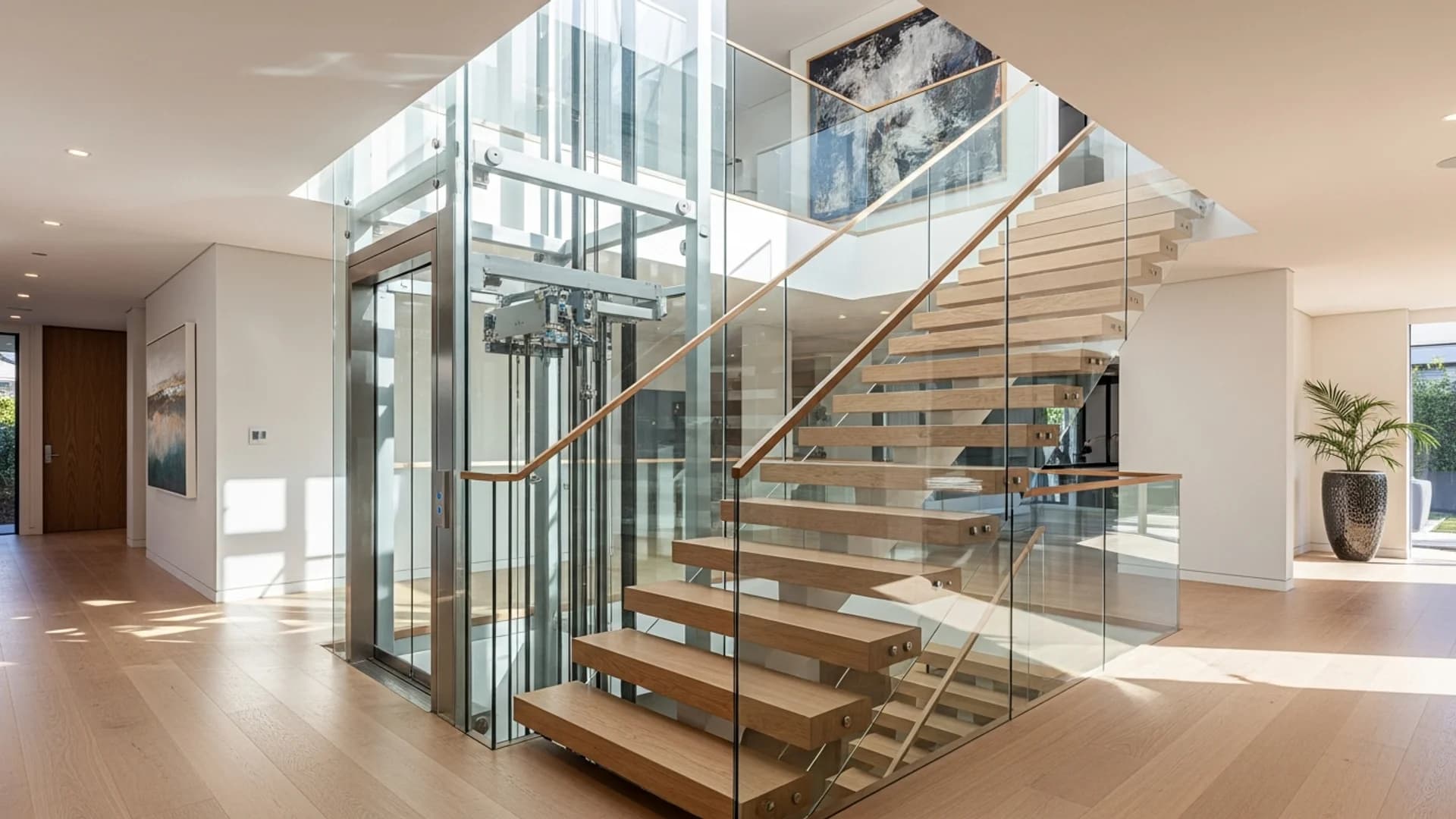
A home lift can add value to the right property, but not in the guaranteed, dollar-for-dollar way supplier brochures often imply. In a premium multi-level home, a well-integrated lift widens the pool of buyers who can live there comfortably — older buyers, families planning ahead, and anyone with mobility needs — and that broader demand is where most of the value comes from.
What a lift does not do is add a fixed percentage to your sale price. Any uplift depends on the market you are selling into, the quality of the installation, and how naturally the lift fits the home. A thoughtfully designed lift in a high-end suburb is an asset; a cramped, bolted-on unit in a modest home may return little at resale.
The honest way to think about a home lift is as future-proofing and everyday liveability first, with resale appeal as a secondary benefit. Read on for what actually drives whether a lift adds value, and how houses and apartments differ.
Do home lifts increase property value?
In the right home, yes — a home lift can lift both appeal and value, but the effect is about broadening demand rather than adding a set dollar figure. A lift makes a multi-level home usable for buyers who would otherwise rule it out: older downsizers, families thinking a decade ahead, and anyone with a mobility need. A wider buyer pool supports a stronger price. What a lift will not do is return a fixed percentage of its cost at resale — that depends entirely on context.
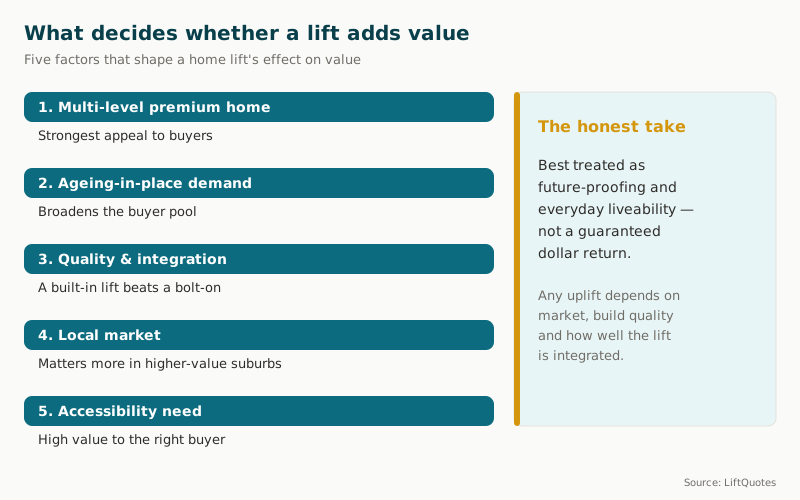
The factors below decide whether a lift adds meaningful value or simply adds convenience.
What makes a lift add value (or not)
Five things move the needle:
- The type of home. A lift adds the most to a genuinely multi-level, premium home where vertical access is a real convenience. In a compact two-storey house it reads more as a personal modification than a selling feature.
- Ageing-in-place demand. Australia's population is ageing, and a growing share of buyers want a home they can stay in for life. A lift signals exactly that, and for downsizers it can be the feature that wins the sale — the same demand explored in our guide to home lifts for elderly residents.
- Quality and integration. A lift designed into the home — matched finishes, sensible placement, no awkward loss of living space — adds far more than a retrofit that eats a corner of a bedroom. Buyers pay for something that looks intended, not bolted on.
- The local market. In higher-value suburbs where premium features are expected, a lift fits the market and supports price. In lower-value areas, buyers are less likely to pay a premium for it.
- A specific accessibility need. To a buyer who needs step-free access, a compliant lift can be the single reason they choose your home — value that a broad market average never captures.
Future-proofing beats chasing a return
The strongest reason to install a lift is not resale — it is staying in the home you love as your needs change. Retrofitting a lift later, in a hurry, is disruptive and expensive; building it in while you renovate is far smoother. Weighed against a full move, or against a home lift versus a stairlift for a single-user need, a lift that keeps a whole household in place for another decade earns its keep in liveability long before resale enters the picture.
It also helps to be clear-eyed about the numbers. A lift is a significant spend, and you should not expect to recover all of it at sale — see our home lift cost guide for realistic installed ranges. Frame the decision around the years of use you will get, not a hoped-for markup at resale.
Houses versus apartments
The value logic differs by property type. In a house, the lift is your asset and your decision — the benefit flows to your resale and your daily life. In an apartment or strata building, the lift is usually shared common property; a well-maintained building lift supports every apartment's value and marketability, but it is not a feature you add to your individual unit. For apartment owners, the equivalent value lever is a reliable, well-serviced building lift rather than a private installation.
If a lift fits your home, your suburb and your plans for the next decade, it can be a genuine asset as well as a daily convenience. The best way to test the numbers for your own situation is to compare real quotes — get free quotes from qualified Australian lift companies and weigh the cost against the years of liveability it buys.
Lift companies in Australia
Browse profiles, compare service areas, and check reviews.

Lift Shop
★ 5.0 (1551 reviews)
Australia's largest dedicated home lift specialist since 1996. 10,000+ installations. Exclusive Italian-crafted lifts with industry-leading 8-year warranty.
View profile →

Compact Home Lifts
NDIS★ 5.0 (465 reviews)
Melbourne branch of Compact Home Lifts. Compact residential lift specialist providing maintenance and repair services across Victoria.
View profile →

Next Level Elevators
★ 5.0 (454 reviews)
Award-winning provider of premium Italian-designed all-electric home elevators. Certified Eltec Partner. Showrooms in Melbourne, Sydney, and Brisbane.
View profile →

Shotton Lifts
NDIS★ 5.0 (9 reviews)
Family-owned Australian lift manufacturer since 1977. 80+ staff. Design, engineer, manufacture, install and service from Dandenong South VIC. NDIS registered.
View profile →

LiftFit Australia
NDIS★ 5.0 (8 reviews)
Victoria-based NDIS registered lift provider, est. 2011. Partners with Cibes, Savaria, and Kalea. Residential, commercial, and platform lifts.
View profile →

Easy Living Home Elevators
★ 5.0 (7 reviews)
Australia's #1 home elevator supplier since 1998. 100% Australian-owned. 11,000+ elevators in service across 6 states.
View profile →
LiftQuotes is a comparison platform. Companies shown are filtered by relevance to this page. Listing does not imply endorsement. LiftQuotes may receive a referral fee when you request quotes.
Put this into action
When you're ready to move forward, get free quotes from verified Australian lift installers.
What are you looking for today?
I need a lift installed
I have a lift that needs attention
Do home lifts increase property value?
In the right home, yes — a home lift can lift both appeal and value, but the effect is about broadening demand rather than adding a set dollar figure. A lift makes a multi-level home usable for buyers who would otherwise rule it out: older downsizers, families thinking a decade ahead, and anyone with a mobility need. A wider buyer pool supports a stronger price. What a lift will not do is return a fixed percentage of its cost at resale — that depends entirely on context.
The factors below decide whether a lift adds meaningful value or simply adds convenience.
What makes a lift add value (or not)
Five things move the needle:
- The type of home. A lift adds the most to a genuinely multi-level, premium home where vertical access is a real convenience. In a compact two-storey house it reads more as a personal modification than a selling feature.
- Ageing-in-place demand. Australia's population is ageing, and a growing share of buyers want a home they can stay in for life. A lift signals exactly that, and for downsizers it can be the feature that wins the sale — the same demand explored in our guide to home lifts for elderly residents.
- Quality and integration. A lift designed into the home — matched finishes, sensible placement, no awkward loss of living space — adds far more than a retrofit that eats a corner of a bedroom. Buyers pay for something that looks intended, not bolted on.
- The local market. In higher-value suburbs where premium features are expected, a lift fits the market and supports price. In lower-value areas, buyers are less likely to pay a premium for it.
- A specific accessibility need. To a buyer who needs step-free access, a compliant lift can be the single reason they choose your home — value that a broad market average never captures.
Future-proofing beats chasing a return
The strongest reason to install a lift is not resale — it is staying in the home you love as your needs change. Retrofitting a lift later, in a hurry, is disruptive and expensive; building it in while you renovate is far smoother. Weighed against a full move, or against a home lift versus a stairlift for a single-user need, a lift that keeps a whole household in place for another decade earns its keep in liveability long before resale enters the picture.
It also helps to be clear-eyed about the numbers. A lift is a significant spend, and you should not expect to recover all of it at sale — see our home lift cost guide for realistic installed ranges. Frame the decision around the years of use you will get, not a hoped-for markup at resale.
Houses versus apartments
The value logic differs by property type. In a house, the lift is your asset and your decision — the benefit flows to your resale and your daily life. In an apartment or strata building, the lift is usually shared common property; a well-maintained building lift supports every apartment's value and marketability, but it is not a feature you add to your individual unit. For apartment owners, the equivalent value lever is a reliable, well-serviced building lift rather than a private installation.
If a lift fits your home, your suburb and your plans for the next decade, it can be a genuine asset as well as a daily convenience. The best way to test the numbers for your own situation is to compare real quotes — get free quotes from qualified Australian lift companies and weigh the cost against the years of liveability it buys.
Lift companies in Australia
Browse profiles, compare service areas, and check reviews.
Lift Shop
★ 5.0 (1551 reviews)
Australia's largest dedicated home lift specialist since 1996. 10,000+ installations. Exclusive Italian-crafted lifts with industry-leading 8-year warranty.
View profile →
Compact Home Lifts
NDIS★ 5.0 (465 reviews)
Melbourne branch of Compact Home Lifts. Compact residential lift specialist providing maintenance and repair services across Victoria.
View profile →
Next Level Elevators
★ 5.0 (454 reviews)
Award-winning provider of premium Italian-designed all-electric home elevators. Certified Eltec Partner. Showrooms in Melbourne, Sydney, and Brisbane.
View profile →
Shotton Lifts
NDIS★ 5.0 (9 reviews)
Family-owned Australian lift manufacturer since 1977. 80+ staff. Design, engineer, manufacture, install and service from Dandenong South VIC. NDIS registered.
View profile →
LiftFit Australia
NDIS★ 5.0 (8 reviews)
Victoria-based NDIS registered lift provider, est. 2011. Partners with Cibes, Savaria, and Kalea. Residential, commercial, and platform lifts.
View profile →
Easy Living Home Elevators
★ 5.0 (7 reviews)
Australia's #1 home elevator supplier since 1998. 100% Australian-owned. 11,000+ elevators in service across 6 states.
View profile →
LiftQuotes is a comparison platform. Companies shown are filtered by relevance to this page. Listing does not imply endorsement. LiftQuotes may receive a referral fee when you request quotes.
Put this into action
When you're ready to move forward, get free quotes from verified Australian lift installers.
What are you looking for today?
I need a lift installed
I have a lift that needs attention
Appeal, not a fixed return
A lift broadens the buyer pool and adds appeal in the right home, but it does not add a guaranteed percentage to the sale price.
Context decides the value
Premium multi-level homes in higher-value suburbs see the strongest effect. In modest homes the resale benefit is smaller.
Integration matters most
A lift designed into the home adds far more than a bolt-on retrofit that compromises floor plan or aesthetics.
Future-proofing is the real win
The clearest benefit is staying in your home as mobility changes — liveability now and demand from ageing-in-place buyers later.
Common questions about home lifts and property value
A home lift can add value to a house, but not as a fixed dollar amount. The value comes from broadening the pool of buyers who can live in a multi-level home comfortably — older downsizers, families planning ahead, and buyers with mobility needs. That wider demand supports a stronger price in the right home. The size of any uplift depends on the property type, the quality of the installation, how well the lift is integrated, and the local market. In a premium multi-level home in a higher-value suburb the effect is strongest; in a modest home the resale benefit is smaller.
Related guides
Location
Commercial Lifts Melbourne: Costs, Compliance & Installers
Commercial lift costs, Victorian OHS compliance and the Melbourne installer market — indicative prices, WorkSafe Victoria rules and NCC requirements for VIC projects.
Location
Commercial Lifts Sydney: Costs, Compliance & Installers
Commercial lift costs, NSW compliance and the Sydney installer market — indicative prices, SafeWork NSW rules and NCC requirements for CBD and metro projects.
Guide
What Size Lift Do I Need for a Wheelchair? (Australia)
A home lift for a wheelchair needs roughly 1,100 x 1,400 mm inside and a 900 mm clear door. See minimum sizes for a wheelchair, a carer, and turning space.
Guide
Support at Home & Lift Funding: The 2026 Guide
Can Support at Home fund a home lift or stairlift? How aged care funding works, the OT assessment, means-tested contributions, and how it differs from the NDIS.
Thinking about a home lift? Compare quotes first
See realistic installed costs for your home and weigh them against the years of liveability and broadened appeal a lift can add. Compare quotes from qualified Australian lift companies.
Join 1,000+ Australians who've requested quotes through LiftQuotes
Get free quotes